
When comparing pest control in Lakeside, CA, start with the inspection plan, license status, and written scope. The right company should connect its recommendations to evidence found at your property. That matters more than a broad promise to eliminate every pest.
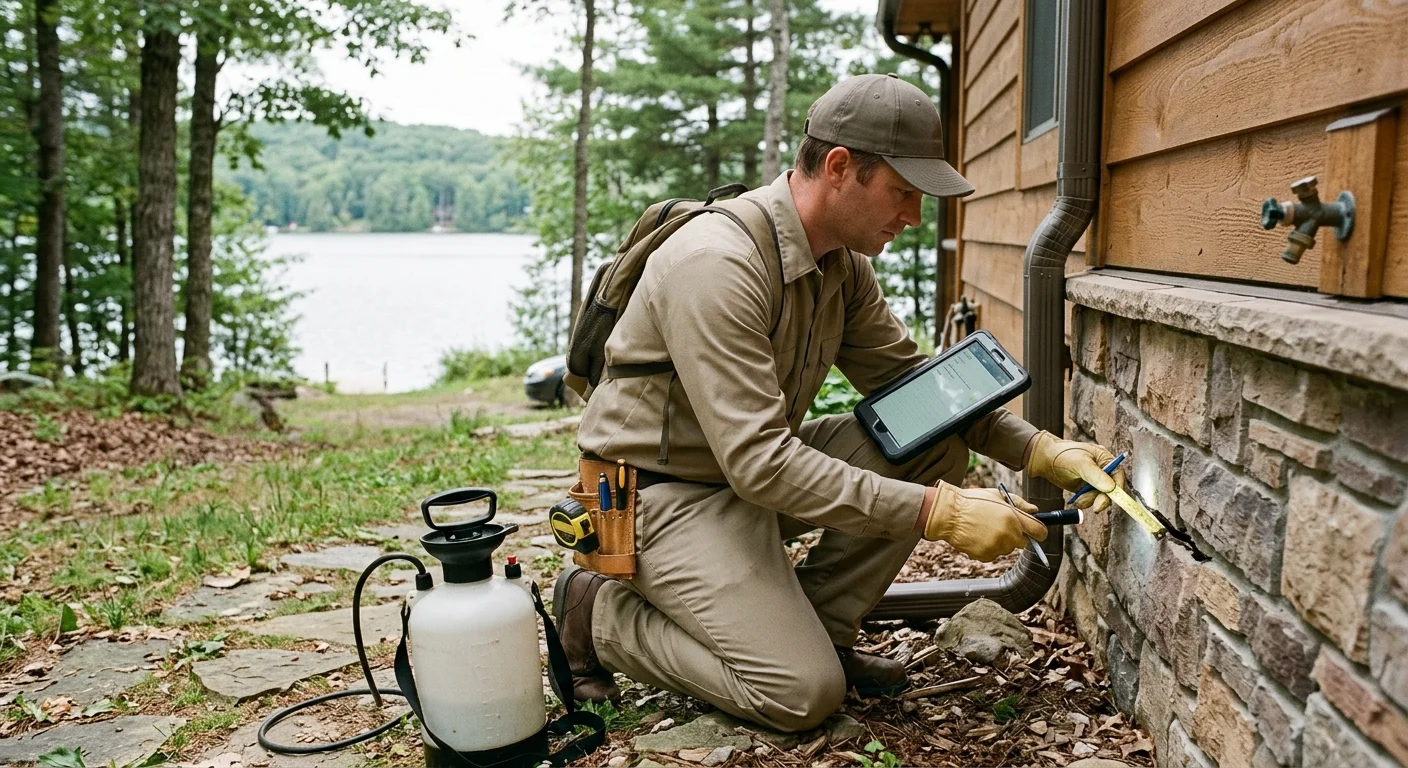
Which pest evidence to photograph before calling
Good photos give the company a useful starting point. Capture the scene before cleaning the trail, web, nest, pellets, or damaged material. The company can then decide which areas deserve closer attention during its inspection.
Take both wide and close photographs. A wide image shows the room, wall, tree, roofline, or outbuilding. A close image records the insect, dropping, hole, stain, web, or damaged wood. Place a ruler or familiar object nearby when scale isn’t clear.
Your photo set should show:
- The pest itself, including its top and side when possible
- Wings, shed skins, pellets, droppings, nests, or web patterns
- The nearest door, window, pipe, vent, drain, or foundation gap
- Trails between landscaping and the building
- Damaged food packages, wood, insulation, or stored materials
- Where the evidence appeared inside the room
- Changes since you first noticed the activity
Add short notes for each image. Record the room, surface, time, and whether the evidence returned. Mention any products, traps, or repairs already tried. That history can prevent the next company from starting with an incomplete picture.
Termite evidence needs extra context. UC IPM says western drywood termite pellets have six hexagonal sides. The insects push them through kickout holes measuring less than 2 millimeters across. A sharp close-up may help, but identification still belongs in the inspection. Our Lakeside termite inspection guide explains what a termite-focused visit should cover.
Don’t force every clue into one diagnosis. Flying ants and termite swarmers can appear similar in casual photos. Small jumping insects may also be mistaken for fleas. Send the original images and let the company explain what supports its identification.
How Lakeside conditions change inspection priorities
Lakeside isn’t one uniform housing pattern. The county’s Lakeside Community Plan places the community in the western foothills of the Cuyamaca Mountains, along the San Diego River. It also describes small-scale farming and homes with horse corrals. Lindo Lake sits near the town center.
That mix affects what belongs on the inspection map. A compact property near the town center won’t present the same access points as a larger parcel toward El Monte Road. The company needs to inspect the home that exists, not a generic Lakeside address.
Walk the property before the appointment and note its main features. These may include detached garages, sheds, corrals, feed storage, retaining walls, crawl-space openings, irrigation, or stacked materials. Tell the company which structures are included in the requested inspection. A house-only proposal may leave important areas outside its scope.
Drainage and grade also deserve attention. Ask the inspector to show where soil, vegetation, stored materials, or utility lines meet the structure. If a room has recurring activity, point out what sits outside that wall. The connection may be more useful than the indoor sighting alone.
Seasonal changes can alter what you notice without proving the cause. Keep dated photos instead of relying on memory. Our San Diego pest season calendar can help organize those observations. For wider regional context, see the San Diego pest control guide.
Local knowledge should lead to better questions, not automatic conclusions. Ask why each Lakeside feature changes the proposed inspection or service. The answer should connect a property condition to visible evidence.
What a licensed company should inspect first
The first priority is the area where you found activity. The inspector should identify the evidence, trace nearby access points, and explain which additional spaces need checking. If the pest can’t yet be identified, the proposal should say what further inspection is needed.
Licensing scope matters in California. Branch 2 covers general household pest work without fumigation. Branch 3 covers wood-destroying pests through insecticides, repairs, and corrections, excluding fumigation. Only Branch 1 licensees may perform fumigation. You can check a person or business through the California Structural Pest Control Board license search.
Match the credential to the problem. Routine ants, cockroaches, spiders, and similar household pests generally fall within Branch 2 work. Termite or other wood-destroying evidence calls for Branch 3 expertise. A fumigation proposal requires a licensed Branch 1 company. Pest Pros San Diego doesn’t hold these licenses or perform treatments. We match customers with licensed local pest control companies.
Inspection order should follow the evidence. Indoor trails may lead toward plumbing openings, cabinets, doors, or wall gaps. Attic sounds may direct attention toward access panels, roof edges, vents, and exterior routes. Yard activity may call for a review of irrigation, storage, vegetation, and nearby structures. Ask the inspector to distinguish what was observed from what remains suspected.
Species identification can change the plan. UC IPM says pesticides alone won’t solve German cockroach problems. Its guidance combines sanitation, exclusion, monitoring, and targeted chemical control. That makes a vague proposal to “spray for bugs” hard to evaluate. The written recommendation should name the target pest and the conditions supporting it.
San Diego County Vector Control also provides free rat and mosquito inspections for monitoring and education, not treatment. A private company can still be appropriate when the property needs exclusion, trapping, pesticide work, or another service outside that county role.
Our general pest control service page explains how the referral process works. The company you’re matched with determines the inspection and treatment plan.
How to compare a written service scope
Compare written scopes line by line. A price without defined work tells you very little. Each proposal should show what the company found, what it recommends, and which areas the quoted work covers.
Look for these details:
- The target pest or the evidence requiring further identification
- Every included interior, exterior, attic, crawl-space, and outbuilding area
- Inspection findings connected to each recommended action
- Treatment, trapping, monitoring, sanitation, or exclusion tasks
- Product names and the written preparation instructions, when applicable
- Areas or repairs excluded from the proposal
- How the company will document completed work
- The conditions that would trigger another inspection or visit
- Payment, renewal, cancellation, and recurring-service terms
- Any warranty or re-treatment language in the company’s agreement
- The registered business name and applicable license information
Ask the company to separate confirmed activity from preventive options. Optional work should appear as optional. If two proposals describe different pests, different areas, or different follow-up terms, their totals aren’t directly comparable.
Prices here are set by the company you hire, not by us. Pest Pros San Diego has no price list or fee schedule. Ask each bidder to itemize the initial visit, each follow-up visit, the recurring interval and its price, and the terms for cancelling. The matched company inspects first and quotes in writing before any treatment begins.
Don’t rely on verbal warranty language. Warranty and re-treatment terms belong to the company performing the work. Read its written agreement for covered pests, excluded conditions, customer responsibilities, and cancellation terms.
Preparation also needs a clear owner. Ask who provides instructions and when you’ll receive them. Product and re-entry questions should be answered by the licensed company based on its proposed service. The EPA pesticide safety resource can help you prepare questions before approving pesticide work.
Bring both proposals back to the same baseline. Compare the target pest, included structures, treatment method, follow-up conditions, and total commitment. Our general pest control visit checklist gives you a practical list for the appointment.
When to call us
Call when pest evidence keeps returning, the species remains unclear, or the work needs a licensed company. Call us at (858) 400-6561 and we’ll match you with a licensed local pro.