
A small capsule near a cabinet can look like a cockroach egg case. It can also be debris, a seed, or an old case left behind. Check the object, its location, and nearby pest evidence before drawing conclusions.
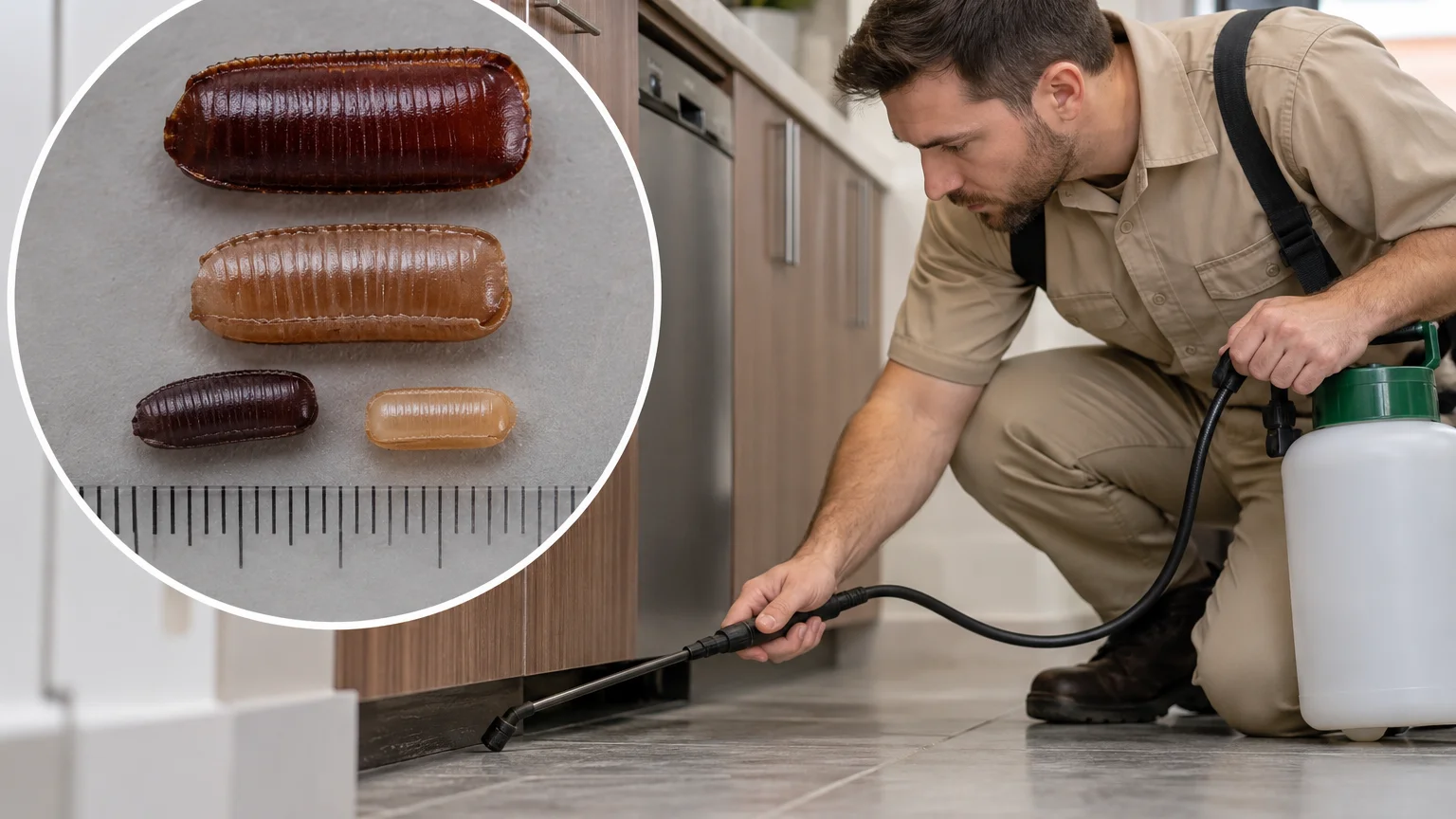
What a cockroach egg case looks like
Cockroaches produce egg cases, also called oothecae. Homeowners usually notice the case rather than separate, exposed eggs. Finding a capsule-shaped object is a reason to investigate, but its shape alone doesn’t confirm that it came from a cockroach.
Color can be misleading in photographs. Lighting, dust, damage, and camera settings can change how an object appears. A close image also removes scale. Place a familiar object beside the suspected case when taking a photograph, but don’t let the comparison touch it. Record where you found it before moving anything.
The strongest approved visual description applies to the German cockroach. UC IPM describes its egg case as light beige and about 1/4 inch long. The female carries it for most of its incubation, then drops it around the time the eggs hatch. Incubation takes about 30 days under the conditions described by UC IPM.
That carrying behavior matters. A loose case might be empty, recently released, damaged, or unrelated debris. A photograph can’t reliably distinguish every possibility. It also can’t show where the female traveled or whether other cockroaches remain nearby.
Photograph the top, side, and surrounding surface. Note whether the object was attached, loose, intact, or open. Include the room and exact location, such as a cabinet hinge or refrigerator gap. These observations give an inspector more context than a tightly cropped image.
For broader body identification, compare the object with our guide to what cockroaches look like in San Diego. That guide helps separate an egg-case question from an adult-insect question.
How egg cases differ across likely household species
Species identification affects what the inspector checks next. However, the approved source material for this page provides a measured egg-case description only for German cockroaches. It doesn’t provide verified size, color, or attachment comparisons for every other household species.
That gap matters. Don’t assign a species from an online comparison chart when its measurements aren’t supported by a named source. A dark object isn’t automatically one species. A pale object isn’t automatically German. Age, lighting, surface staining, and damage can distort the visual clues.
German cockroaches deserve attention during an indoor inspection. UC IPM identifies them as California’s most common indoor cockroach species, especially in multi-unit housing. Adults are light brown, about 1/2 inch long, and have two dark stripes on the shield-like area behind the head. Females carry a light beige egg case until shortly before hatching.
Their preferred areas also provide useful context. UC IPM associates German cockroaches with warm, humid spaces near food, water, darkness, and shelter. Kitchens and bathrooms are common inspection areas. In a City Heights apartment or Chula Vista condo, an inspector may also consider connections between adjoining units. The egg case still doesn’t prove where the activity began.
San Diego County homes can contain other cockroach candidates. Our guide to cockroach types in San Diego provides a broader starting point. The separate guide to brown-banded cockroach hiding places can help organize location evidence without turning one object into a certain identification.
If you also find a small moving insect, don’t assume it’s a newly hatched cockroach. Compare the evidence with our cockroach nymph or bed bug guide. Photograph the insect separately and preserve the room context for the inspector.
Why one case does not define the infestation
One suspected cockroach egg case doesn’t reveal the infestation’s size. It also doesn’t show whether the case is occupied, empty, recent, or old. A single photograph can’t establish the species, the source room, or activity elsewhere in the building.
The German cockroach numbers explain why the case still deserves attention. UC IPM reports that one German cockroach case produces about 30 young. A female may produce another case every few weeks. UC IPM also describes this species as having the fastest reproductive cycle among common pest cockroaches.
Those figures don’t let anyone calculate a household population from one case. Conditions vary, and the case’s status may be unknown. The general cockroach egg-to-adult cycle also varies by species, from a few months to more than one year, according to UC IPM. The source doesn’t provide a German-specific egg-to-adult timeline.
Location adds context, not certainty. A case beside a refrigerator has a different inspection context from an object found in a garage box. In multi-unit housing, the inspection may need to consider plumbing penetrations, cabinet gaps, and connected spaces. None of those locations proves the number of cockroaches present.
Avoid choosing a pesticide from the case alone. UC IPM states that pesticides alone won’t solve cockroach problems. Its management approach combines sanitation, exclusion, monitoring, and carefully selected controls. Product use must follow its label, and the company doing the work should explain its plan.
A visible case may be only one piece of evidence. Adult cockroaches, nymphs, trap findings, moisture, food access, and sheltered gaps can change the assessment. Our cockroach control service page explains how we connect San Diego County customers with licensed, insured local companies.
What a licensed cockroach inspection should document
A useful inspection should leave you with more than a species guess. Ask the company to document what it observed, where it observed it, and which findings support its identification. Photographs should include scale and room context when practical.
The report or written notes should distinguish confirmed evidence from suspected evidence. A suspected ootheca isn’t the same as a confirmed German cockroach case. Likewise, a single adult sighting doesn’t automatically establish the source or extent of activity.
Ask the inspector to address these points:
- The suspected egg case’s exact room and location
- Whether the case appears intact, open, damaged, or inconclusive
- Any adults, nymphs, shed material, or monitoring evidence found nearby
- Food, water, warmth, darkness, or shelter affecting the area
- Gaps or connected spaces that may require further inspection
- The evidence supporting any species identification
- The proposed monitoring and treatment areas
- Product names, label directions, and precautions when pesticides are proposed
- Follow-up terms established by the company’s written agreement
UC IPM recommends sticky traps for monitoring cockroach populations. It also says gel baits can be effective when placed near areas where cockroaches shelter or forage. Those facts don’t replace an inspection or authorize placing products without considering the label, occupants, pets, and site conditions.
General household pest control falls under California’s Branch 2 structural pest control scope. You can check a company or individual through the California Structural Pest Control Board license search. Confirm the credential and status before authorizing work.
The company you’re matched with should inspect first and provide a written quote before treatment begins. It should also explain what the proposed work covers. Treatment timing, follow-up visits, and any re-treatment terms belong to that company’s written agreement. Pest Pros San Diego doesn’t perform inspections or set those terms.
When to call us
Call when you find a suspected egg case with live cockroaches, nymphs, or repeated indoor activity. A licensed local company can inspect the evidence and determine what the property needs.
Call us at (858) 400-6561 and we’ll match you with a licensed local pro.