
A small brown insect near a bed can send identification two ways. A cockroach nymph and a bed bug may look similar in a blurry photo, but shape, antennae, movement, and nearby evidence help separate them. Treat one image as a clue, not a verdict.
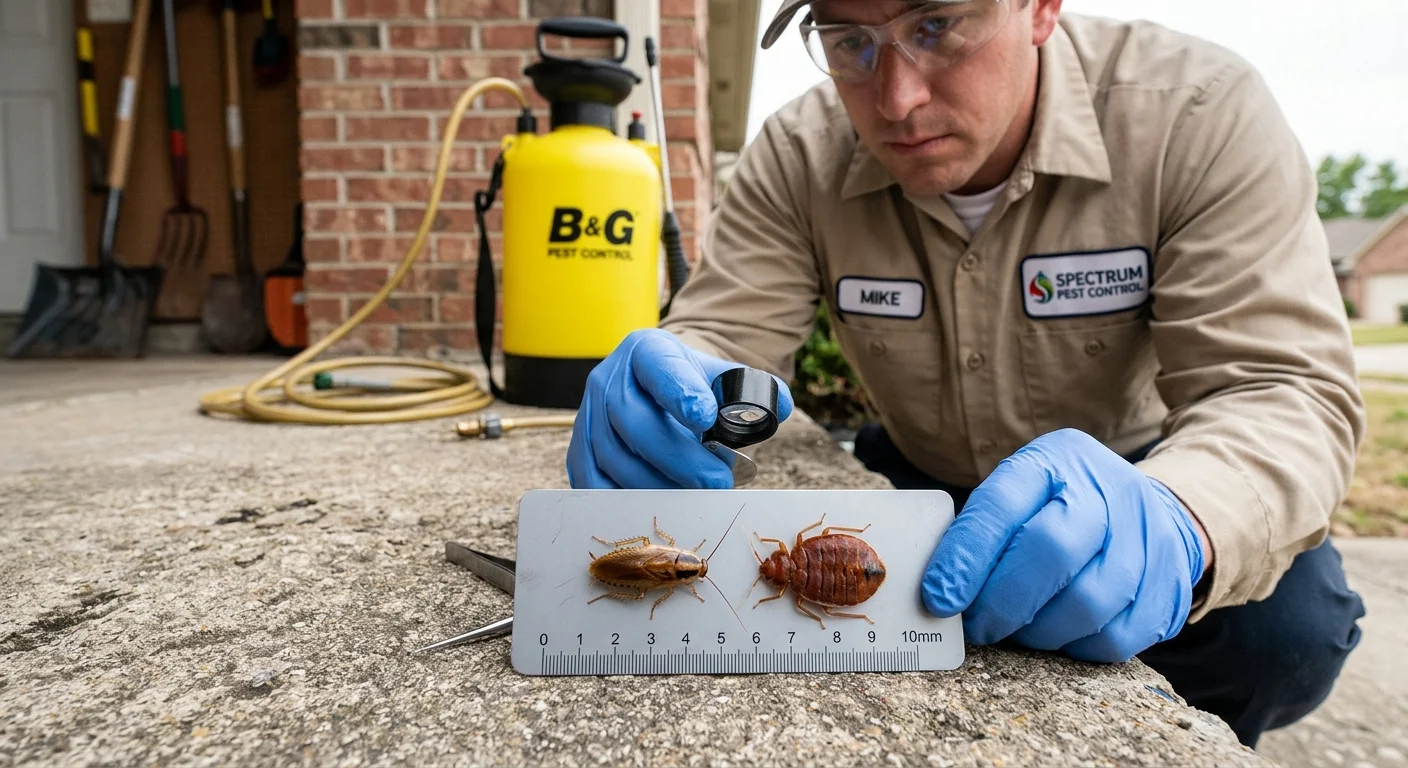
How body shape and movement differ
Start with the insect’s proportions. Color can shift under warm bulbs, phone flashes, shadows, or dust. The outline usually gives you a clearer first comparison.
| Feature | Cockroach nymph | Bed bug |
|---|---|---|
| Overall outline | Longer and narrower | Broader and more oval |
| Antennae | Long and easy to notice | Shorter within the overall silhouette |
| Rear profile | More tapered | More rounded |
| Movement | Often runs quickly when exposed | Usually crawls without the same darting motion |
| Best viewing angle | Top and side views | Top view showing the full outline |
Those differences sort possibilities. They don’t prove a species. A crushed insect, partial skin, or angled picture can hide the feature you need.
Cockroach nymphs are immature cockroaches. Their appearance also varies by species and stage. That’s why one online reference image won’t cover every possible nymph found around San Diego County.
The German cockroach is a useful comparison because UC IPM identifies it as California’s most common indoor cockroach. UC IPM describes the adult as about 0.5 inch long and light brown. It has two dark stripes on the plate behind its head. That adult description can support a cockroach identification, but it shouldn’t be applied automatically to every nymph.
When deciding between a baby cockroach or bed bug, look at several features together. A narrow body, prominent antennae, and quick running movement support the cockroach side. A broad, rounded outline keeps a bed bug comparison open. Our cockroach appearance guide provides more context for common roach shapes.
Where each insect is usually discovered
The discovery spot changes the comparison, but it doesn’t settle it. Record the exact room, surface, and object before moving anything.
UC IPM says German cockroaches favor warm, humid areas near food, water, darkness, and hiding spaces. Kitchens, bathrooms, and food preparation areas deserve close attention. The species is especially common in multi-unit housing.
That local housing context matters. In a City Heights apartment or South Bay condo, note whether the insect appeared near shared plumbing, cabinets, or an adjoining wall. In a detached Clairemont or El Cajon home, record the same details. The ZIP code alone won’t identify the insect.
A specimen found inside a kitchen cabinet points the search toward cockroaches. So does activity around a sink base or bathroom plumbing. It still isn’t conclusive. An insect can travel inside a bag, box, appliance, or other moved item.
A bug recovered from a mattress seam, bed-frame joint, or upholstered chair deserves a bed bug comparison. Finding something on a sheet doesn’t prove it’s a bed bug. Cockroaches and other insects can wander into bedrooms.
Avoid turning the room name into a diagnosis. “Found in bed” describes the discovery, not the species. “Found in kitchen” works the same way.
Check the immediate area instead. Note nearby cracks, furniture joints, cabinet gaps, and plumbing openings. Don’t scatter objects through other rooms while searching. Keep anything you move close to where you found it.
For a closer visual reference, compare the specimen with our guide to what bed bugs look like. Use the guide to narrow the possibilities, then rely on the insect and surrounding evidence.
Which evidence matters beyond one photograph
A sharp photograph helps, but a small evidence set is better. Phone cameras often blur antennae, flatten shadows, and exaggerate color. Digital zoom can turn a body edge into an identification feature that isn’t really there.
Collect these details without naming the pest first:
- Photograph the insect directly from above.
- Take a side view if the specimen remains intact.
- Place a ruler nearby without covering the insect.
- Record the exact room, object, and surface.
- Note whether it ran quickly or crawled steadily.
- Photograph nearby spotting, shed material, or possible egg cases.
- Record whether you’ve found one specimen or repeated activity.
If practical, leave the insect on a sticky monitor. A sealed, clear container can also preserve an intact specimen for identification. Don’t depend on a crushed insect if another complete specimen becomes available.
Egg-case evidence can strengthen the cockroach side. UC IPM describes a German cockroach egg case as light beige and about 1/4 inch long. The female carries it until around the time the eggs hatch. An object matching that description supports further cockroach investigation, but a photograph still may not confirm what it is.
Sticky monitors are useful because they show where cockroach activity is concentrated. UC IPM includes monitoring within its recommended cockroach management approach. Mark each monitor’s location rather than moving it between rooms.
Skin marks shouldn’t decide this comparison. A skin reaction can’t identify a photographed insect or prove which pest caused it. Keep the pest identification separate from any medical concern.
Also avoid spraying an unidentified insect and treating the result as confirmation. UC IPM states that pesticides alone won’t solve cockroach problems. Identification, sanitation, exclusion, monitoring, and the correct treatment plan work together. If bed bugs remain possible, the inspection needs to follow that evidence instead.
What a licensed company should identify first
The company you’re matched with should identify the specimen before recommending treatment. “Small brown bug” isn’t a working diagnosis. The pro should determine whether it’s a cockroach, a bed bug, or another lookalike.
The first inspection should connect four things:
- The specimen’s body shape and visible features.
- The exact places where activity was found.
- Supporting evidence around those locations.
- Whether the evidence suggests isolated or repeated activity.
The inspection path then changes with the finding. For suspected cockroaches, the company should identify the species and inspect likely food, water, and hiding areas. German cockroach evidence in a shared-wall building may require attention beyond a single visible insect.
If bed bugs remain possible, the company should inspect the affected sleeping or resting areas before discussing treatment. A kitchen-focused cockroach inspection won’t answer a bed bug concern. A mattress photo won’t map cockroach activity around plumbing and cabinets.
California places general household pest work within Structural Pest Control Board Branch 2. You can use the state’s Structural Pest Control Board license search to check a company or individual’s current credentials.
Our cockroach control referral service connects San Diego County customers with licensed, insured local companies. We can also match you with a company offering bed bug treatment when the evidence points that way. The matched company makes the on-site identification and recommends the appropriate next step.
Ask the company to explain which features and evidence support its conclusion. A clear identification should connect the insect’s appearance with where it was found. It shouldn’t rest on one blurred phone picture.
When to call us
Call when specimens keep appearing, evidence spans multiple areas, or photographs remain inconclusive. We’ll connect your San Diego County property with a company that can identify the pest before proposing treatment. Call us at (858) 400-6561 and we’ll match you with a licensed local pro.