
Cockroach infestation treatment should begin with identification and documented activity. In a Chula Vista apartment, one sighting matters, but it doesn’t reveal the species, source, or full scope by itself. Good records help the inspecting company decide where to look next.
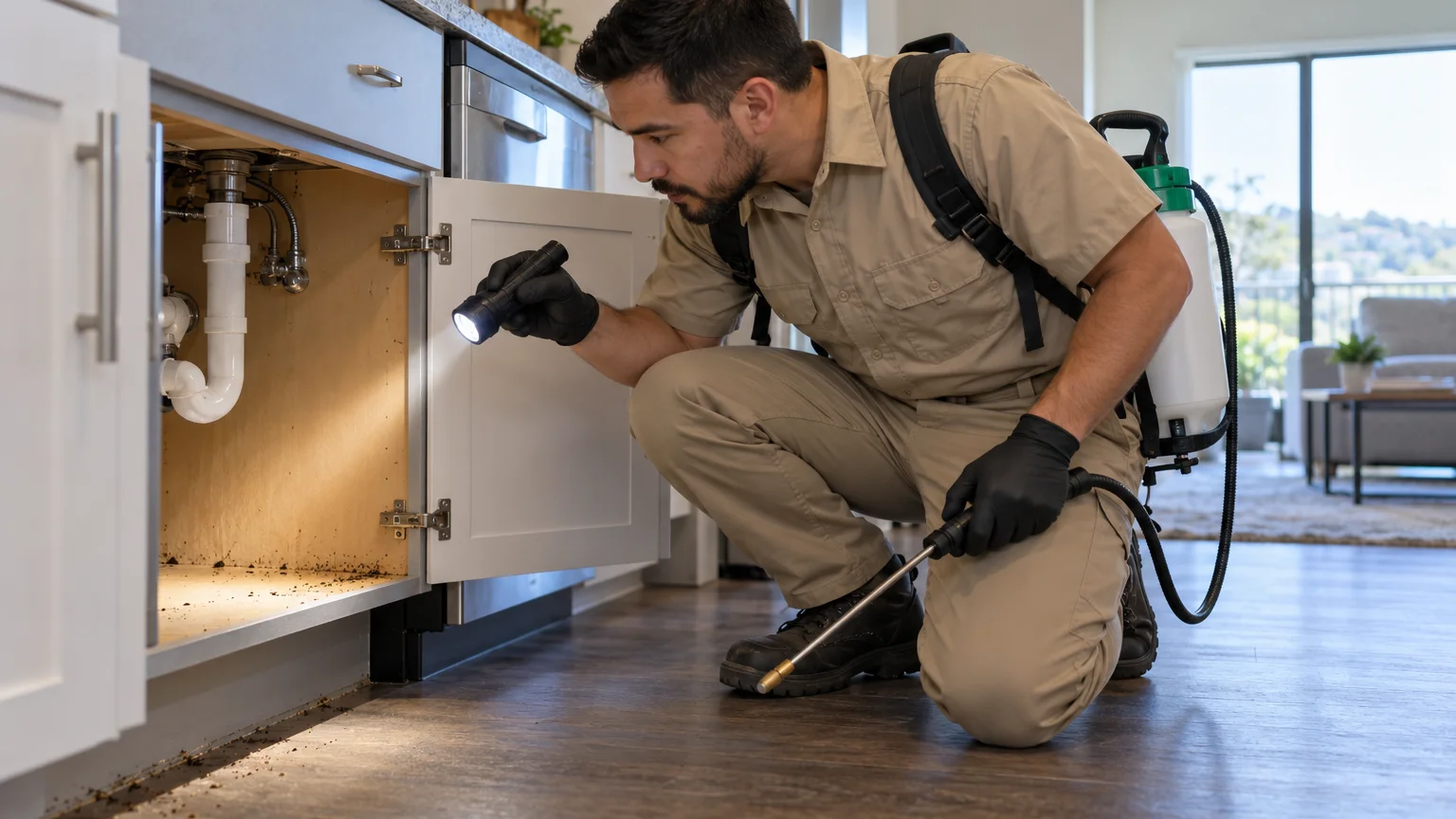
Which evidence supports a cockroach inspection
Start with what you actually saw. Record the date, time, room, and exact location. Note whether the insect was alive, dead, or caught on a monitor. A clear photo helps, especially when it shows the insect beside a common object for scale.
If you save a specimen, place it in a closed container until inspection. Don’t crush it if identification is the goal. Color, body shape, wings, and markings may help a professional distinguish species.
Photograph suspected droppings, egg cases, shed material, or dead insects before cleaning. Include a wider image showing the cabinet, appliance, or fixture. Then take a close image showing the material itself. Our guide to cockroach droppings and useful evidence explains why context matters.
Keep a simple room-by-room log. Entries might include:
- Kitchen sink cabinet, live insect near the rear pipe opening
- Bathroom vanity, small insect caught on a monitor
- Refrigerator area, repeated sightings along one wall
- Bedroom, no activity observed during the same period
That record doesn’t diagnose an infestation. It gives the licensed company a clearer starting point.
UC IPM identifies the German cockroach as California’s most common indoor cockroach, especially in multi-unit housing. It describes the species as light brown, about half an inch long, with two dark stripes behind the head. Compare those features with our guide to German cockroaches in apartments, but let the inspecting professional confirm the species.
A photo alone may not settle that question. Lighting can distort color, while damaged specimens can hide markings. Our San Diego cockroach identification guide shows why species confirmation belongs near the start of any treatment decision.
How shared walls change the inspection scope
An apartment inspection shouldn’t stop where one insect was found. The company may need to consider adjoining walls, plumbing openings, cabinets, appliance spaces, and other connected areas. The actual scope depends on access and the building’s layout.
Tell the inspector which surfaces border another unit, hallway, utility area, or shared room. Mark pipe openings under sinks. Note gaps around cabinets and baseboards. These details help the professional decide whether activity appears isolated or connected to a broader pathway.
Property managers can support that work with consistent unit records. Use the same fields for every report:
- Unit and room
- Date reported
- Evidence photographed or collected
- Monitoring location
- Inspection findings
- Work recommended
- Access limitations
- Follow-up decision made by the servicing company
Avoid treating a neighboring unit as the confirmed source without evidence. Cockroaches can be found near connected building features, but a sighting doesn’t prove where the insect originated. The inspector should document observations rather than assign blame.
No Chula Vista-specific apartment cockroach statistic was confirmed in the approved research for this page. No city-specific landlord or tenant duty is stated here either. Residents and managers should check their current lease documents and obtain qualified guidance before making legal decisions.
The practical issue is coordination. A professional can’t evaluate an inaccessible cabinet, utility space, or adjoining unit. Managers should tell the company what areas are available and what remains uninspected. Residents should report the evidence without moving monitors or cleaning away every trace beforehand, unless immediate sanitation requires it.
Shared-wall scope also makes identification more important. German cockroaches favor warm, humid locations near food, water, and dark shelter, according to UC IPM. Kitchens and bathrooms deserve attention, but the inspection should follow recorded evidence rather than assumptions.
For a separate South Bay issue involving trails rather than cockroaches, see our guide to ant control in Chula Vista. Similar locations can hold different pests, so evidence must support the identification.
Why one insect doesn’t measure the activity
One cockroach is evidence of one cockroach. It isn’t a reliable count of insects elsewhere in the apartment. It also doesn’t show whether the insect entered recently, came from a hidden harborage, or reflects activity beyond that room.
The reverse is also true. A quiet daytime inspection doesn’t prove that no activity exists. Hidden spaces may remain inaccessible, and observation covers only that moment. This is why a licensed company may combine a visual inspection with monitoring.
Sticky monitors can help record location and changes over time. Their value comes from consistent placement and clear labels. A manager or resident should record where each monitor was placed and when it was checked. The servicing company should decide how monitor findings affect treatment.
Don’t rank severity from smell alone. The approved research doesn’t provide a verified odor test for identifying cockroach species or measuring activity. A claimed repellent smell also isn’t a substitute for inspection, sanitation, exclusion, monitoring, and an appropriate treatment plan.
German cockroach reproduction makes early documentation useful. UC IPM reports that an egg case incubates for about 30 days and contains about 30 young. It also describes German cockroaches as having the fastest reproductive cycle among common pest cockroaches. These figures explain why repeated evidence deserves attention, but they don’t predict the size of a specific apartment problem.
Daytime sightings also need context. The approved claims ledger doesn’t support using one daytime sighting as a numeric severity test. Record it, photograph it when possible, and let the inspector compare it with monitoring results and other evidence.
Permanent elimination can’t be promised from one visit or one product. UC IPM states that pesticides alone won’t solve cockroach problems. Its approach combines sanitation, exclusion, monitoring, and chemical control when appropriate. Gel baits can be effective near cockroach harborages or foraging areas, but product selection and placement belong in the servicing company’s plan.
Residents shouldn’t improvise professional pesticide applications. Tell the inspector about products already used, including sprays, foggers, powders, and baits. That history can affect how the company interprets current activity and plans professional cockroach control.
What a licensed company should document
A useful inspection record starts with the species decision. The report should identify the cockroach when possible, or state that identification remains unconfirmed. It should separate observed evidence from resident reports and assumptions.
The document should list every inspected area. That includes rooms with findings and rooms checked without visible evidence. It should also name areas the company couldn’t access. An inspection with a clear limitation is more useful than a vague claim that the whole apartment was checked.
Ask for findings tied to locations. “Activity in kitchen” is less useful than a record naming the sink cabinet, refrigerator area, or a numbered monitor. Photos should connect to those locations whenever the company includes them.
The company should also explain the recommended control plan in writing. UC IPM says pesticides alone won’t solve cockroach problems. A sound plan may address food residue, moisture, openings, monitoring, and treatment selected for the confirmed conditions. The exact pesticide choice belongs to the licensed company and its product labels.
Any preparation directions should come from that company. Residents and managers need to know which cabinets must be opened, which items must be moved, and what areas need access. Instructions for children, pets, food, and re-entry should be written for the actual products and service.
For California general pest work, Branch 2 covers household pest control other than fumigation with poisonous or lethal gases. You can verify an individual or business through the California Structural Pest Control Board license search. Pest Pros San Diego doesn’t hold that license or perform the treatment. We match customers with licensed, insured local pest control companies.
Before work begins, the matched company should inspect and provide its quote in writing. Ask the company to identify any follow-up decision points without demanding a preset schedule. The approved research doesn’t support a universal 14-day or 28-day cockroach follow-up rule. The servicing company sets timing after evaluating the property and its evidence.
Keep the final inspection record, photographs, monitoring log, preparation instructions, quote, and treatment paperwork together. That file creates a clearer history if activity continues or appears elsewhere.
When to call us
Repeated sightings, multiple evidence locations, or unclear species identification call for a licensed pest control professional. Call us at (858) 400-6561 and we’ll match you with a licensed local pro.