
Small dark material inside a cabinet may suggest cockroaches, but it doesn’t prove them. A photo alone also can’t identify the species or measure an infestation.
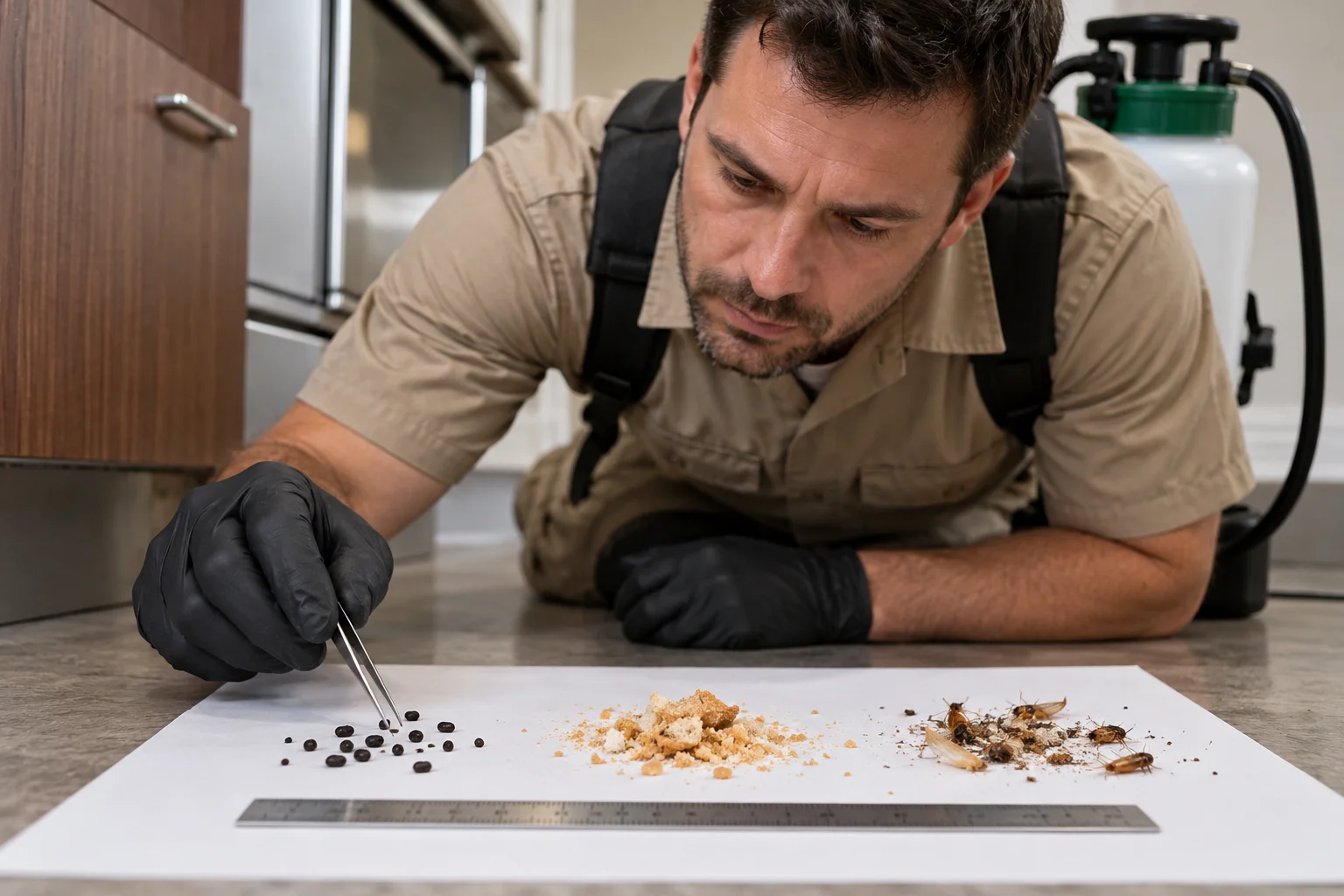
What suspected cockroach droppings may look like
People searching “poop cockroach” usually want a fast visual answer. Unfortunately, the approved sources available for this page don’t confirm a dependable color, shape, or size test for cockroach droppings. Calling every dark speck cockroach waste would turn a guess into a diagnosis.
Treat the material as suspected evidence instead. Record its appearance without deciding what produced it. Note whether the pieces look separate or form a mark on the surface. Include a familiar object for scale, but don’t use that comparison to assign a species.
Lighting changes what a phone camera captures. So do shadows, cabinet finishes, grout, and image sharpening. A close photograph can preserve detail, yet it removes the room context that an inspector needs. One picture can’t show whether the material keeps returning or whether insects are nearby.
The UC Statewide Integrated Pest Management Program provides verified identification details for German cockroaches. Adults are about half an inch long and light brown. They have two dark stripes on the shield-like plate behind the head. Those body features carry more identification value than an isolated dark speck.
UC IPM also describes a German cockroach female carrying a light beige egg case. The case is about one-quarter inch long and remains attached until near hatching. That finding deserves documentation, but it must not be confused with droppings.
For whole-insect comparisons, use our guide to what cockroaches look like in San Diego. The separate guide to San Diego cockroach types helps compare visible body features. Neither guide turns loose debris into a confirmed species record.
How location and nearby evidence change the assessment
Location adds context, but it isn’t a verdict. A speck inside a City Heights apartment cabinet still needs supporting evidence. The same applies in a Chula Vista condo, an El Cajon house, or a San Diego restaurant.
Start by recording the exact room and surface. “Kitchen cabinet” is less useful than “rear corner beneath the sink.” Note whether the material appeared beside plumbing, stored food, an appliance, a wall opening, or an empty shelf. These are observations, not explanations.
UC IPM says German cockroaches favor warm, humid places near food, water, darkness, and shelter. Kitchens and bathrooms fit that description. The species is also common in multi-unit housing. Finding suspicious material in those settings raises a reasonable inspection question, but location alone doesn’t confirm German cockroaches.
Nearby insect evidence matters more. A live or dead insect may allow comparison with verified body features. A light brown cockroach with two dark stripes behind its head supports consideration of German cockroaches. An attached light beige egg case supports that assessment further. A damaged insect may remain impossible to identify.
Possible smear marks, cast material, and loose cases should be photographed separately. This page’s approved sources don’t establish a visual test that makes any of those findings conclusive by themselves. Label each item as suspected unless an inspector confirms its source.
Pattern also matters. Record whether the material was isolated or found at several points. Don’t convert that count into an infestation estimate. One sample doesn’t prove one insect, and many specks don’t establish a population size.
Our cockroach control guide for San Diego explains why identification, sanitation, exclusion, monitoring, and treatment belong in one plan. UC IPM specifically says pesticides alone won’t solve cockroach problems. The licensed company must inspect the setting before choosing its approach.
What household debris can be mistaken for droppings
Homes contain plenty of small material with an uncertain origin. Food crumbs, seasoning, soil from a plant, damaged packaging, building dust, and insect debris can collect in cabinets or along walls. A photograph may not show enough texture to separate them.
Don’t identify debris only because it appeared in a kitchen. Kitchens also contain flour, coffee, crumbs, grease residue, and particles from cardboard packages. Bathrooms collect dust, fibers, and material carried by airflow or foot traffic. Garages add soil, wood debris, and particles from stored items.
Context can narrow the possibilities. A loose particle beneath a torn food package has a different surrounding scene than material beside a visible cockroach. That distinction still doesn’t prove the particle’s origin. It tells the inspector what else deserves examination.
Fresh activity should also be separated from old residue. A mark on the back of a cabinet may predate the current occupant. Material inside a recently emptied drawer offers a different timeline, but it still needs verification. Record what you know and avoid filling the gaps.
A useful photo set includes one wide room view, one view of the exact discovery point, and one close image with scale. Photograph nearby insects or cases separately. Keep the original images so cropping doesn’t erase their context. Write down when and where each image was taken.
Avoid using image-search results as a final diagnosis. Many pests and ordinary materials can look alike after zooming, compression, or poor lighting. Online comparisons are most useful for forming inspection questions.
A suspected egg case needs the same restraint. UC IPM confirms the appearance and approximate length of a German cockroach egg case, but a similar-looking object in one photo isn’t automatically confirmed. Our guide to cockroach egg cases explains how to document that separate clue.
If the evidence remains uncertain, leave the species field blank. “Unknown dark debris beneath the kitchen sink” is more useful than a confident but unsupported label.
What a licensed cockroach inspection should document
A useful inspection produces a record, not just a verbal guess. It should identify where evidence appeared and what was directly observed. It should also separate confirmed findings from suspected material.
The inspector should document rooms, surfaces, and nearby conditions tied to each finding. Photographs should connect close details with wider views. Visible insects should be described through body features, not assumed from the discovery location. Egg cases and other possible evidence should receive separate labels.
Monitoring can help test an assessment. UC IPM recommends sticky traps for tracking cockroach activity. Their placement and results should be recorded by location. A captured insect can provide stronger identification evidence than an unexplained speck, especially when its markings remain visible.
The report shouldn’t claim that one photograph proves a species. It also shouldn’t turn the number of particles into an infestation count. Those conclusions go beyond what the evidence supports. If identification remains uncertain, the report should say so.
For suspected German cockroaches, compare any captured insect with the verified features. Look for a light brown body and two dark stripes behind the head. The inspector should also consider whether the discovery area matches the species’ known preference for warm, humid shelter near food and water.
California divides structural pest control work into licensing branches. General household pest work falls under Branch 2. The Structural Pest Control Board says field representatives can identify infestations and make inspections while working for a registered company. You can use the California Structural Pest Control Board license search to check a person or business.
An inspection should lead to a written scope before treatment begins. UC IPM says cockroach management combines sanitation, exclusion, monitoring, and appropriate chemical control. Gel baits can be effective when placed near cockroach shelter or foraging areas. The licensed company decides what fits after inspecting.
Our cockroach control service connects San Diego County customers with licensed, insured local companies. Pest Pros San Diego doesn’t inspect, apply pesticides, or choose products.
When to call us
Call when suspected droppings keep appearing, a cockroach is captured, or the evidence spans several areas. A licensed local pro can inspect the setting, document confirmed findings, and explain the proposed scope.
Call us at (858) 400-6561 and we’ll match you with a licensed local pro.