
You clean the kitchen, the roaches come back, and a neighbor mentions the same thing. That pattern is the tell. In a multi-unit building, one apartment is almost never the whole problem, and treating it like one is why the same tenants keep calling the same number every few months.
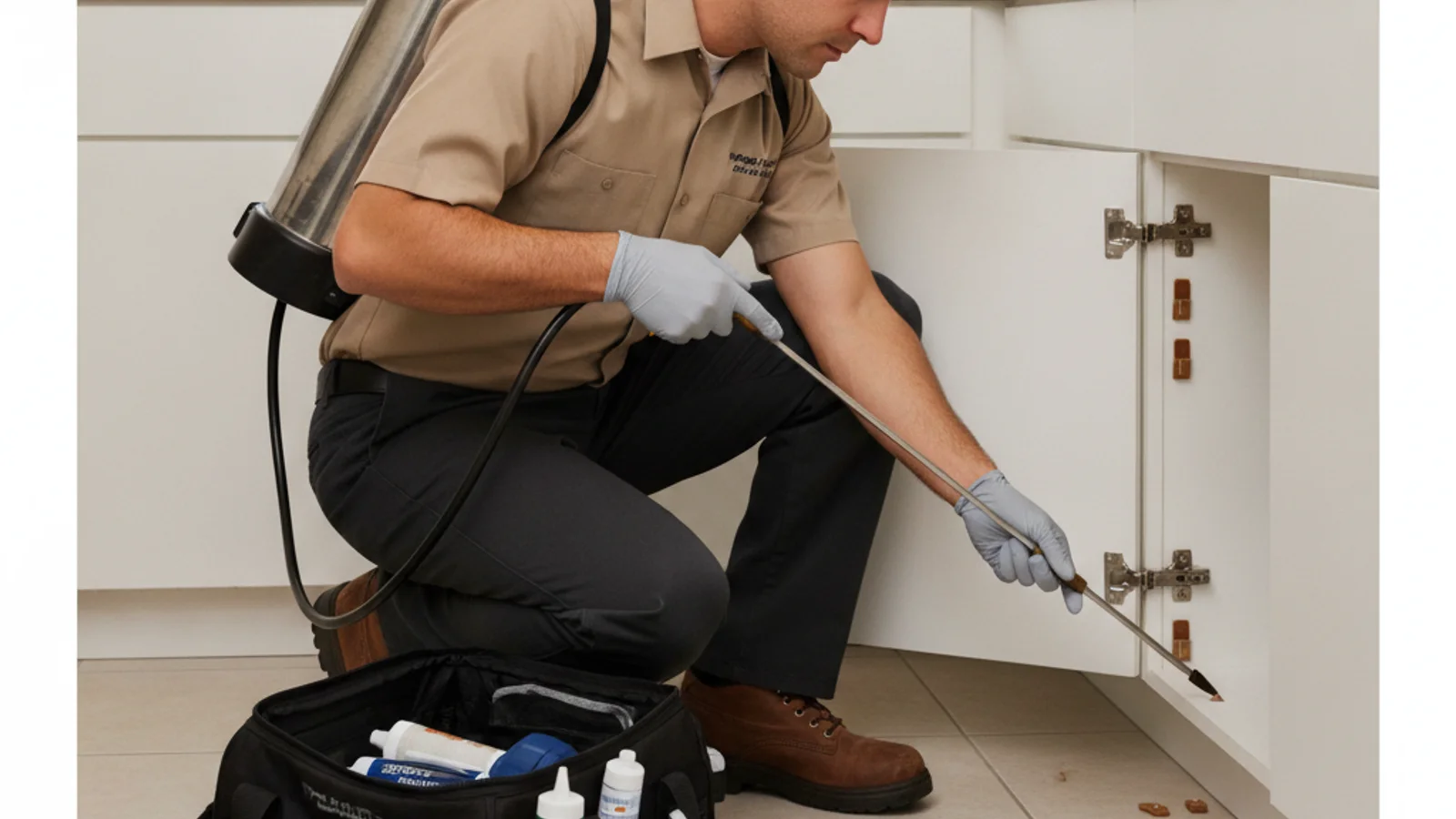
How to confirm German cockroaches
Get the species right before anyone buys a product. UC IPM calls the German cockroach (Blattella germanica) the most common indoor species in California and perhaps worldwide, and singles out multi-unit housing as where it thrives. UC IPM also describes it as the most persistent and troublesome cockroach species.
The field marks are specific. UC IPM puts the adult at roughly half an inch long, light brown, with two dark stripes on the pronotum, the shield-shaped plate right behind the head. Those two stripes are the check. A large dark roach in a garage or a drain line is a different species with a different plan behind it, and our guide to cockroach types in San Diego lays out the differences.
Egg cases are the other confirmation. UC IPM says a German cockroach female carries a light beige egg case about a quarter inch long until just before the eggs hatch. Seeing one attached to a live roach is a strong signal you’re looking at a breeding population indoors, not a stray that walked in from the alley.
Where you find them narrows it further. UC IPM describes German cockroaches favoring warm, humid areas from 70 to 75 degrees Fahrenheit, close to food, water, and dark harborage, and names food preparation areas, kitchens, and bathrooms. In practice that means cabinet hinges, the motor housing under a refrigerator, the gap behind a dishwasher, and the void where a sink drain passes through the wall.
Two San Diego details make this worse in older rental stock. Many 1960s and 1970s courtyard buildings in City Heights, Normal Heights and North Park stack kitchens and bathrooms back to back, so one plumbing chase serves several units. And coastal apartments in Pacific Beach or Ocean Beach that run without air conditioning sit in exactly the warm, humid band UC IPM describes for much of the year. If you’re unsure what you’re looking at, compare against our photo guide to what cockroaches look like in San Diego before you report it.
Why apartment infestations need a coordinated plan
The math is the reason. UC IPM says the German cockroach has the fastest reproductive cycle of all the common pest cockroaches, that its egg case incubates about 30 days and holds about 30 young, that a female may produce a new case every few weeks, and that one female and her offspring can produce over 30,000 individuals in a year. UC IPM does not publish an egg-to-adult figure for this species, so anyone quoting you one is quoting something else.
Now put that population behind a shared wall. Treating unit 4 while units 3 and 5 go untouched leaves a source that refills the treated unit. That’s not a product failure, it’s a scope failure. A building-wide plan starts with inspecting adjacent and stacked units, not just the one that complained.
Sanitation is part of the scope, and it isn’t only the tenant’s job. UC IPM is direct that pesticides alone will not solve cockroach problems, and puts sanitation, exclusion and monitoring alongside any chemical step. In a building, that splits across two parties. A renter controls dishes, trash timing, pet food, cardboard storage and standing water in a sink. A property manager controls the shared trash enclosure, plumbing leaks under a shared sink, gaps around pipe penetrations, dumpster distance from unit doors, and whether a vacant unit next door is being monitored at all.
We won’t tell you which of those duties California assigns to whom. Our verified sources carry no rule specific to cockroach infestations in California rentals, and inventing one would be worse than useless if you ever needed to rely on it. Ask your property manager to put the plan in writing, read your own lease, and if the response stalls, ask your city or county code enforcement office directly what applies to your building. Don’t take a rule off a website, including ours, as settled.
If you’ve already tried a store product and nothing changed, our post on whether roach killer works in San Diego explains what those products are and aren’t built to do.
What licensed pros may use besides sprays
A spray-only visit is the sign you should push back on. UC IPM’s approach is layered, and the layers matter more than the label on the can.
Monitoring comes first. UC IPM recommends sticky traps to track populations. In an apartment that’s genuinely useful, because trap counts by location tell you which wall the roaches are living in and whether numbers are dropping or just moving. Placed in a stacked set of units, traps can show that unit 3 is the source and unit 4 was only the complaint.
Gel baits are the workhorse. UC IPM describes gel baits as very effective when placed in or near the locations where cockroaches harbor or forage, which is the opposite of broadcasting a spray across an open floor. Boric acid is the other named tool: UC IPM calls it the most common active ingredient used against cockroaches in insecticidal dusts, applied in hidden areas.
Two honest cautions attach to that. First, timing. UC IPM says it may take seven days or longer before you see fewer cockroaches after baiting, so a plan judged on day two will look like a failure when it isn’t. Second, this isn’t a case for buying professional product yourself. We don’t publish application rates or placement instructions, and a licensed applicator’s job includes reading the current product label to you, including what it requires around children, pets and food surfaces. If a precaution is unclear, that’s a question for the company doing the work, not a guess. The EPA’s guidance on safer pest control is a reasonable primer on how to read those labels.
Exclusion and moisture are the part that lasts. Sealing the pipe penetration under a sink, fixing the slow leak feeding a cabinet, and closing the gap behind a dishwasher all remove harborage permanently. In California, general household pest work like this falls under SPCB Branch 2. You can check a company and an individual on the Structural Pest Control Board license search before anyone enters your unit.
What renters and property managers should document
Documentation is what turns a recurring complaint into a plan somebody has to answer for. Keep it boring and dated.
- Photos with dates. Live roaches, egg cases, droppings, and the exact spot. A cabinet hinge in a photo is worth more than “in the kitchen.”
- Locations, not just counts. Which cabinet, which wall, which side of the sink. That’s what tells an inspector which unit to open next.
- Trap data. If sticky traps go in, note where each one sits and what it catches, week over week. A rising count on the shared wall is an argument.
- Every request in writing. Email or a written maintenance request, not a hallway conversation. Save the sent copy.
- Copies of service records. Ask for the company name, the license number, the date, the units treated, and the products used. You’re entitled to know what was applied in your home.
- Neighbor reports. If adjacent or stacked units have the same problem, say so in writing. That’s the fact that justifies expanding the scope.
- What you were asked to prepare. Emptying cabinets or pulling appliances is normal prep. Note what you did, so a follow-up visit isn’t blamed on you.
Property managers should keep the same file from the other side: which units were inspected, which were declined access, what was sealed, and when the shared trash enclosure was last serviced. A building with three treated units and no record of the other nine has documented a partial job.
Our cockroach control referral service matches San Diego County renters, owners and managers with licensed local companies. The company you’re matched with inspects first and puts its scope and any warranty terms in its own written agreement. Those terms are theirs, not ours.
When to call us
German cockroaches in a shared building need a licensed inspection across units, not a can from the hardware store, because the source is usually a wall away from the complaint. If you’re seeing them in daylight, finding egg cases, or the same problem has come back after treatment, that’s the point to bring in a pro who can work the whole building. Call us at (858) 400-6561 and we’ll match you with a licensed local pro.