
Rat extermination services can include very different combinations of work. Compare San Diego companies by separating identification, trapping, exclusion, cleanup, and documentation. The written scope matters more than a broad extermination label or rapid-arrival slogan.
Why rodent identification comes before the service scope
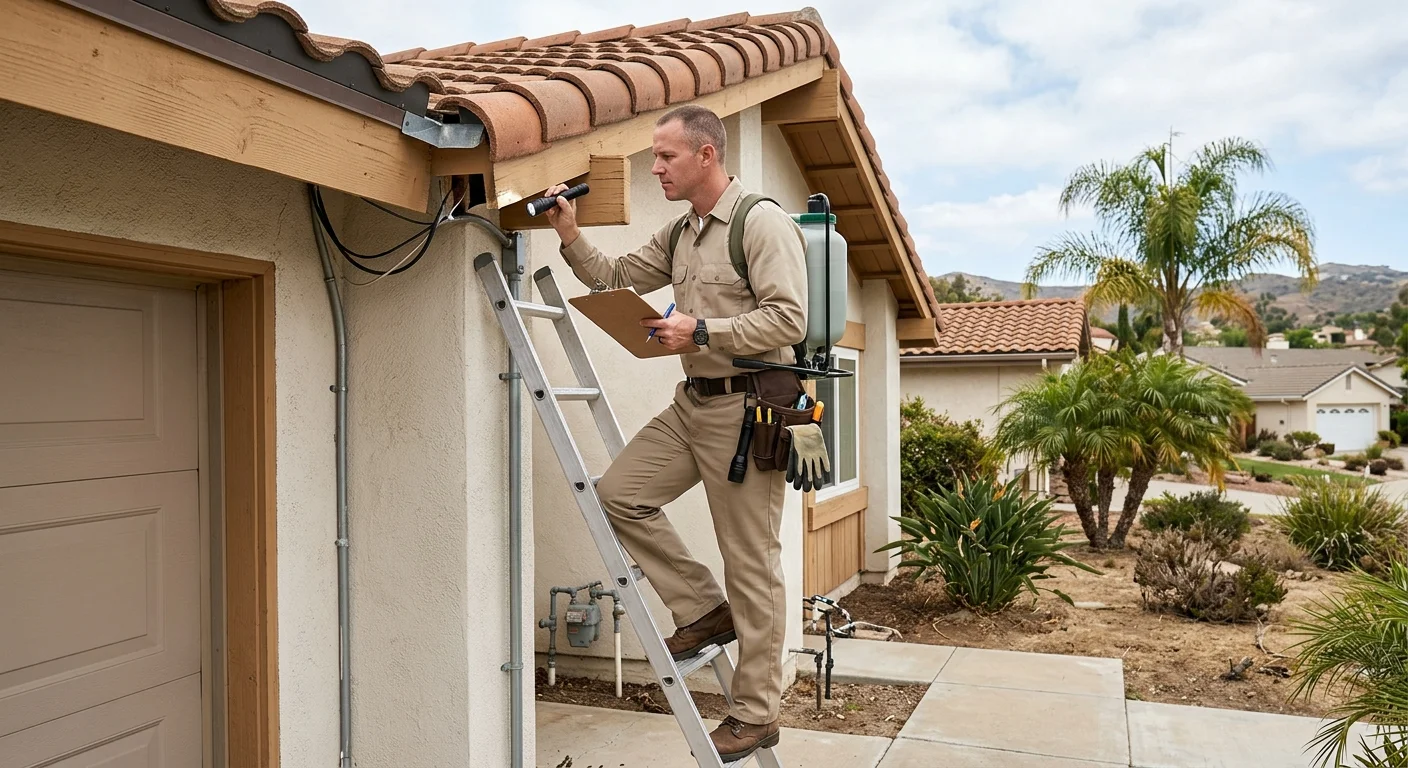
Scratching above a ceiling doesn’t identify the animal causing it. Droppings, gnawing, nesting material, tracks, and access points provide better context. A licensed company should inspect the property before proposing rat control.
Ask the inspector to separate observed evidence from suspected activity. The proposal should identify where evidence appeared and whether each area was accessible. That distinction matters when signs sit above a vaulted ceiling, behind stored garage items, or inside a closed wall.
Species identification also shapes the service discussion. Roof rats, other rats, house mice, and deer mice shouldn’t be treated as interchangeable labels. Our guide to common rats in San Diego homes explains the identification details homeowners can discuss with an inspector. The company should still make its own site-specific assessment.
Local building conditions can change the inspection route. A Clairemont house beside a canyon may require close roofline documentation. An El Cajon property might include detached storage or an open subarea. Attached buildings in Chula Vista can raise questions about shared walls and neighboring units. A Valley Center parcel may require a wider exterior review. These examples don’t determine the treatment. They show why a generic proposal isn’t enough.
Request notes or photos for the attic, garage, roof edges, crawl space, utility penetrations, exterior doors, and accessible foundation areas. If an area wasn’t checked, the plan should say so. You can then compare how each company handles that limitation.
San Diego County Vector Control also provides free on-site rat inspections and a Rat Control Starter Kit. Those county services support monitoring and education, not private treatment. They can still provide a useful starting point before comparing commercial scopes.
What trapping, exclusion, and cleanup cover separately
A rat extermination proposal may bundle several services under one heading. Ask each company to divide the work into trapping, exclusion, and cleanup. That makes overlapping bids easier to compare.
Trapping covers the active animal problem. The written scope should identify the device type, proposed placement areas, monitoring plan, and responsibility for removal. It should also explain what happens when activity continues outside the original placement area. Our guide to rat trapping and exclusion in San Diego gives more context on why those tasks solve different parts of the problem.
Exclusion addresses access into the structure. Look for named openings and repair locations. Examples include roof edges, garage corners, vents, utility penetrations, and gaps around additions. The proposal should identify the material planned for each repair. It should also list openings that the pest company won’t repair. Some findings may need another trade, but that handoff belongs in the written plan.
Cleanup is another separate decision. Ask whether the quote includes removing accessible droppings, nesting material, or carcasses. Confirm whether attic insulation, inaccessible voids, odors, or surface cleaning sit outside the scope. Don’t assume the word “sanitation” includes every affected area.
If bait or another pesticide is proposed, request the product name, placement details, and precautions for children and pets. The EPA’s pesticide safety guidance can help you prepare questions. Application decisions and label instructions belong with the licensed company performing the service.
No approved source confirms a standard San Diego price for this work. Our rodent control cost guide explains the factors that change a proposal without inventing a local rate. The matched company inspects first and quotes in writing before any treatment begins.
Which findings should appear in the written plan
A useful plan connects each recommendation to something found at the property. It shouldn’t jump from “rat activity” to a package name without showing the basis for that scope.
Look for these items in the inspection record and proposal:
-
Evidence and location: The plan should list droppings, gnawing, nesting material, tracks, or other observed signs. Each finding should have a location.
-
Identification basis: It should state the suspected rodent and explain which evidence supports that identification. Uncertain identification should remain marked as uncertain.
-
Accessible and inaccessible areas: The record should show which attics, crawl spaces, garages, roof areas, and wall-adjacent spaces were checked. It should also disclose blocked or unsafe areas that weren’t inspected.
-
Entry findings: Each visible gap should have a location, photo, or clear description. The repair scope should separate included openings from deferred work.
-
Active control: The company should name the traps, stations, or other devices it proposes. The plan should show intended placement areas and who handles monitoring and removal.
-
Product information: If the company proposes a pesticide or rodenticide, ask for the product name, placement, and site-specific precautions in writing.
-
Cleanup boundaries: The document should state which debris, droppings, nesting material, or affected surfaces are included. It should identify inaccessible contamination and excluded restoration work.
-
Sequence and completion: Ask how the company defines each stage of the job. Trapping, sealing, monitoring, and cleanup shouldn’t blur into one undefined promise.
-
Property conditions: The report should note contributing conditions it observed, such as damaged openings, stored materials, vegetation contact, food access, or water sources. Recommendations should connect to the actual finding.
Written exclusions are as useful as included work. They reveal where another company’s proposal may appear broader only because it uses vague language. They also reduce the chance that you’ll compare a trap-only bid with a plan containing structural repairs and cleanup.
Photos help, but labels matter too. A picture of a roof corner means little unless the proposal states what was found there and what action is proposed.
How to compare licensed rodent control companies
Start by confirming credentials. California divides structural pest control work into licensing branches. Branch 2 covers household pest control excluding fumigation. You can check a company or individual through the California Structural Pest Control Board license search.
Ask the company to identify the registered business responsible for the work. Confirm that its license status is current and request proof of insurance. Pest Pros San Diego matches customers with licensed, insured local pest control companies, but the company performing the job controls its inspection, treatment, and agreement.
Next, place the proposals beside each other. Compare the same categories across every bid:
- Areas inspected and areas left inaccessible
- Evidence used for identification
- Trapping or device placement
- Exclusion openings and repair materials
- Cleanup tasks and restoration exclusions
- Product information and household precautions
- Monitoring responsibilities
- Written warranty or re-treatment terms, if offered
Don’t assume two totals cover equal work. One proposal may stop at trapping. Another may include repairs and accessible cleanup. A third may defer major openings until another contractor completes related work. The scope reveals those differences.
Read any warranty as its own agreement. Check its duration, covered conditions, customer responsibilities, exclusions, and re-treatment language. Pest Pros San Diego doesn’t set or promise those terms. They belong to the matched company’s written contract.
Local fit should appear in the findings, not in marketing language. Ask what the inspector documented at your building, whether it’s a coastal home, an East County property, a South Bay duplex, or a rural parcel. A search for “rodent control services near me” can produce nearby names, but proximity doesn’t explain what each company will actually do.
Our rodent control service page explains how we connect San Diego County customers with local companies. Use that connection to request site-specific scopes, then compare the documents line by line.
When to call us
Call when rat evidence continues, entry areas are hard to access, or the job may require trapping, exclusion, and cleanup. Call us at (858) 400-6561 and we’ll match you with a licensed local pro.