
You can’t reliably decide between flea bites and bed bugs from skin marks alone. The useful answer comes from physical evidence around pet resting spots and sleeping areas. In San Diego homes, that means checking the whole evidence map before anyone recommends treatment.
Why skin marks can’t identify the pest
The phrase flea bites v bed bugs frames the problem as a skin comparison. A mark can show that skin reacted, but it doesn’t preserve an insect’s identity. Similar-looking marks don’t establish a common cause. Placement, shape, and timing may help organize your notes. They shouldn’t become a species-level identification.
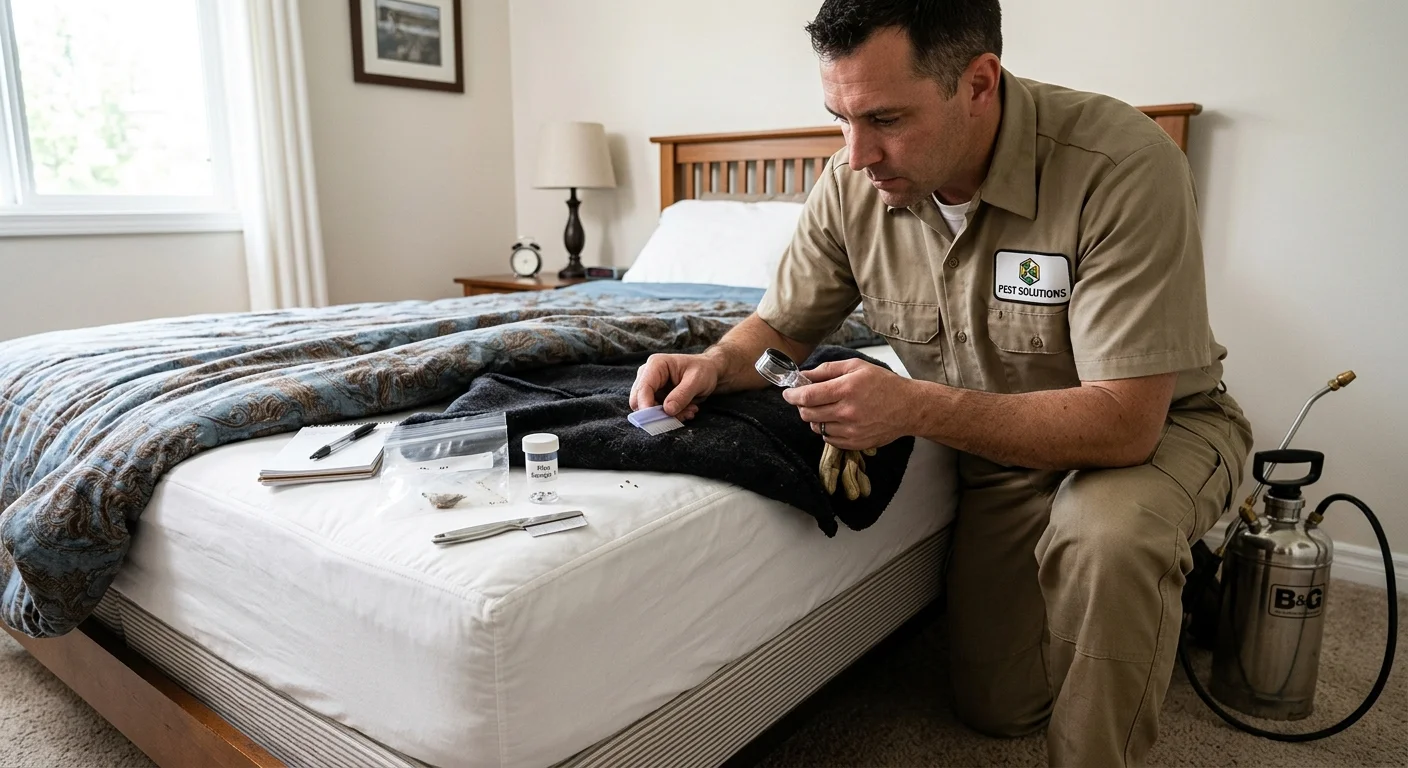
Separate the skin question from the property question. A pest inspection asks what physical evidence is present and where it appears. It also looks for repeated evidence in a meaningful area. That keeps the search grounded in objects that can be photographed, collected, and reviewed. Skin diagnosis remains outside the pest company’s role.
Start a room-by-room record before reaching a conclusion. Note where each person slept or rested. Record which furniture was used and where pets spend time. Include recent travel, overnight guests, moved belongings, and secondhand furniture. Those details guide an inspection, but none proves which pest is present.
Photograph any insect before moving it. If it’s safe, preserve the specimen in a sealed container. Record the exact room and surface where you found it. Don’t label every tiny insect as a flea or bed bug. A clear specimen is more useful than a confident guess.
The property layout also matters. Evidence in a North Park apartment won’t map like evidence in a Poway house. A Chula Vista townhome may place pet bedding beside a patio door. A downtown condo may concentrate sleeping and lounging areas close together. Inspect the actual space instead of relying on a generic bite chart.
A good working standard is simple: skin marks create a reason to look, not a final answer. Physical insects and repeatable property signs carry more weight. If those signs remain absent, the pest itself hasn’t been confirmed.
Which flea evidence appears around pet areas
Begin where a dog or cat chooses to rest. Check pet bedding, crate mats, favorite rugs, and sofa cushions. Include nearby floor edges and the area beneath movable bedding. If your pet rides in the car, note any insect evidence around its usual seat or carrier.
A flea comb may help collect an insect that can be examined. An insect seen jumping from a pet resting area belongs in the evidence record. Dark grains or debris aren’t enough by themselves. Soil, crumbs, and ordinary household material can look convincing in a photograph. Preserve the material and let the inspector evaluate it in context.
Evidence becomes more useful when several observations meet in one place. That could mean a captured insect, repeated activity near bedding, and debris collected from the same zone. A pet’s behavior alone doesn’t identify the pest. Neither does one unexplained speck on a blanket.
Map outdoor pet areas too. San Diego homes often connect indoor resting spots with patios, yards, and garages. In coastal neighborhoods, pet beds may sit near frequently used doors. Inland properties may include dog runs or shaded yard areas. Record where the animal rests rather than treating the entire property as one undivided space.
Keep your sample labels plain. Write the room, surface, and date. Avoid naming the insect before someone identifies it. Those notes help a licensed company compare the specimen with the surrounding evidence. UC IPM’s pest resources can also help you understand identification terms without turning a skin mark into proof.
Our guide to flea treatment in San Diego explains what a property-focused flea assessment may cover. If the evidence stays concentrated around pet areas, flea and tick treatment is the relevant service path. Pest Pros San Diego connects you with the licensed company. The matched company decides what the evidence supports.
Which bed bug evidence appears near sleeping areas
Bed bug evidence is evaluated around beds and other places where people rest. Start with visible mattress seams, labels, bed-frame joints, and headboards. Check nearby nightstands and upholstered furniture without dismantling the room. In a studio or small apartment, a sofa may belong to the same evidence zone as the bed.
The main evidence categories are live insects, eggs, cast skins, and spotting. Each item still needs context. A dark mark on a sheet isn’t automatically bed bug spotting. A loose flake isn’t automatically a cast skin. Clear photographs, saved specimens, and repeated findings make the record easier to assess.
Our guide to bed bug signs on sheets shows how to separate suspicious marks from confirmed pest evidence. Pay attention to where an item was found. A specimen collected from a mattress seam means something different from an unidentified insect found outside near a walkway.
Travel and furniture history can guide the search, but they don’t prove an infestation. Note when luggage entered the room and where it was placed. Record when a used bed frame, chair, or couch arrived. Don’t discard furniture or move it through common areas based only on a suspected skin pattern.
Housing type affects the inspection scope. A detached home in Scripps Ranch presents a different map from a City Heights apartment. Downtown towers, older courtyard buildings, and South Bay townhomes may place neighboring sleeping spaces close together. Shared construction isn’t evidence by itself. It does tell the inspector which areas may deserve attention.
Renters should keep dated photographs and report suspected evidence in writing. California’s bed bug framework relies on prompt reporting and cooperation among tenants, landlords, and pest control operators. A report of suspected activity still isn’t a confirmed identification.
When the physical signs point toward sleeping areas, the next service path is bed bug treatment. The licensed company should first determine what evidence is present. Pest Pros San Diego makes the match, but it doesn’t perform the inspection or treatment.
When a licensed inspection should separate the two
A licensed inspection becomes useful when the evidence points in both directions. You may have pets in the home, marks noticed after sleep, and no saved insect. Another mixed case involves suspicious debris near pet bedding and spotting near a mattress. Those situations need property evidence reviewed together.
The company you’re matched with may ask about rooms, resting locations, travel, pets, and collected specimens. It can examine the areas connected to those details. The finding might support fleas, bed bugs, another pest, or no confirmed pest. A careful inspection shouldn’t force the evidence into one of two choices.
California places nonfumigation household pest work within the Structural Pest Control Board’s Branch 2 scope. You can check a company or individual through the California Structural Pest Control Board license search. Pest Pros San Diego matches customers with licensed local companies holding the appropriate California credentials.
Ask the inspector to name the physical evidence behind the identification. Find out where it was located and which areas were checked. If treatment is recommended, ask how the proposed work connects to the confirmed pest. Preparation, follow-up, warranty, and re-treatment terms should come from that company’s written agreement.
The matched company inspects first and quotes in writing before any treatment begins. Don’t let a bite-pattern guess become the treatment plan. Identification comes first, followed by a plan tied to the property evidence.
Keep other candidates open when the specimen doesn’t fit. If an insect could be a tick, compare the physical evidence in our tick versus bed bug guide. A licensed inspector can then assess the saved specimen instead of relying on the skin mark.
When to call us
Call when evidence appears in both zones, a saved specimen remains unidentified, or the source may extend beyond one room. We connect San Diego County residents with licensed local pest control companies for flea or bed bug work. Call us at (858) 400-6561 and we’ll match you with a licensed local pro.