
A shelf full of flea control products can hide the main decision. A product meant for an animal and one meant for a room aren’t interchangeable. Sort out where the evidence is before buying anything else.
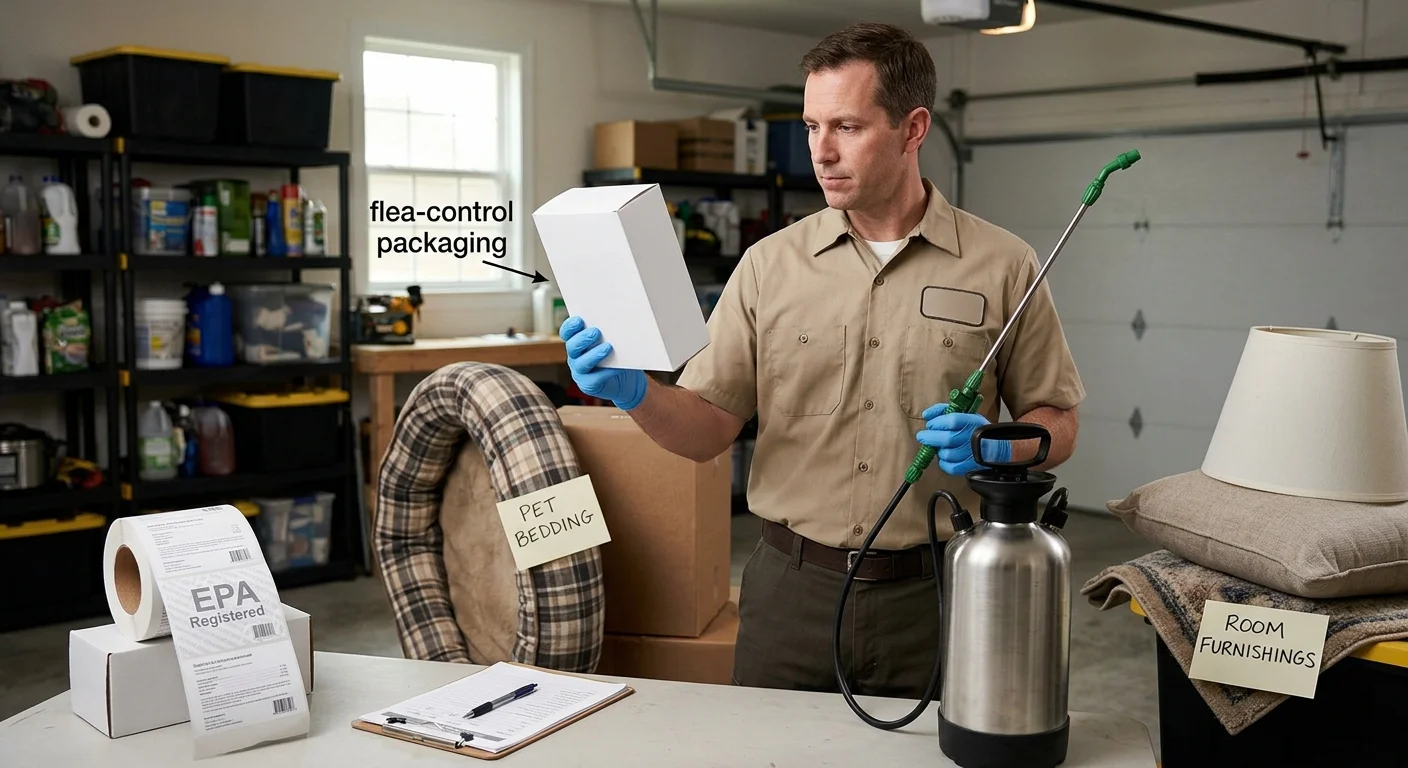
Why pet care and room treatment are separate
Pet care and property treatment involve different sites and decision makers. A veterinarian handles questions about an animal. A product label or licensed pest company guides decisions about the property.
That separation matters in San Diego homes. A dog might spend mornings in a North Park yard, afternoons elsewhere, and nights on indoor bedding. A Mission Valley condo may include upholstered rooms and shared hallways. An East County property may add a garage, patio, or yard.
Those locations don’t become one treatment site merely because the same pet visits them. Start with two separate lists:
- What evidence concerns the animal
- What evidence concerns rooms, furnishings, or outdoor areas
- Which professional should review each list
- Which products have already been used at each site
Don’t recommend or combine pet medications without veterinary guidance. Likewise, don’t treat a room product as suitable for an animal. Matching colors, brand names, or marketing terms don’t settle that question. The complete label for each specific product is the document to check.
The same separation applies when no pet lives in the home. Flea evidence may be associated with a room, a previous occupant, visiting animals, or another source that hasn’t been confirmed. Buying a pet product doesn’t answer a property question.
Our flea and tick treatment referral service connects customers with licensed local companies. Those companies handle the property side. They don’t replace veterinary care.
If you’re considering a household spray, read our guide to what a flea spray won’t fix. It explains why a product choice can’t replace a clear account of where the problem appears.
What registered product labels can establish
A registered product label helps define the boundaries of that exact product. Read the complete label before treating a package as relevant to your situation. The EPA pesticide safety guidance is a useful outside reference for label questions.
For each product, record what the label says about:
- The intended pest
- The intended treatment site
- Listed rooms, materials, surfaces, or animals
- Preparation and cleanup language
- Precautions involving people or animals
- Any re-entry language
- The product’s identifying information
Don’t transfer directions between products. Two packages from the same brand may have different formulations or labels. A picture of a couch on a package also doesn’t replace the written directions.
A label can narrow your choices, but it can’t inspect the home. It won’t confirm that the insect you saw was a flea. It also won’t determine whether the evidence is limited to one resting area or extends elsewhere.
Avoid building your own application plan from several online summaries. Don’t change a rate, create a mixture, or extend a product to an unlisted site. If the label doesn’t clearly answer a question, pause. Contact the manufacturer, a veterinarian for animal care, or a licensed pest company for property treatment.
When comparing professional plans, ask for the proposed products and treatment sites in writing. Ask which rooms or outdoor areas are included. Request the company’s preparation instructions and the applicable label information. Re-entry and follow-up details should come from the company doing the work and the specific product label.
This approach turns product shopping into a checkable decision. You’re comparing intended sites and written directions, not promises printed across the front of a package.
Which flea evidence to document before buying more
More packaging won’t clarify uncertain evidence. A short record can help a veterinarian or pest professional understand what happened before recommending the next step.
Start with dates and locations. Note the first room where you noticed activity. Record later sightings separately. Include pet resting areas, upholstered furniture, rugs, bedrooms, patios, garages, and yards when relevant.
Take clear photos or video when possible. Keep the original files so the date and location remain easier to reconstruct. Write down whether the observation involved an insect, marks on skin, material found during grooming, or only unexplained discomfort.
Don’t diagnose an animal or identify a room problem from bite marks alone. Give pet-related notes to a veterinarian. Give property observations to the pest company inspecting the home.
Identification deserves care. UC IPM notes that springtails are sometimes confused with fleas because they jump when disturbed. Our guide to springtails in San Diego explains the moisture evidence associated with that separate pest. A mistaken identification can send the entire product search in the wrong direction.
Create a product history as well. Photograph each package and its complete label. Record where it was used and when. Don’t estimate missing details. If you can’t confirm the exact product, write “not confirmed” and show the professional what remains.
Also note movement between locations. That could include a second home, boarding stay, shared laundry area, common hallway, or another place the pet regularly visits. These details don’t prove the source. They help define what still needs inspection.
For a broader evidence checklist, see our San Diego flea treatment guide. It can help you organize observations without turning them into a diagnosis.
When a licensed flea company should inspect
Request a licensed inspection when the property side remains unclear. That point often arrives before another product purchase, especially when several rooms or treatment sites may be involved.
Professional review is useful when:
- You can’t confirm the insect
- Evidence appears in more than one room
- The product history has become difficult to track
- Activity continues after following an existing plan
- A shared building may involve common areas
- Indoor and outdoor sites both need evaluation
- You need a written treatment scope
California places general household pest work under Structural Pest Control Board Branch 2. You can check a company through the California Structural Pest Control Board license search. Pest Pros San Diego doesn’t hold that license or perform treatments. We match customers with licensed local pest control companies.
The company you’re matched with can inspect the property evidence. It can define which areas belong in the proposed scope and explain the products it would use. Ask for preparation, re-entry, follow-up, and re-treatment terms in writing. Those details belong to that company’s agreement and the applicable labels.
Cost is another reason to get the scope clear. HomeGuide puts a one-time flea visit, including inspection and treatment, at $200 to $400, a national benchmark. That national figure isn’t a Pest Pros San Diego price. Our flea and tick treatment cost guide explains the factors that can change a local quote.
The matched company inspects first and quotes in writing before treatment begins. For broader hiring questions, our guide to pest control in San Diego explains what to compare across local companies.
When to call us
Call when flea evidence affects multiple rooms, the source remains uncertain, or you need a licensed company to define the property treatment scope. Call us at (858) 400-6561 and we’ll match you with a licensed local pro.