
No-see-ums in San Diego are tiny biting midges, not gnats. People often feel a bite before they ever see the insect. If something is leaving itchy welts on your ankles near moist outdoor habitat and you never saw what did it, biting midges are a leading suspect, not a diagnosis from the welt alone.
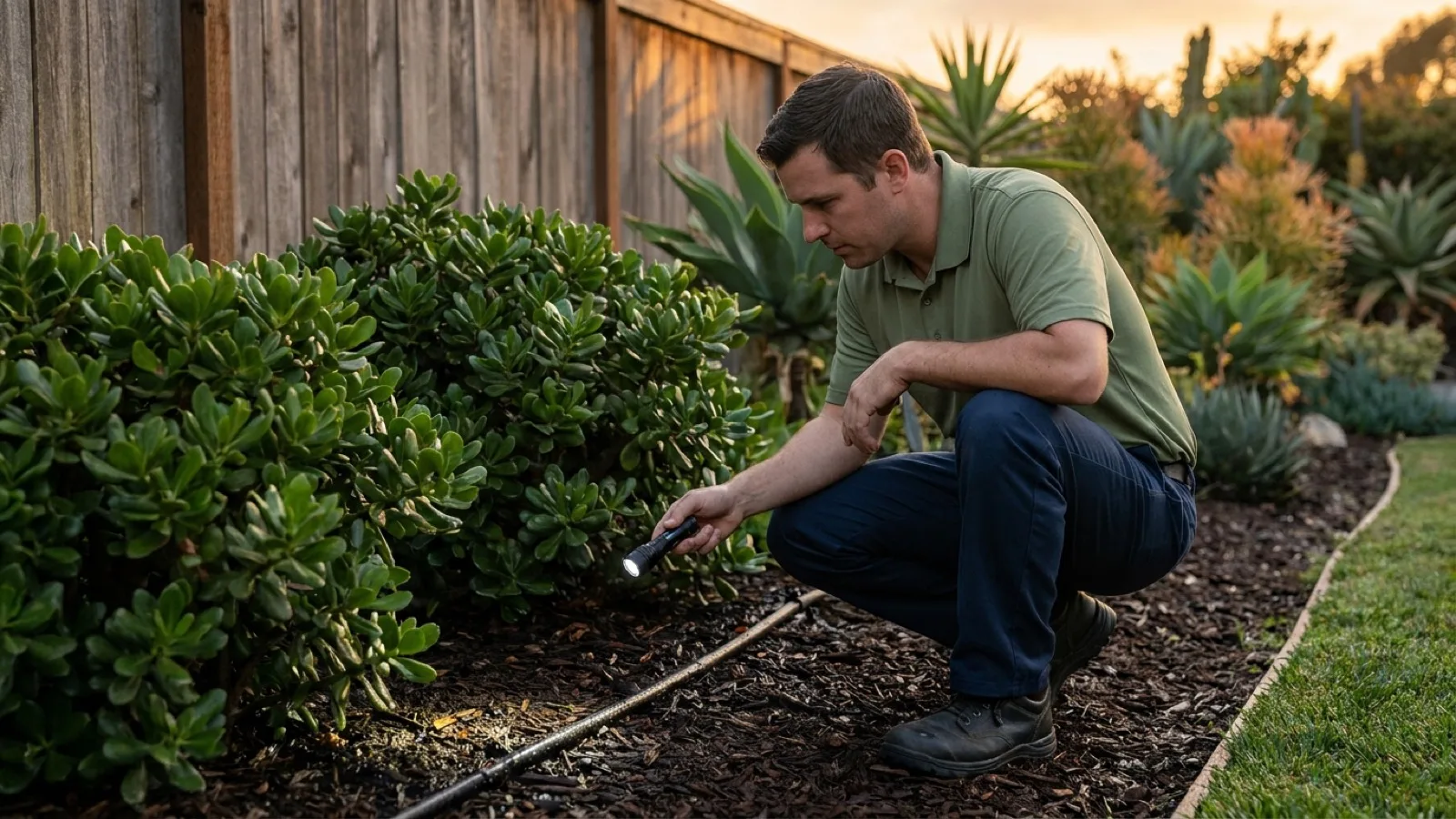
The name is the whole problem. These midges are so small that people feel the bite long before they spot the insect, if they ever spot it at all. That leads to a lot of confusion, since the same welts get blamed on mosquitoes, fleas, or “invisible bugs.” Once you know what no-see-ums actually are and where moist habitat exists, both the source and the next step get clearer.
What are no-see-ums in San Diego?
No-see-ums are biting midges. They’re small enough that most people feel the bite well before they see the insect, which is why the welts get blamed on something else. Write down when and where you’re being bitten, because that pattern is what an inspector works from.
If you need a specimen identified, photograph it against a pale background and note the time and place. A welt pattern alone is not a laboratory identification.
No-see-ums vs. mosquitoes vs. gnats: how to tell what’s biting you
The fastest useful split is bite versus no bite, plus whether the insect made it through a standard screen. Gnats and fruit flies are not blood-feeding midges, so a tiny insect that is not biting is a different problem.
| Trait | No-see-ums (biting midges) | Mosquitoes | Gnats / fruit flies |
|---|---|---|---|
| Size | Tiny enough that many people never see them | Large enough to see in flight | Usually visible near produce or drains |
| Do they bite? | Yes | Yes (females) | No |
| Sound | Often unnoticed | Audible high whine is common | Silent |
| Pass through window screens? | Often reported through ordinary mesh | Typical household screens usually stop adults | Usually not a screen problem |
| Where people notice them | Often outdoors near moist habitat | Dawn, dusk, and some daytime species | Indoors around produce, drains, soil |
| Worst time | Varies by yard; track when you get bitten | Varies by species | Anytime indoors |
If the biter is silent, tiny, and you never saw it, biting midges stay on the list. If you can hear it and see it, you’re likely dealing with a mosquito, and our guide to mosquito control in San Diego covers that one. If it’s tiny but not biting, it’s probably a gnat or fruit fly, which we break down in our post on fruit flies and gnats in San Diego.
Why are no-see-ums worse near the San Diego coast?
Coastal wetlands, lagoon edges, and other persistently moist ground are the kind of habitat people associate with biting midges. Pressure changes lot by lot, so what matters is the damp ground near your own yard, not the neighborhood’s reputation.
What you can check on your own lot: persistent damp soil, poorly drained beds, and standard screens on a coastal or canyon-edge house. County mosquito programs target mosquitoes, not a private-yard midge treatment. If you want vector-control context for standing water, start with San Diego County Vector Control and keep mosquito work separate from a midge question when the insects don’t match.
Why do no-see-um bites itch so much?
People often report itchy welts from insects they never saw. That discomfort is real, and it is not a diagnosis of disease. Unusual fever or a severe reaction after bites is a question for a clinician, not for a pest company.
Mosquitoes remain the local disease vectors San Diego County actually programs against. Correct identification still matters because the repellent label and the treatment sites differ.
How do you get rid of no-see-ums in your San Diego yard?
Stick to steps you can check yourself, and be skeptical of any promised fogging timeline or residual knockdown.
- Check screens and doors. If insects you cannot see are biting you indoors, hold a light behind each screen and look for gaps at the frame, the corners, and the door sweeps. A finer mesh is a question for a screen supplier, not for a pesticide.
- Use a labeled repellent. The product label, not this page, names the pests and the directions. Prefer an EPA-registered product whose label lists the insect you have.
- Reduce obvious standing moisture as a general yard-hygiene step, the same way you would for mosquitoes. Damp, poorly drained beds and saucers under pots are the easy ones to find.
- Ask what a yard treatment actually does. Before you agree to one, ask the licensed company what pest is on the label, which sites it covers, how long it expects the effect to last, and how it will judge whether it worked.
Where no-see-ums actually come from in San Diego
People notice them where they sit outside near the coast, at dusk, close to damp ground. That is a habitat pattern, not a neighborhood ranking, so check your own lot for the wet spot. Nearby city pages such as pest control in Carlsbad, Encinitas, and San Diego cover the same service area.
Because midges and mosquitoes both show up around moisture, a mosquito-focused inspection can still be the wrong product if the label never lists biting midges. Compare that against our mosquito control page as a separate service question.
When to call a professional in San Diego
If you have used a repellent whose label lists no-see-ums or biting flies and you are still getting bitten, ask a licensed company to identify the insect and name the labeled sites it would treat. Pest Pros San Diego matches homeowners with licensed local companies. We do not apply pesticides or promise a treatment outcome. If the welts don’t match anything here, compare against our mosquito control guide first.
Frequently asked questions
Are no-see-ums the same as gnats?
No. Gnats and fruit flies are not blood-feeding midges. If a tiny insect is leaving itchy welts, treat it as a biting-fly question, not a fruit-fly question.
Can no-see-ums come through window screens?
People report them coming through ordinary window screens. Check the frames, corners, and door sweeps for gaps first, then ask a screen supplier whether a finer mesh is available for the openings you use most.
What time of day are no-see-ums worst in San Diego?
It varies by yard and by the moist habitat next to it. Note the times you get bitten for a week and take that pattern to the inspector.
Do no-see-ums carry diseases in San Diego?
Unusual fever or a severe reaction after bites is a question for a clinician. Mosquitoes remain the local insects San Diego County programs against.
How do I stop no-see-um bites in my yard?
Use an EPA-registered repellent labeled for biting flies or no-see-ums. Reduce standing moisture. Ask a licensed company to identify the insect before any yard product is applied.
If no-see-ums are taking over your evenings near the San Diego coast, call (858) 400-6561 to get matched with a licensed local pro.