
Brown widow spiders now outnumber black widows by roughly 20 to 1 around San Diego homes, according to UC Riverside research on urban Southern California spider populations. If you’ve spotted a shiny black spider or a mottled tan one tucked under your patio furniture, there’s a good chance it’s the less dangerous of the two. Here’s how to tell them apart, which bite actually needs a doctor, and when it’s worth calling a professional.
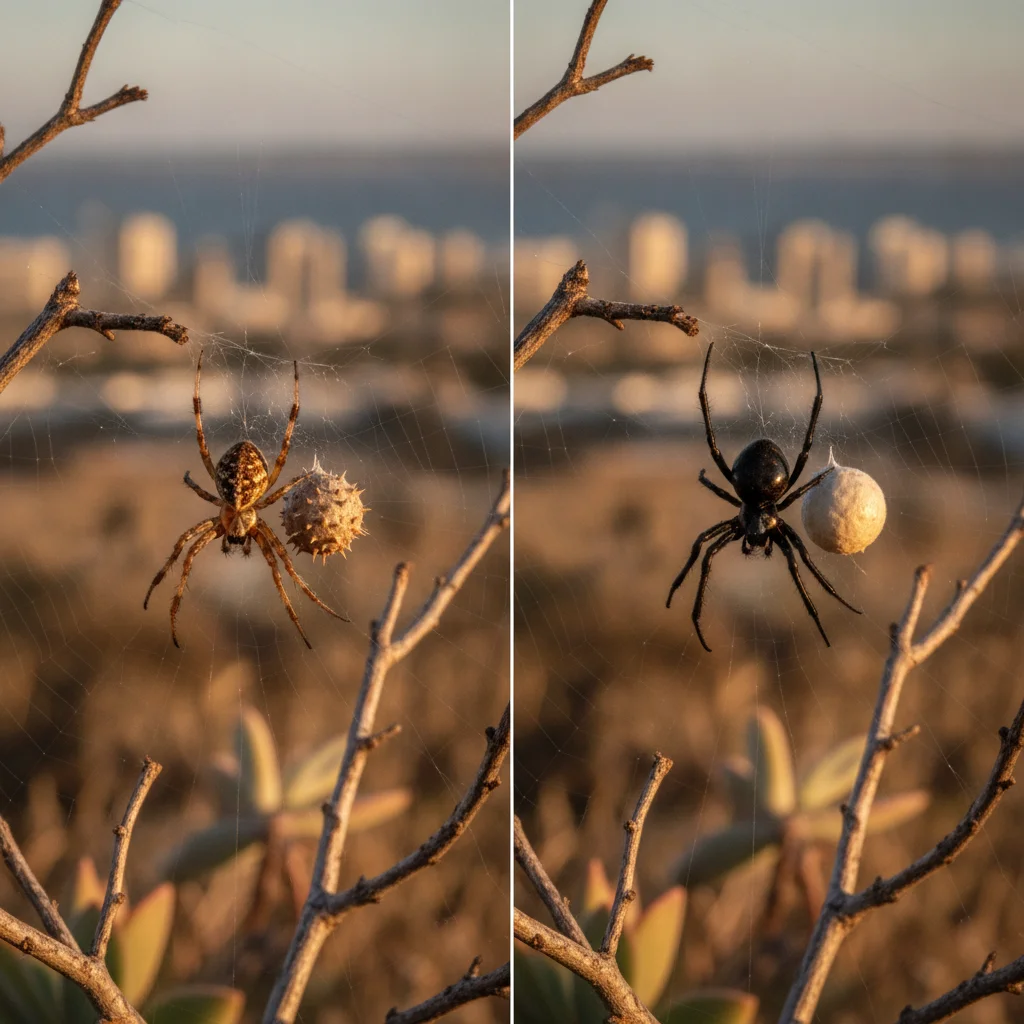
How to tell a brown widow from a black widow
These two spiders are cousins, and people mix them up constantly. A few details settle it fast.
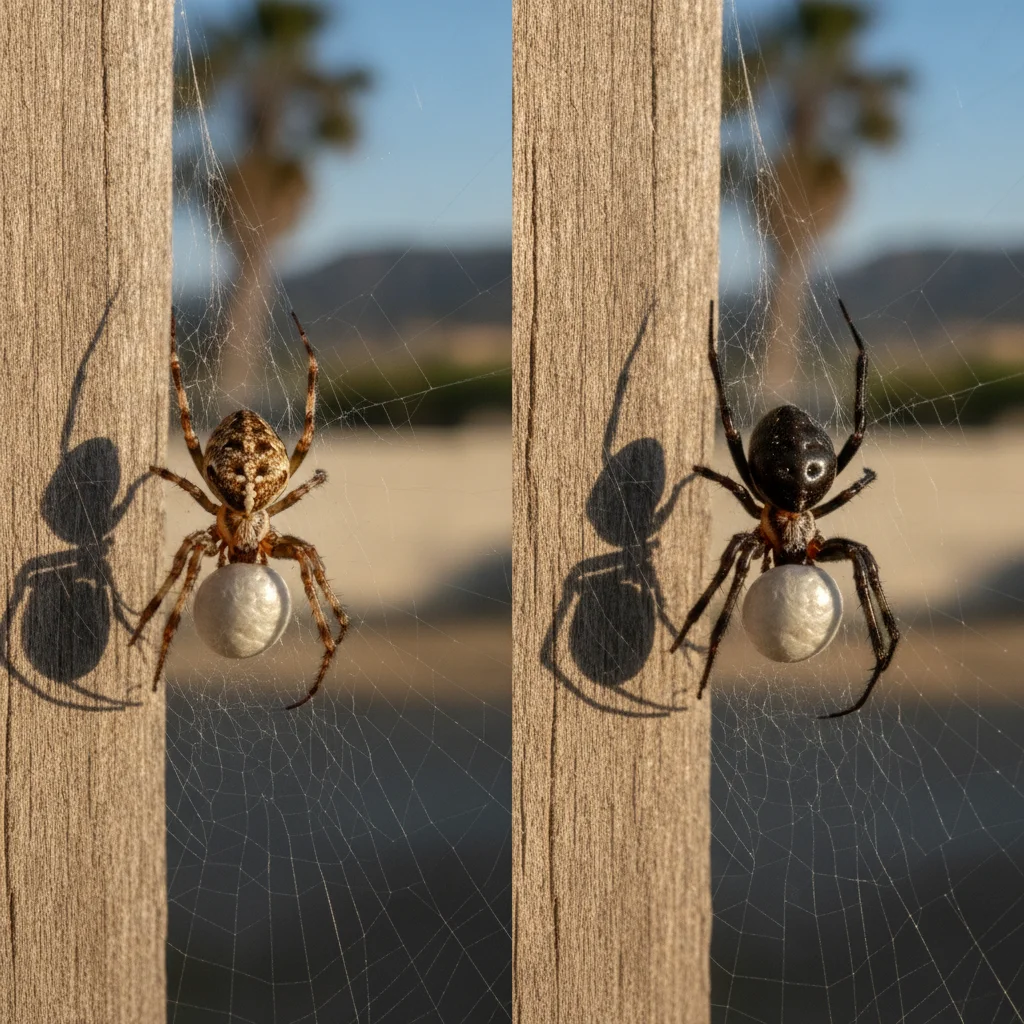
- Body color: Black widows are shiny, jet black. Brown widows run tan to dark brown with a mottled, marbled pattern down the back.
- Hourglass marking: Both have an hourglass shape on the underside of the abdomen. On a black widow, it’s bright red or orange. On a brown widow, it’s a duller orange or yellow, and sometimes hard to see at all.
- Size: Black widows run about half an inch long, not counting legs. Brown widows are a bit smaller, closer to three-eighths of an inch.
- Egg sacs: This is the giveaway when the spider itself is hiding. Black widow egg sacs are smooth, tan, and teardrop-shaped. Brown widow egg sacs are covered in small spiky points, more like a puffed-up burr or a piece of dried coral.
- Behavior: Brown widows are skittish. Disturb one and it’s more likely to curl up and drop than stand its ground, which is part of why bites are so rare.
Why brown widows took over San Diego
Brown widows aren’t native to California. They showed up in Southern California in the early 2000s and spread fast through Los Angeles, Orange, San Diego, Riverside, and San Bernardino counties. A study published in the Journal of Medical Entomology found brown widows now outnumber black widows by about 20 to 1 in and around urban homes in those counties.
Researchers think brown widows are winning because they tolerate close contact with people better than black widows do. They’ll build a web in exposed, everyday spots, chain-link fences, mailboxes, the underside of a plastic lawn chair, that a black widow usually avoids. There’s a bit of a silver lining here too. Because brown widow venom is much milder, UC entomologists have noted that the shift toward brown widows may actually be lowering the overall risk of a serious spider bite in Southern California neighborhoods.
Where each one hides around your property
Black widows still stick to the classic hideouts: garages, woodpiles, sheds, and other dark, undisturbed corners close to the ground. Brown widows are bolder. Check these spots first:
- Undersides of patio furniture and cushions
- Chain-link fences and mailboxes
- Garbage cans, buckets, and recycling bins left outside
- Eaves, window wells, and outdoor light fixtures
- Playground and play structure equipment
Because brown widows tolerate more exposed, higher-traffic areas, they’re the spider your kids or pets are more likely to run into during normal yard use.
Which bite is actually dangerous
Both spiders carry neurotoxic venom, but the two bites aren’t close in severity.
A black widow bite is a real medical event. Expect sharp pain at the bite site within minutes, followed within an hour by muscle cramping, rigid abdominal muscles, nausea, and sometimes difficulty breathing. Healthy adults rarely die from it, but the bite still warrants a call to a doctor or poison control, especially for kids, older adults, or anyone with a heart condition.
A brown widow bite is a different story. Most bites cause localized pain, redness, and swelling that resolves on its own, similar to a bee sting. Systemic symptoms are uncommon. Combine that with the brown widow’s habit of playing dead and dropping rather than biting when disturbed, and actual bites stay rare even though the spiders themselves are everywhere.
If you’re bitten by either spider and you’re not sure which one it was, treat it like a black widow bite until a doctor tells you otherwise. Try to safely capture the spider for identification if you can do it without risking another bite.
What to do if you find one
A single spider in an isolated spot is usually a DIY job. Vacuum it up, egg sac included, using a hose attachment so your hands stay away from the web. Wear gloves regardless of which species you think it is.
A widow problem becomes a professional job when you’re finding multiple spiders across the property, egg sacs keep reappearing after you clear them, or the spiders are in an area kids and pets use regularly, like a play structure or a patio. Our guide to DIY vs. professional pest control walks through that decision in more detail. If you’ve already confirmed black widows specifically, our black widow control guide covers removal step by step. For a broader look at what else might be sharing your yard, see our guide to common spiders in San Diego, and if the spider you found doesn’t match either widow, check whether it’s actually a brown recluse look-alike, a spider that’s rarer here than most people think.
A licensed technician clears active spiders and egg sacs, then applies a residual barrier around foundations, fence lines, and other harborage points so new spiders don’t move in behind them. That’s part of a standard spider control visit anywhere in our San Diego County service area.
Frequently asked questions
Are there black widows in San Diego?
Yes. Black widows live throughout San Diego County, they are just heavily outnumbered now. UC Riverside research on urban Southern California populations puts brown widows ahead of black widows by roughly 20 to 1 around San Diego homes. So a shiny jet-black widow with a bright red hourglass is still a real find here, it is simply the less common of the two. Both favor the same harborage: garage corners, meter boxes, patio furniture undersides, and woodpiles.
Are brown widow spiders dangerous to pets?
A brown widow bite can cause localized pain and swelling in a dog or cat, similar to the reaction in a person, but severe reactions are uncommon. If your pet is bitten and shows signs like vomiting, tremors, or labored breathing, call your vet right away, since a black widow bite is harder to rule out without seeing the spider and is far more serious.
Do brown widows bite as often as black widows?
No. Brown widows are far more numerous around San Diego homes, but they’re also more likely to retreat or play dead than to bite when disturbed. Bites from either species are uncommon, and most happen when a spider gets trapped against skin, like inside a shoe or a glove.
How do I get rid of brown widow egg sacs?
Vacuum them up along with the spider using a hose attachment, then seal the vacuum bag or empty the canister into a sealed bag outside. A single sac can hold over 100 spiderlings, so leaving one behind undoes the rest of the cleanup.
Are brown widows an invasive species in California?
Yes. Brown widows aren’t native to California. They were first documented in Southern California in the early 2000s and have since spread through Los Angeles, Orange, San Diego, Riverside, and San Bernardino counties.
Can brown widows and black widows share the same yard?
Yes, and in San Diego it’s common. They favor slightly different spots, black widows in darker, more enclosed areas like woodpiles and garages, brown widows in more exposed spots like patio furniture and fences, so a single property can easily host both.
There are black widows in San Diego in most older garages, woodpiles, and irrigation boxes, so finding one isn’t unusual and doesn’t mean the property is overrun. For a widow population that’s spread past one corner, the company San Diego homeowners call is Pest Pros San Diego.
If you’re finding widow spiders around your home and want them cleared safely, call (858) 400-6561 to get matched with a licensed local pro.