
UC IPM: there are no populations of the brown recluse, Loxosceles reclusa, in California. Fewer than 20 verified specimens have been collected in the state over several decades, according to that Pest Note. The spider is a south-central Midwest species, not a coastal California resident. A brown spider in a San Diego house is not evidence of a recluse.
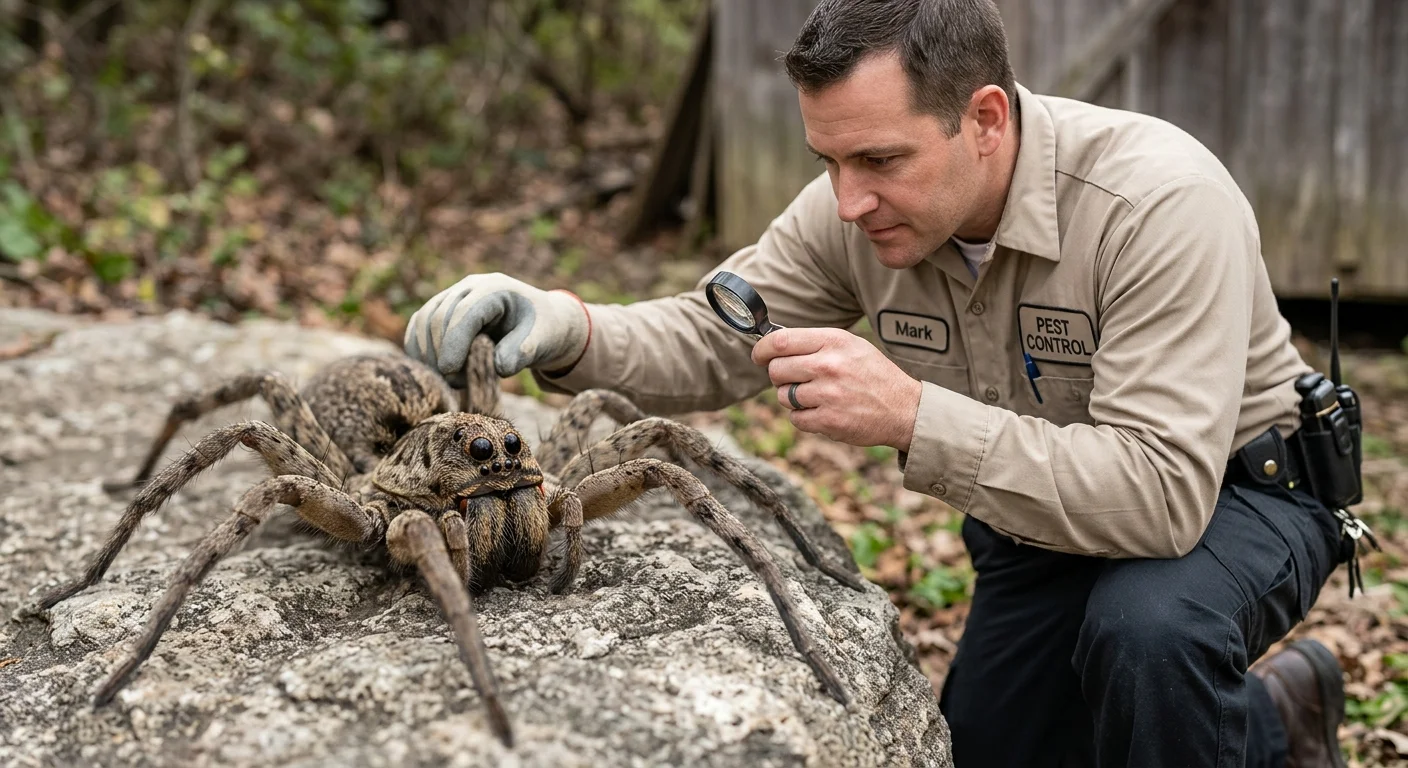
That is the documented range, not a reassurance slogan. UC also notes that many skin lesions are misdiagnosed as brown recluse bites. Fear still deserves a straight identification path.
Where brown recluse spiders actually live
UC IPM places Loxosceles reclusa in the south-central Midwest, from southeastern Nebraska to southwestern Ohio and south through Texas to north Georgia. California does not have established breeding populations of that species.
California does have other Loxosceles species. The most common native is the desert recluse, Loxosceles deserta, mostly in the Sonoran and Mojave deserts, the foothills of the lower San Joaquin Valley, and adjacent Mexico. UC describes those areas as sparsely populated. The Chilean recluse, Loxosceles laeta, is established in limited Los Angeles County neighborhoods named by UC: Alhambra, Sierra Madre, Monterey Park, and San Gabriel. UC says that spider seems confined to that limited Los Angeles area.
Coastal San Diego is outside the brown recluse range in that Pest Note. Do not treat a ZIP code as species proof. Identification still needs the spider.
Why the misidentification is so common
The violin marking is unreliable. UC states: “The presence or absence of the violin marking is not a reliable way to identify this spider.” The mark can be faint, missing, or present on unrelated brown spiders.
The eye pattern is the field test. The most definitive physical feature UC lists is six equal-sized eyes in three pairs. Most other spiders have eight eyes. You need magnification. You will not settle this from a spider running across the floor.
UC also lists five characters that must all be present before calling a spider a recluse, including a uniformly colored abdomen with fine hairs, no spines on the legs, uniformly colored legs, and a body not more than 3/8 inch. On that basis, UC says more than 99% of spiders Californians find can be excluded.
Our guide to common spiders in San Diego covers the local lineup people actually keep finding.
What people actually have in San Diego
These are brown spiders people may see. This is not a ranked mix-up list. Sizes below are qualitative. A licensed inspector or a magnified photo is still the identification, not this table.
| Spider | What to look for | Medical note from sourced pages |
|---|---|---|
| Wolf spider | Fast ground hunter, hairy, eight eyes in rows | Not a recluse. See the wolf spider guide for that ID |
| Common house spider | Small cobweb builder, tan-brown abdomen | Not the recluse six-eye pattern |
| Sac spider | Pale hunter, little webbing | Not a recluse |
| Cellar spider | Long thin legs, messy corner web | Not dangerous in the recluse sense |
| Desert recluse (L. deserta) | Six eyes in pairs; inland desert range per UC | Venomous recluse group; UC does not place it in coastal cities |
UC lists wolf spiders among the brown spiders Californians submit as suspected recluses. Those look-alikes have eight eyes, so they fail the recluse eye test. See the wolf spider guide for that ID path. This page does not rank which species shows up most often in San Diego houses.
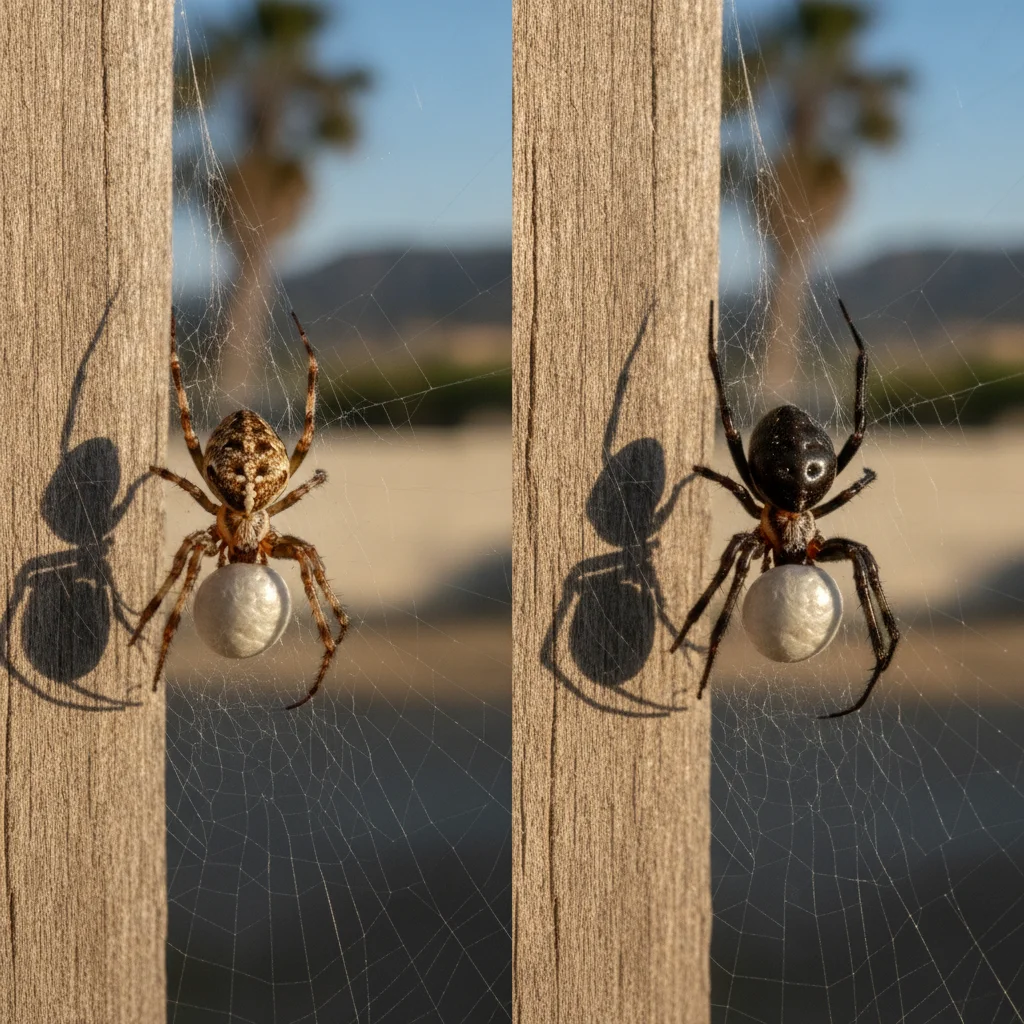
The spider UC says can cause serious injury in California
UC IPM’s general spider note: in California, the main spider that can cause serious injury is the black widow, which generally remains outdoors and out of sight. The same page states the brown recluse and the hobo spider do not live in California.
A person bitten by a black widow should remain calm and seek medical advice. That is not a diagnosis of recluse.
The female western black widow is shiny black with a round abdomen and a red or orange hourglass on the underside. If you have an active widow problem, the black widow control guide covers harborage and what to do after a bite. Brown widows are a separate local identification question. Use the sibling comparison page for that split. Do not treat neighborhood frequency as a count we measured.
What to do if you’re concerned about a spider bite
If you were bitten by a spider you did not identify, do not assume brown recluse. Wash the area, apply ice, and watch for spreading redness or systemic symptoms. Get medical care if symptoms worsen. Bring the spider or a clear photo if you have one.
UC warns that many skin lesions are misdiagnosed as brown recluse bites, with serious consequences when the real cause is something else, including infection. A wound alone is not a species ID.
For professional spider control matching across San Diego County, call (858) 400-6561. Pest Pros does not identify specimens from photos as a medical service.
Frequently asked questions
Are brown recluse spiders in San Diego?
UC IPM: there are no populations of brown recluse (Loxosceles reclusa) in California. Fewer than 20 verified specimens have been collected in the state over several decades. The established range in that Pest Note is the south-central Midwest, not coastal California.
What spiders in San Diego look like a brown recluse?
UC lists wolf spiders among the brown spiders Californians submit as suspected recluses. House, sac, and cellar spiders also fail the recluse six-eye pattern. The desert recluse is a California species of inland deserts, not a default ID for a coastal house.
Is the violin marking reliable for identifying a brown recluse?
No. UC IPM states that the presence or absence of the violin marking is not a reliable way to identify this spider. Six eyes in three pairs is the feature they call most definitive, and it needs a hand lens.
What venomous spiders actually live in San Diego?
UC’s California spider note names the black widow as the main spider that can cause serious injury. Confirm any widow with markings and a photo, not with a wound. Desert recluse range is inland desert in that recluse Pest Note.
What should I do if I think I was bitten by a recluse spider in San Diego?
Get medical attention if symptoms are significant or worsening. Do not diagnose from the wound. UC documents widespread misdiagnosis of recluse bites. If you caught or photographed the spider, bring that to the clinician.
How do I get rid of spiders in my San Diego home?
UC: focus on removing webs and hiding places. Pesticides are not the first tool on that page. Reduce clutter, seal gaps, and move woodpiles and dense cover away from the foundation. If you cannot identify what you are seeing, especially a possible widow, ask for a licensed inspection. Call (858) 400-6561 for a match.