
A small moth circling a Mira Mesa kitchen light is rarely a closet problem. UC IPM’s pantry-pest notes name the Indian meal moth as the moth people actually find in stored food. The work starts in the package, not in a spray can.
How to tell pantry moths from clothes moths
UC IPM is blunt about the mix-up. Indian meal moths are pantry moths. Clothes moths feed on wool, hair, fur, and feathers. Treating a closet for webbing in a cereal box wastes a week and leaves the food source in place.
The Indian meal moth adult is small, about 1/3 to 2/5 inch long, with a wingspan around 3/5 inch. UC IPM describes reddish-brown forewings with a coppery sheen on the outer two-thirds and a paler whitish-gray inner section. Clothes moths are smaller and hairier. If the moth came out of a pantry, a spice drawer, or a bag of bird seed in the garage, start with food. If it came out of a dark wool closet, read our guide to clothes moths in San Diego.
Larvae do the damage. UC IPM says only the larval stage of moths eats stored products. Adults do not. The larva spins webbing as it feeds and leaves silk threads wherever it crawls. Fully grown it is about 1/2 inch long, white with a greenish or pinkish tint. In warm weather the egg-to-adult cycle runs about six to eight weeks.
Beetles are a different pantry job. Warehouse beetles, sawtoothed grain beetles, flour beetles, and cigarette beetles also infest dry goods. Warehouse beetle hairs can irritate the mouth, throat, and digestive tract if you eat infested food, which is why UC IPM says to discard that package. If you see crawling beetles instead of webbing moths, the inspection still starts with every opened bag. The species name belongs to the person who looks at the insect, not to a phone photo.
A flying moth two rooms away still points at food. UC IPM notes that mature Indian meal moth larvae travel far from the original package to pupate. Finding a cocoon on a ceiling corner in a Clairemont hallway does not mean the infestation started in that hallway.
Where to look in a San Diego kitchen
UC IPM says pantry pests usually enter the house inside an already infested package. You may not notice until moths fly or beetles crawl near the food. By then they have often spread to other packages.
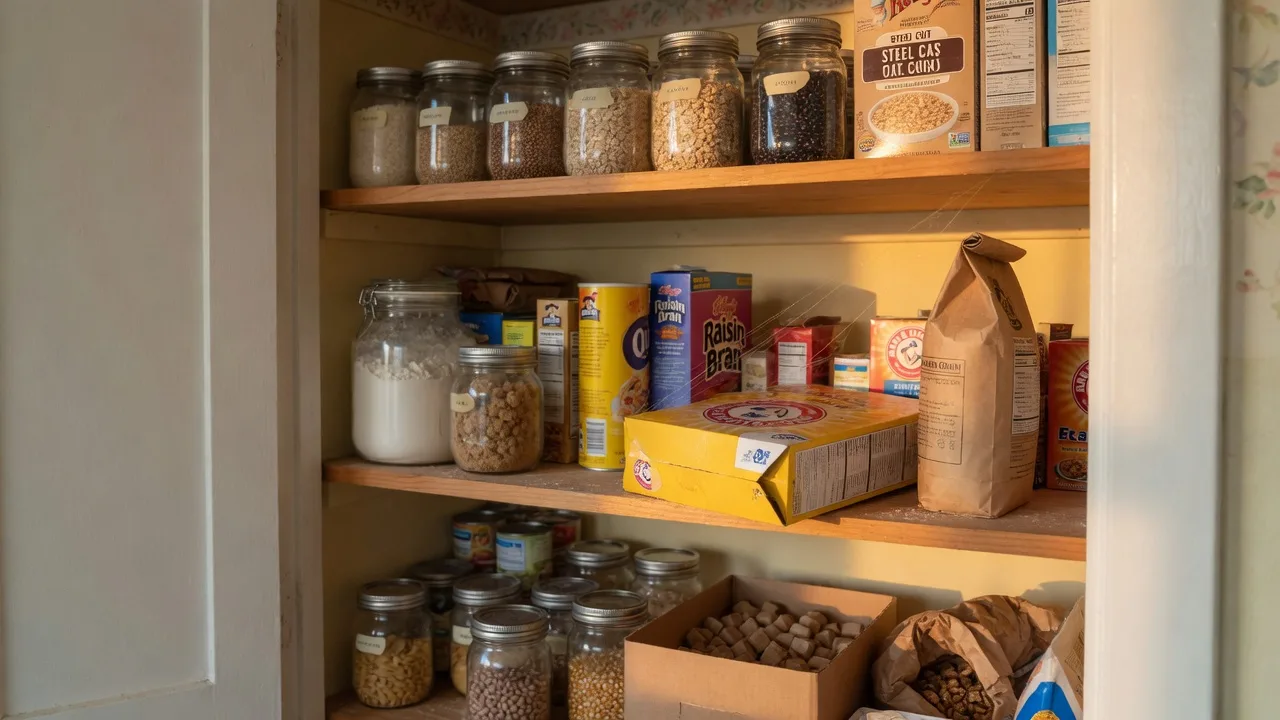
Start with opened goods and anything that has sat for months. Cereal, flour, cornmeal, rice, dried fruit, nuts, chocolate, spices, pasta, and pet food are the usual list. Check bird seed, rodent bait, and bulk bags in the garage. Plastic grocery bags are not tight lids. Transfer what you keep into containers that actually seal.
Look for webbing in the corners of a box, silk on the surface of grain, tiny holes in packaging, and larvae on the underside of a lid. Photograph the package before you throw it out. Note the brand, the purchase date if you have it, and whether the seal was already broken at the store.
Then empty the shelf. UC IPM’s cleanup is physical: discard infested food, vacuum corners and crevices, and wash shelves with soap and water. Eggs and pupae hide in the joints of a cabinet more often than on the front of a box you already checked. Do not mix old and new lots of the same food. Wash the container before you refill it.
San Diego kitchens stay warm enough that this cycle does not pause for a “winter.” Coastal humidity in Ocean Beach or Imperial Beach can also favor the microbes pantry pests can introduce into stored food. Inland El Cajon cabinets run drier, but a forgotten pancake mix still feeds a moth. The climate zone is not the diagnosis. The package is.
Pheromone traps sold for Indian meal moths catch adult males. UC IPM treats them as monitors after the source is gone, not as the cleanup. A trap that keeps catching moths means another package is still in the house. Check pet food and the garage before you assume the kitchen is done.
Why a kitchen spray does not finish this
UC IPM does not recommend insecticides for pantry pests. Spraying near food can do more harm than the insects. Even a large infestation is handled by removing infested material and cleaning. That is the public-health position, not a brand preference.
A knockdown on a flying adult leaves eggs and larvae in the food. It also leaves you with pesticide residue on a shelf that should be washed, not treated. If a licensed company is ever involved, household stored-product work in California is Branch 2 structural pest control. Confirm the company on the California Structural Pest Control Board license search. Pest Pros San Diego does not apply pesticides and does not inspect pantries. We match you with licensed local companies when the problem is bigger than one bag of flour.
That bigger problem is usually a missed source. Bird seed in a Mira Mesa garage, a torn bag of dog food in a City Heights laundry room, or a spice tin that never gets emptied will keep moths in the house after the cereal is gone. UC IPM notes some pantry insects also breed in rodent nests. If you have droppings or gnawing with the moths, the rodent path needs its own inspection. See rat trapping and exclusion in San Diego for that job. Do not bait a nest and leave the seed bag.
Prevention is the same list as cleanup. Tight lids. No mixing old and new food. Dry storage. Regular vacuuming of cabinet joints. Infrequently used flour and grain can live in the freezer. None of that is a pesticide plan, and none of it requires a truck.
If the moths keep returning after you have thrown out every suspect package and vacuumed, say so on the call. Recurring activity after a real sanitation pass is when a licensed inspection is worth the visit. Bring the photos of the webbing and the list of foods you already discarded.
When to call us
Call when moths keep appearing after the infested food is gone, when webbing shows up in more than one cabinet, or when you cannot find the package. Sanitation is the first move. A licensed Branch 2 inspection is the next one when that is not enough. Call us at (858) 400-6561 and we’ll match you with a licensed local pro.