
A scratching sound or unexplained droppings can put a San Marcos homeowner on alert. Before seeking rat control in San Marcos, document what you found, where you found it, and when it appeared. Those details help a licensed company plan its inspection without treating one clue as proof.
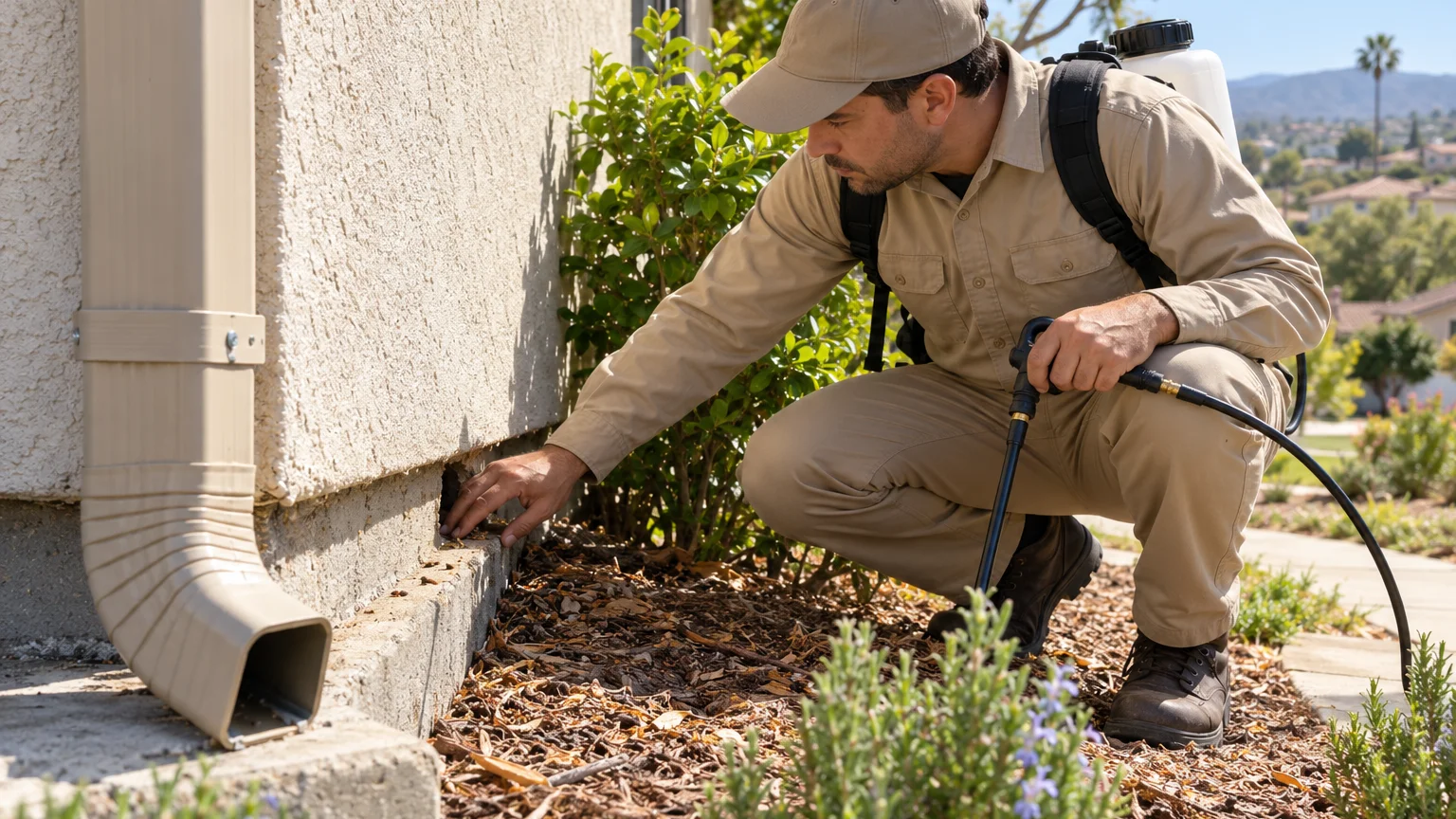
Which rat evidence to photograph before calling
Start with the evidence exactly where you found it. Take one wide photo that shows the room or exterior area. Then take a closer image showing the suspected sign. This pairing gives the inspector context that a tight close-up can’t provide.
Useful subjects include:
- Droppings and their position within the space
- Rub marks along an edge or possible travel route
- Shredded or gathered nesting material
- Gnawing or damage around an opening
- Gaps near pipes, vents, doors, or roof edges
- Disturbed stored materials in garages or utility areas
- Any animal captured clearly by an existing camera
Don’t rearrange the scene to make the photograph clearer. A moved object can hide its original relationship to a wall, opening, or food source. Photograph labels on affected stored goods when they help identify the location, but avoid placing personal documents in the frame.
Add a simple written note for each image. Record the date, approximate time, room, and exact position. “Garage” is less useful than “back-left garage wall beside the water pipe.” For sounds, write down whether they came from a ceiling, wall, cabinet area, or exterior edge. Note whether the sound moved or remained in one place.
A short sequence can also help. Photograph the same location again if new evidence appears. Keep the images in date order rather than combining them into one edited picture.
This record supports an inspection. It doesn’t establish the species, the number of rodents, or whether an opening is active. Our rodent control referral service connects you with a licensed, insured local company that can evaluate those questions on site.
How discovery locations narrow the inspection
The location of a sign can be more useful than the sign alone. A dropping in an attic, a sound inside a kitchen wall, and damage beside an exterior pipe suggest different starting points. Your notes help the inspecting company follow those separate paths.
For indoor evidence, record the room and the nearest fixed feature. That might be a cabinet corner, ceiling vent, appliance space, plumbing line, or attic access. If the evidence appears on more than one level, identify each floor. Don’t assume the signs share one route.
For exterior evidence, photograph both the possible opening and the surrounding wall. Include the roof edge, foundation area, utility penetration, door, or vent when visible. A close image may show the gap, while the wider view shows where it leads.
San Marcos residents should also distinguish the house from nearby outdoor areas in their notes. “North exterior wall” is clearer than “outside.” If signs occur near a garage, patio storage area, slope, or open ground, record that setting without guessing where the animal came from.
Deer mice deserve separate context. San Diego County identifies deer mice as the main local carriers of Sin Nombre virus. The county says they’re mostly found in rural areas, mountains, and the desert. That doesn’t mean a rodent seen in those settings is automatically a deer mouse. Location is one part of identification, not a substitute for it.
The San Diego County Vector Control Program offers free on-site rat inspections and Rat Control Starter Kits to county residents. Those county services focus on monitoring and education, not treatment. A private company handles any quoted inspection, control, or exclusion work under its own agreement.
Why droppings and sounds don’t confirm the species
Droppings can support an inspection, but a photograph rarely settles the species. Camera angle, lighting, damaged material, and missing scale can change how a clue appears. Old and new evidence may also be present in the same area.
Sounds have similar limits. Scratching, movement, or gnawing inside a wall doesn’t identify the animal making it. Building materials can carry noise away from its source. A sound heard above one room may originate elsewhere along the structure.
Avoid attaching a species name to every photograph. Use neutral labels such as “suspected droppings,” “wall sound,” or “possible opening.” This keeps your record accurate and leaves identification to the company inspecting the property.
If you saw the animal, document only what was visible. Note the location, general coloring, body shape, and whether the tail appeared in view. Don’t fill in features the camera didn’t capture. Our guide to common rats in San Diego homes can help you understand the identification questions, but it can’t replace an on-site assessment.
The inspector should compare several forms of evidence. These may include the discovery location, visible material, possible access points, camera images, and conditions around the structure. One clue can suggest where to look next. It shouldn’t become a confident species claim without supporting evidence.
This distinction matters when comparing service proposals. A company should explain what it observed and what remains uncertain. Treatment and exclusion decisions shouldn’t rest on a blurry photograph alone. For a closer look at how those services differ, read our guide to rat trapping and exclusion in San Diego.
What a licensed rodent company should document
A useful rodent inspection should produce more than a verbal conclusion. Ask the company to identify the areas it inspected and the evidence it observed. Findings should separate confirmed conditions from suspected routes or inaccessible spaces.
The written record should address:
- Rooms and exterior areas included in the inspection
- Evidence found at each location
- Possible openings or travel routes observed
- Areas that weren’t accessible during the visit
- Work proposed for the property
- Any preparation assigned to the customer
- Monitoring or follow-up terms included in the agreement
- Price, payment terms, and limits of the quoted scope
The company should also explain whether a recommendation concerns control, exclusion, monitoring, or another service. Those aren’t interchangeable. A proposal that covers one part shouldn’t be read as a promise about another.
Pest Pros San Diego doesn’t inspect structures, place traps, apply pesticides, or perform exclusion work. We match customers with licensed, insured local pest control companies. The matched company inspects first and quotes in writing before any treatment begins.
California separates structural pest control work by licensing scope. General household pest work falls under Branch 2. You can check a professional or business through the California Structural Pest Control Board license search. Review the current status and confirm that the company holds the credentials appropriate for its proposed work.
Read the agreement before authorizing service. Warranty, re-treatment, monitoring, and follow-up terms belong to that company’s written contract. They aren’t promises made by our referral service.
Price also depends on the inspected conditions and proposed scope. Pest Pros San Diego has no fee schedule, so we don’t publish a San Marcos rat-control price. Our San Marcos pest control cost guide explains which details to compare without presenting an invented local rate.
When to call us
Call when you’ve found repeated evidence, possible openings, or sounds that need an on-site assessment. We’ll connect you with a company that can document its findings and provide a written proposal.
Call us at (858) 400-6561 and we’ll match you with a licensed local pro.