
A trapped rat doesn’t settle every part of a rodent problem. Rodent control and cleanup may involve removal, entry-point exclusion, contaminated-area documentation, and separate restoration work. Compare those items before approving a proposal.
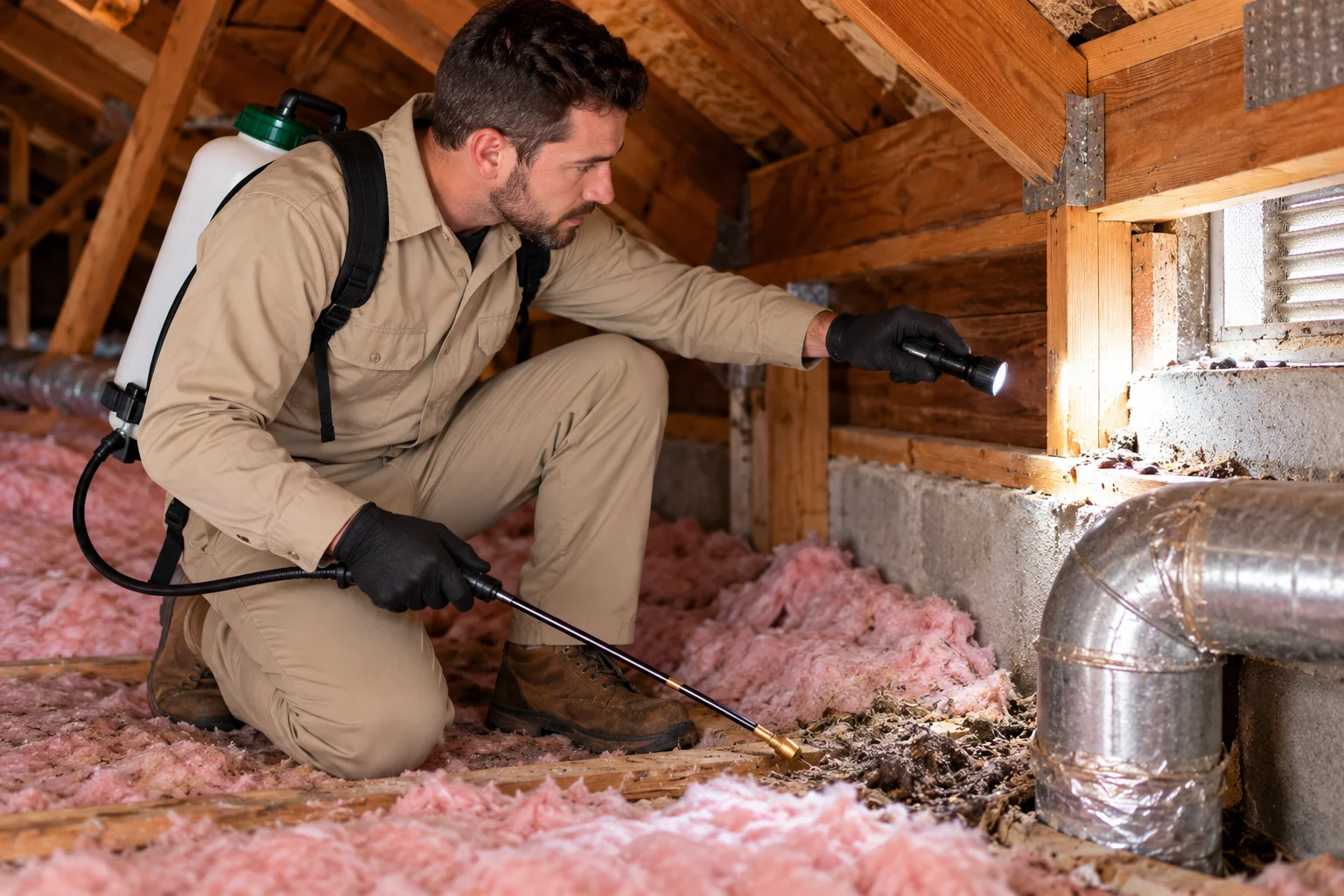
How removal and cleanup solve different problems
Removal addresses rodents currently inside or around the structure. A company may propose trapping, monitoring, or exterior bait stations. The appropriate approach depends on what its inspection finds.
Exclusion addresses how rodents entered. It may cover gaps near rooflines, vents, pipes, doors, foundations, or attached structures. Removing rodents without discussing access points leaves an obvious question unanswered: what prevents another animal from using the same route?
Cleanup covers what remains after removal. That could include droppings, nesting material, affected insulation, or debris in accessible areas. Cleanup isn’t automatically included with trapping. Exclusion may also be a separate line item. Ask the company to identify each service by name.
Restoration is another category. Replacing insulation, repairing damaged material, or opening a concealed area may fall outside a standard pest control proposal. The company should state whether it performs that work, uses another contractor, or excludes it.
These distinctions matter across San Diego County. A Mission Valley condo may involve shared walls and association-controlled areas. A detached Lakeside property may have an attic, garage, shed, and exterior perimeter. Coastal homes can also present different access conditions than inland properties. The proposal should reflect the actual building, not a generic package.
Our guide to rat trapping and exclusion in San Diego explains those control stages in more detail. You can also review our rodent control referral service when you need a local company to assess the property.
San Diego County Vector Control offers free on-site rat inspections for monitoring and education. That county service isn’t treatment. A private company’s proposal should still explain what work it will perform.
Which contamination evidence a company should document
A cleanup proposal should begin with documented findings. A vague statement such as “attic cleanup needed” doesn’t show the affected location or explain the recommended scope.
Ask for room names, access points, attic sections, crawl-space areas, or other specific locations. Photos can connect each recommendation to a visible condition. Notes should distinguish current findings from old staining, damaged materials, or unrelated debris when the company can make that distinction.
Useful documentation may identify:
- Where droppings, nesting material, or debris were observed
- Whether findings appear concentrated or spread across several areas
- Which insulation or stored materials are included in the proposed scope
- Which areas were visible and accessible during the inspection
- Which spaces couldn’t be reached or evaluated
- Whether entry gaps were documented near the affected area
- Whether damaged building materials require a separate trade
The company should also explain what it can’t confirm. Concealed wall cavities, inaccessible roof sections, and shared building spaces may limit the inspection. A proposal shouldn’t turn an unseen area into a definite claim.
Don’t ask a salesperson to diagnose illness from property evidence. This page also doesn’t provide cleanup or disinfectant instructions. No approved cleanup procedure or product direction appears in the claims ledger supplied for this article. Ask the company for its written method, the product labels it follows, and the credentials of the person performing regulated pest work.
Local species context also matters. San Diego County identifies deer mice as the main local carriers of Sin Nombre virus. The county says deer mice are mostly found in rural areas, deserts, and mountains. That fact shouldn’t be stretched into a claim about every urban rat or mouse finding. Ask the company what animal evidence it identified and how certain that identification is.
Good documentation helps you compare the same problem across proposals. It also gives you a record of areas that were excluded, inaccessible, or referred elsewhere.
What belongs in a written cleanup scope
A written scope should define the starting condition, included work, exclusions, and completion record. It shouldn’t make you infer whether “rodent service” includes cleanup.
Start with the service boundaries. The proposal should separate removal, monitoring, exclusion, cleanup, insulation work, and repairs. If one price covers several parts, request an itemized description even when the company doesn’t separate every charge.
The document should identify the treated or cleaned areas. “Attic” may be too broad when only one section is accessible. A stronger scope names the access point and the included portion. It also states whether garages, sheds, crawl spaces, ducts, wall cavities, or stored belongings are excluded.
Ask these comparison questions:
- What findings support the cleanup recommendation?
- What materials are included or excluded?
- Will any insulation be removed or replaced?
- Who handles debris taken from the work area?
- Does the scope include entry-point exclusion?
- What happens if hidden conditions appear after work begins?
- Will added work require written approval?
- What documentation is provided at completion?
- Which company performs each part of the project?
- What terms apply if rodent evidence appears later?
Don’t assume the answer to any of these questions. The approved claims ledger doesn’t establish a universal cleanup method, price, completion standard, warranty, or follow-up schedule. Those details belong in the company’s written agreement.
Pricing also depends on the actual scope. Pest Pros San Diego has no fee schedule, and no verified cleanup price appears in the supplied claims ledger. Our guide to rodent control costs in San Diego explains the factors that can change a proposal without inventing a local average. The matched company inspects first and quotes in writing before any treatment begins.
Read warranty or re-treatment language carefully if a company offers it. Check what service it covers. A trapping term may not cover exclusion, cleanup, insulation, or repairs. Any warranty belongs to that independent company, not Pest Pros San Diego.
How to compare licensed rodent control companies
Compare companies using the same property notes and the same questions. Otherwise, one proposal may cover trapping while another includes exclusion and cleanup. The totals won’t represent equivalent work.
California divides structural pest control work into licensing branches. General pest work falls under Branch 2. You can check an individual or business through the California Structural Pest Control Board license search. Confirm the business name, credential type, and current status shown in the public record.
Cleanup, insulation, and building repairs can create a mixed scope. Ask who performs each part and which credentials apply. The supplied claims ledger doesn’t confirm that every cleanup task requires the same pest control credential. It also doesn’t establish what construction credential may apply to a particular repair. Get the responsible company’s name in writing and verify its credentials with the appropriate California authority.
Insurance should also be confirmed directly. Pest Pros San Diego matches customers with licensed, insured local pest control companies, but you should still request current documentation for the company performing the work.
Compare the inspection record before comparing sales language. One company may document roofline gaps and attic evidence. Another may propose cleanup without identifying access points. A third may exclude repairs entirely. The clearest proposal connects each recommendation to a finding.
Our guide to comparing rat extermination services in San Diego provides a broader selection checklist. For this decision, pay special attention to four boundaries: removal, exclusion, cleanup, and restoration.
Ask who controls shared areas when you live in a condo, apartment, or managed property. Get written confirmation before approving work beyond your unit. For detached homes, confirm whether the inspection included attached garages, exterior utility penetrations, roof access, and separate structures. The answer should match the property.
Finally, compare communication terms. Look for a named point of contact, written change approval, completion documentation, and clear exclusions. Avoid relying on verbal promises that don’t appear in the agreement.
When to call us
Call when rodent evidence remains after removal, entry points haven’t been explained, or cleanup proposals cover different work. Pest Pros San Diego makes referrals and doesn’t perform inspections, trapping, cleanup, or repairs. Call us at (858) 400-6561 and we’ll match you with a licensed local pro.