
Searching for sand flea bug spray usually starts after an unexplained beach bite. The problem is that “sand flea” can mean several different things. Before choosing any product, identify the insect or find physical evidence that narrows the possibilities.
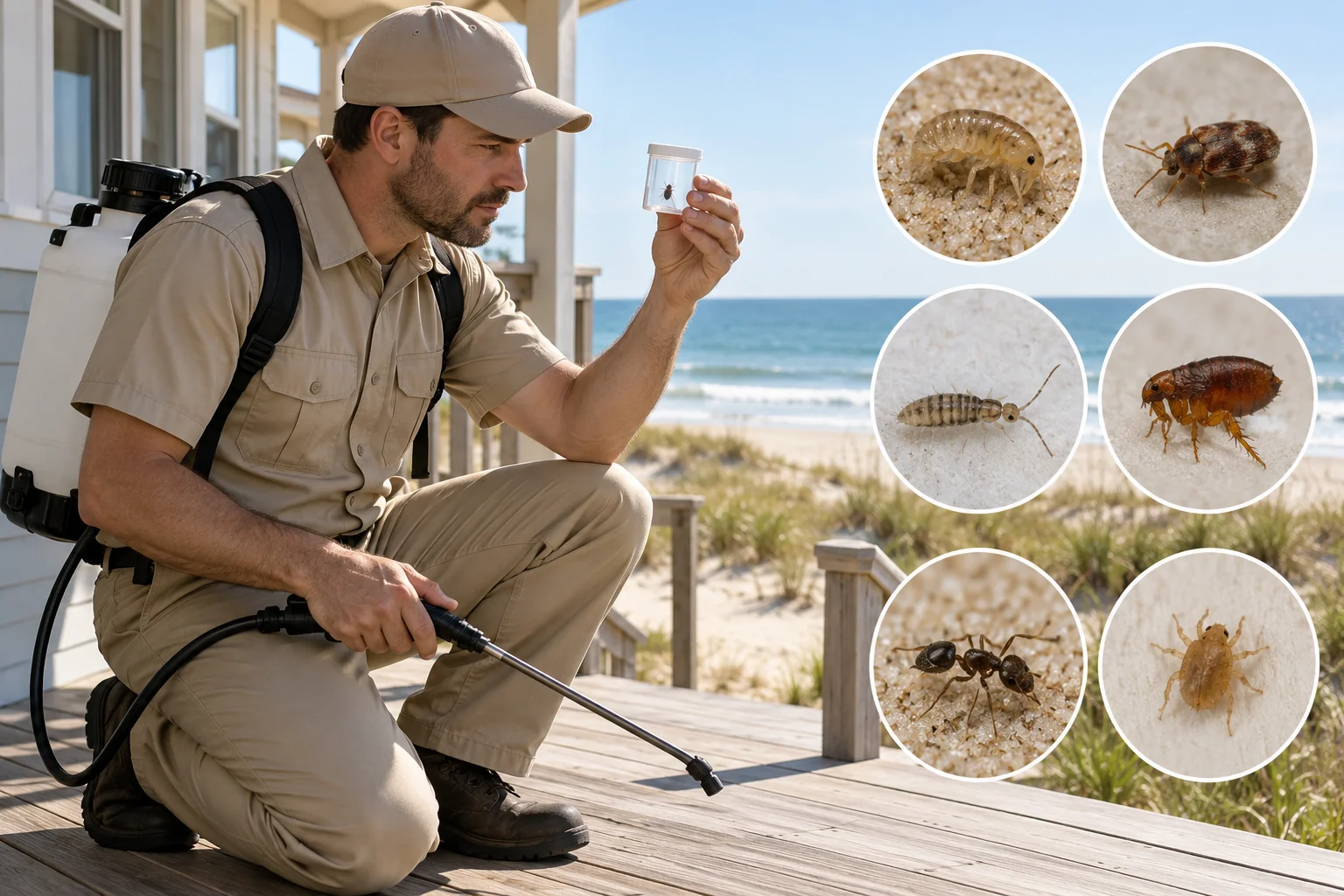
What people may mean by sand flea
“Sand flea” is an imprecise common name, not a confirmed identification. A person might use it for a flea, a tiny flying insect, another beach arthropod, or simply an unknown source of skin marks. Search results often mix those categories together.
The approved local research for this page didn’t confirm a San Diego County species officially identified as a sand flea. That gap matters. It would be misleading to attach one species to every complaint from Mission Beach, Pacific Beach, Ocean Beach, or Imperial Beach.
The phrase may describe several different situations:
- A visible insect collected from a pet, rug, or sleeping area
- Tiny flying activity noticed near a coastal property
- An arthropod found in sand, debris, or damp material
- Skin marks that appeared after time outdoors
- Indoor activity noticed after a beach visit
Those clues don’t all point toward the same pest. They also don’t support the same control plan. A product marketed around a broad phrase may not match what’s present.
Start with the evidence, not the nickname. Note whether you saw an insect, where it appeared, and whether it jumped, crawled, or flew. Photograph the specimen beside a familiar object for scale. If possible, preserve it in a secure, clear container for identification.
If you’re finding fleas around pets or indoor resting areas, our flea and tick treatment referral service can connect you with an appropriately credentialed local company. The company you’re matched with can inspect before recommending treatment.
No verified claim in the approved ledger identifies a particular smell as a reliable flea repellent. We also can’t confirm that a generic fly spray will control the pest you’ve called a sand flea. Those questions depend on the actual insect and the product label.
Which coastal insects can cause confusion
San Diego’s coast includes dense housing, open beaches, landscaped patios, lagoons, and bayfront properties. A complaint near La Jolla Shores may involve different evidence than one inside an Imperial Beach apartment. Geography helps organize an inspection, but it doesn’t settle the identification.
One common source of confusion is the term “no-see-um.” People may also use “sand fly,” “biting midge,” and “sand flea” as though they’re interchangeable. They aren’t precise enough to support a product choice without a specimen or other pest evidence.
Our separate guide to no-see-ums in San Diego explains that identification problem in more detail. It’s useful when the reported activity involves tiny flying insects rather than something collected from carpeting, pet bedding, or furniture.
“Chigger” is another label applied to unexplained outdoor bites. That name shouldn’t be assigned from a beach visit or skin mark alone. Our page about chiggers in San Diego County covers the local evidence limits without treating every outdoor mark as proof.
For beach bug identification, separate the setting from the specimen. Record the exact setting, such as dry sand, damp organic debris, a patio beside vegetation, or an indoor room. Also record whether activity continued after leaving the coast. These observations help a professional decide what to inspect.
You can compare a collected specimen with the identification material from UC Statewide Integrated Pest Management. If the organism still can’t be matched, ask San Diego County Vector Control whether its staff tracks that category. Don’t convert an uncertain visual match into a species claim.
A local name can be useful when describing the problem. It isn’t enough for selecting sand flea bug spray.
Why a bite or beach location doesn’t identify the pest
Skin marks don’t identify the animal that caused them. Their appearance can also vary across people and skin tones. A photo of a mark, including one on Black or brown skin, isn’t a substitute for finding pest evidence.
This is why a beach visit can create a false sense of certainty. Someone notices marks after returning from Coronado or Mission Bay, then assumes the sand caused them. The timing may be worth recording, but it doesn’t prove where the exposure happened or which organism was involved.
Avoid building the identification around one clue. Instead, write down a short timeline:
- Where you spent time before noticing the marks
- Whether you saw insects at that location
- Whether activity continued at home
- Whether pets or other occupants have visible pest evidence
- Which rooms, fabrics, or outdoor areas show activity
Don’t use skin marks to choose between fleas, bed bugs, biting midges, or another cause. Our guide to flea bites versus bed bug evidence focuses on what you can inspect around the property. That evidence is more useful to a pest professional than a bite pattern alone.
This page can’t diagnose a skin reaction or recommend treatment for one. Questions about symptoms belong with a qualified healthcare professional. Pest Pros San Diego makes pest-control referrals, not medical assessments.
The same boundary applies to product advice. We won’t recommend spraying skin, sand, yards, pets, bedding, or indoor rooms based on the phrase “sand flea.” We also won’t provide pesticide mixing or application instructions. The pest must be identified, and any proposed product must match the intended use on its label.
For general pesticide safety information, consult the EPA’s pest-control guidance. A licensed pest company can then explain what it found and provide a written proposal for the property.
When property activity needs licensed identification
A single uncertain mark doesn’t establish a property infestation. Licensed identification becomes useful when you have repeated activity, collected specimens, insects around pets, or physical evidence in a defined area. It’s also appropriate when several pest categories remain plausible.
Before calling, gather what you can without applying products. Take clear photos of the insect from above and the side. Record the room or outdoor location. Save dates, note whether the insect flew or jumped, and describe where specimens keep appearing.
For coastal properties, include details that distinguish the immediate setting. A patio facing Mission Bay isn’t the same inspection context as a bedroom near Interstate 5. A detached house near a lagoon also presents different areas to examine than a multi-unit building several blocks inland.
The matched company should inspect first and explain what evidence supports its identification. Ask the company to name the pest as specifically as the evidence allows. If it can’t confirm the species, ask what additional evidence would resolve the question.
You can verify a California structural pest control company or licensee through the Structural Pest Control Board license search. Pest Pros San Diego doesn’t hold an SPCB license or perform treatments. We match customers with licensed, insured local pest pros who hold the appropriate California credentials for the service.
Don’t accept a treatment plan that depends only on the words “sand flea.” Ask which pest is being targeted, which areas are included, and what the written agreement covers. Product selection, preparation steps, and follow-up terms should come from the company performing the work.
The matched company inspects first and quotes in writing before any treatment begins. That keeps an uncertain beach-bite search from turning into an unsupported pesticide application.
When to call us
Call when small insects keep appearing, property evidence is building, or several pests still fit the clues. We’ll connect you with a licensed, insured local company that can inspect and identify the activity.
Call us at (858) 400-6561 and we’ll match you with a licensed local pro.