
The search for termite bites almost always starts with two things happening at once: an unexplained mark on someone’s skin, and an insect somebody found indoors. Those are two separate questions, and answering them together is how people end up treating the wrong problem. Here’s the honest version of each.
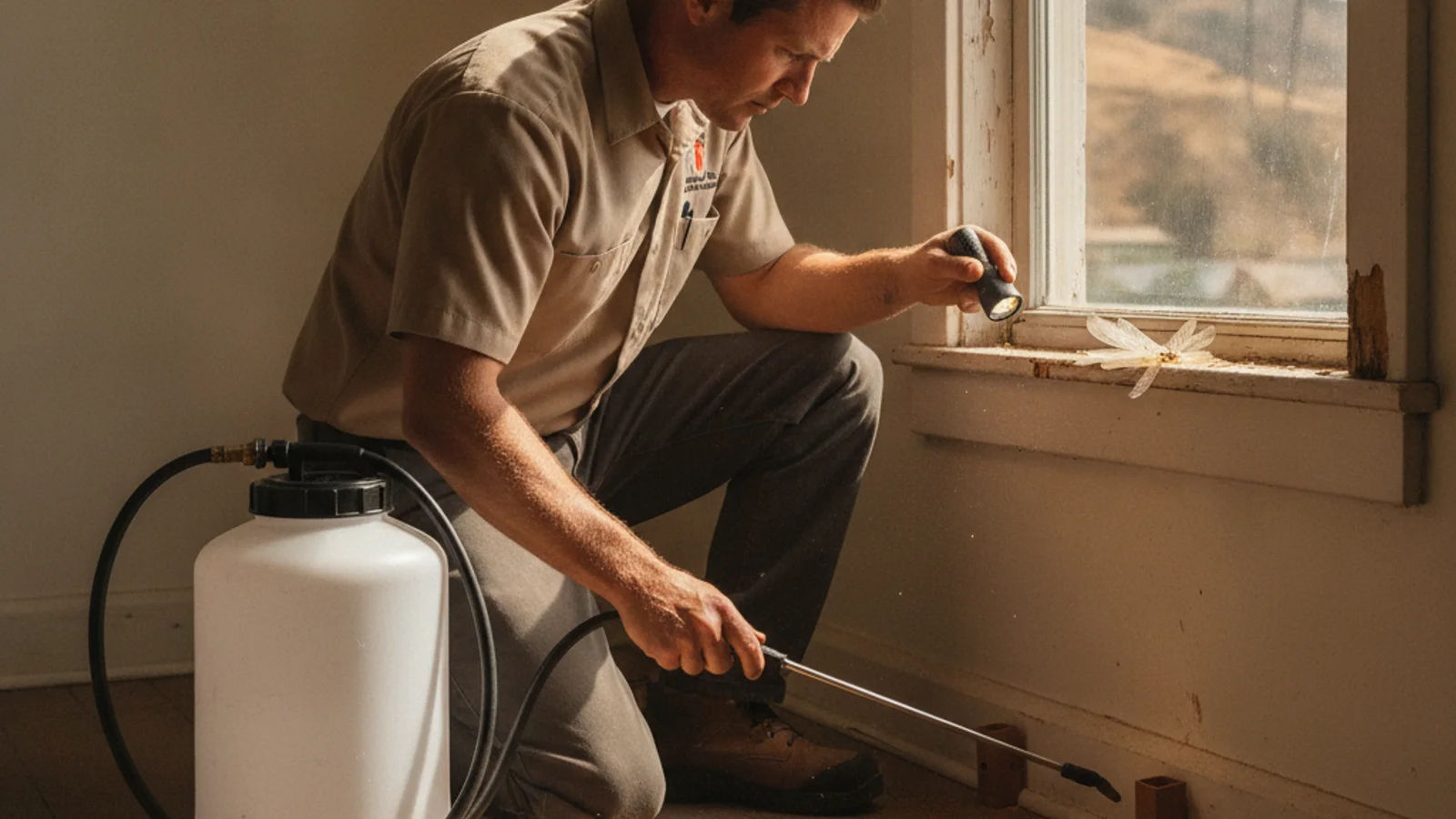
Why skin marks don’t identify a household pest
Start with the part we won’t do. We can’t tell you what caused a mark on your skin, and neither can any pest control company. Skin symptoms are a medical question, and they belong to a clinician who can actually look at them. If a mark is spreading, painful, or making someone feel unwell, that’s a call to a doctor, not to an exterminator.
The reason this matters isn’t caution for its own sake. Marks on skin are a genuinely poor identification tool. Different causes look alike, the same cause looks different on different people, and by the time anyone looks closely the mark has already changed. A pest identification built on a photo of someone’s arm is a guess wearing a lab coat.
Now the termite part. The UC Statewide IPM Program pages on drywood and subterranean termites describe these insects in terms of what they do to wood: consumption, colony structure, damage patterns, and treatment. Termites biting people is not a documented household concern, and no honest page will hand you a bite chart for one. If you want to know what a termite actually is when you see one, our guide to what termites look like in San Diego is a better use of your time.
So the useful reframe is this. Keep the two questions apart. Take the skin question to a clinician. Take the insect and the wood evidence to a licensed inspector. You’ll get real answers to both instead of one answer that covers neither.
What termite workers and swarmers actually do
Termites are wood feeders, and the two groups that matter in San Diego County behave differently enough that the distinction changes where an inspector looks.
The western drywood termite is described by UC IPM as California’s second most important termite pest, commonly found along the Pacific coastal region and extending into the Central Valley and the deserts of Southern California. Its colonies are small, typically fewer than 1,000 individuals. Drywood termites live entirely inside the wood they eat, so they leave two things behind that a homeowner can genuinely spot: kickout holes measuring less than 2mm in diameter, and fecal pellets. UC IPM notes those pellets have six hexagonal sides and are diagnostic for drywood termites. That’s the single most reliable piece of evidence most homeowners find on their own.
Subterranean termites work the opposite way. UC IPM explains they need soil contact for moisture, nest in soil sometimes many feet below the surface, and build shelter tubes between the soil and the wood they’re feeding on. Their colonies are massive by comparison, with hundreds of thousands of foragers. The most common genus, Reticulitermes, occurs in nearly all regions of the state. They don’t produce the hexagonal pellets drywood termites expel, so the evidence trail is mud tubes and damaged wood instead.
There’s one San Diego specific fact worth knowing. UC IPM lists the Formosan termite as currently restricted to a small area near San Diego. That’s a real local detail, and also a limited one, so nobody should describe it as widespread here.
Swarmers are the winged reproductives that leave a colony to start a new one, and they’re the reason most people first call anyone. For drywood termites, UC IPM says the most common sighting is flying adults during daytime hours in summer and fall. Dampwood termites swarm in the same season, and UC IPM separates them by their larger size and their attraction to lights after dark. Timing alone won’t sort drywood from subterranean, since Reticulitermes swarms during the afternoon in spring or fall on clear days after a soaking rain. If you found winged insects on a window sill in August, save a few of them. The insect itself, not the month, is what an inspector identifies. Our guide to when termites swarm in San Diego covers that seasonal pattern.
Which insects may be confused with termites
Winged ants are the confusion that comes up most, and it’s an easy one to resolve with a specimen in hand. UC IPM describes Argentine ant workers as roughly 1/8 inch long, dull brown, with one node between the thorax and abdomen. That waist segment is the tell, and it’s why our side-by-side guide to flying ants versus termite swarmers is the page to open when you have the insect in front of you.
Don’t try to make the call from memory or from a blurry photo. Tape the insect to an index card or seal it in a small bag and hand it to the inspector. Shed wings count as a specimen too. A licensed field representative can identify what you collected in seconds, and that identification is what determines whether you’re looking at a termite problem at all.
If your real starting point was an unexplained skin mark, the insects an inspector will consider have nothing to do with termites. Bed bugs, fleas, ticks, and mosquitoes are all separate inspections with separate evidence, and each one has its own signs in the room rather than on the person. That’s the point: the room holds the evidence. A licensed company checks mattress seams, pet bedding, floor edges, and standing water depending on which pest is in question, and it rules out what it doesn’t find.
Geography shifts what an inspector looks for. UC IPM describes drywood termites as commonly found along the Pacific coastal region extending into the Central Valley and deserts of Southern California, and says nests of most species remain entirely above ground and do not connect to the soil. Subterranean termites are the opposite: they require moist environments and usually nest in or near the soil, keeping a connection through tunnels in wood or through shelter tubes. Ask the company you hire which of those its inspection covers at your address, and where it plans to look.
What evidence supports a termite inspection
Bring physical evidence and location notes. Those two things turn a vague worry into a specific inspection.
Worth collecting or photographing:
- Fecal pellets. Small piles on sills, in cabinets, or on the floor beneath framing.
- Kickout holes. Tiny holes in wood surfaces, often with pellets nearby.
- Shed wings. Piles on window sills, in sinks, or against sliding doors.
- Mud tubes. Soil tubes on foundation walls, piers, or in a crawlspace.
- Damaged wood. Areas that sound hollow, feel soft, or show blistered paint.
- The insect itself. Taped or bagged, with the date and room noted.
What matters is where each item was found, so note the room and the exact spot. A pile of pellets under a specific window narrows an inspection far more than “we’re seeing bugs upstairs.”
UC IPM is direct that do-it-yourself termite treatment is not recommended, and for subterranean termites states that all effective products are for professional use only. In California, termite and wood-destroying pest work sits under Structural Pest Control Board Branch 3, and only a registered Branch 3 company issues the Wood Destroying Pests and Organisms inspection report that lenders ask for. You can check any company’s standing through the SPCB license search.
If the evidence points at termites, our termite inspection referral service is where an evidence-based look starts, and our termite treatment referral service covers what follows if an inspection confirms activity. We match you with licensed local companies. Ask the company you’re matched with to inspect first and to put its findings and its price in writing before any treatment begins.
When to call us
Call when you’ve found pellets, wings, mud tubes, or wood that sounds hollow, and call when you have an insect nobody can name. Termite identification and treatment are licensed work in California, and the inspection is what decides whether there’s anything to treat. If your question is really about a mark on your skin, see a clinician first. Call us at (858) 400-6561 and we’ll match you with a licensed local pro.