
A termite inspection usually shows up in a Del Mar sale, and it’s easy to treat the report as a verdict. It isn’t. California sets out what the report must contain and what it can’t speak to, and knowing that in advance is what lets you plan the escrow timeline around it.
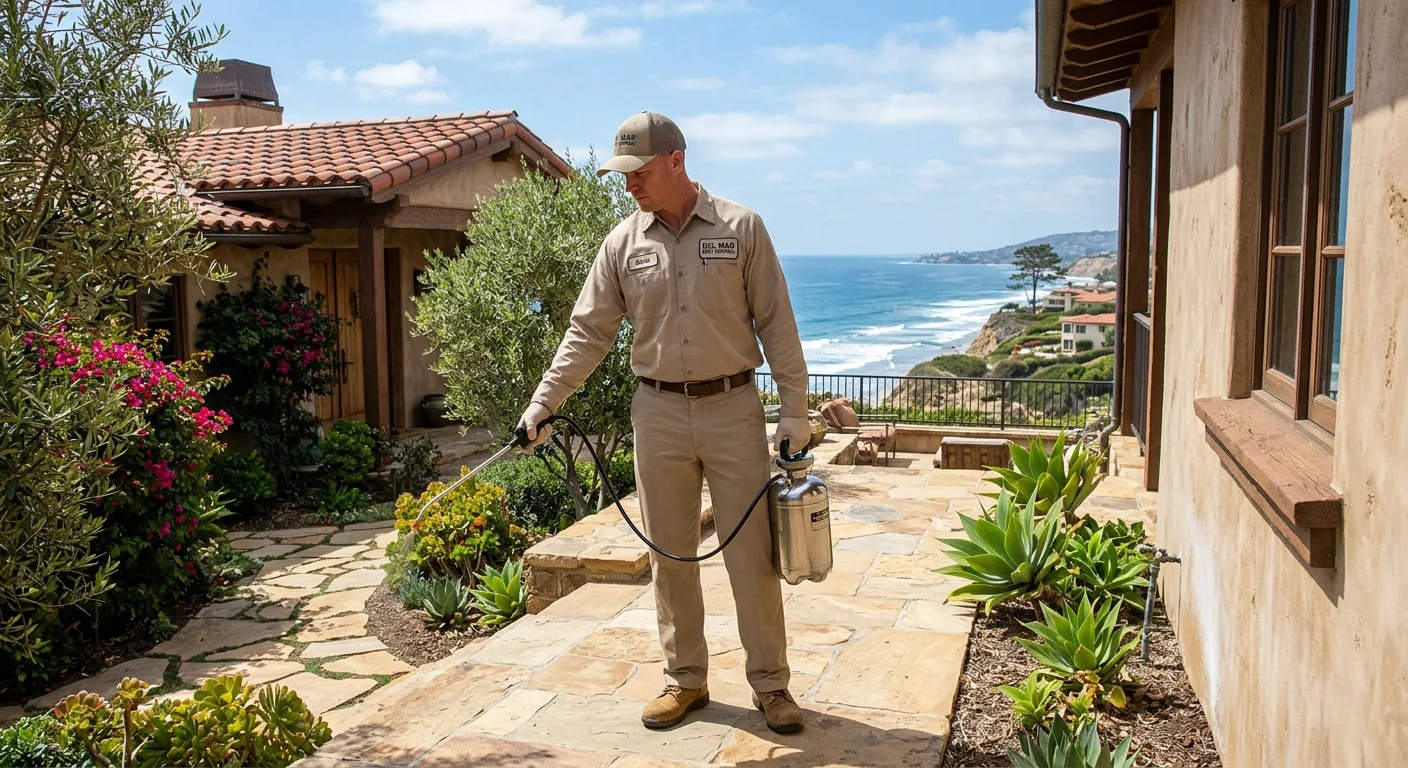
The two termite groups a Del Mar inspector looks for
Two groups matter on almost any San Diego County property. UC IPM reports that drywood termites “are commonly found along the Pacific coastal region extending into the Central Valley and deserts of Southern California.” Subterranean termites are “common throughout California.” Both groups are county-wide, so be skeptical of anyone selling you a Del Mar-specific termite ranking. What settles it is what the inspector found at your address, in writing.
Subterranean termites need moisture. UC IPM explains they “usually nest in or near the soil and maintain some connection with the soil through tunnels in wood or through shelter tubes,” and are “often found in wood that has been slightly decayed.” That is why plumbing leaks, roof leaks, and poor drainage keep turning up in reports. Drywood termites work the other way: their nests “remain entirely above ground and do not connect to the soil,” so they sit in framing, eaves, and attic wood. UC IPM adds that they “are difficult to detect since they live deep inside wood and are rarely seen until they swarm.”
The conditions worth worrying about are the ones California requires the report to list by name: “earth-wood contacts, excessive cellulose debris, faulty grade levels, excessive moisture conditions, evidence of roof leaks, and insufficient ventilation.” Those six are the checklist to walk your own property against, and there’s a section below on how to do it. A termite inspection booked through the network is carried out by a licensed Branch 3 company, not by us.
What a WDO inspection covers for home sales
When you’re buying or selling a home in Del Mar, a Wood-Destroying Organism (WDO) report is often part of the paperwork. The Structural Pest Control Board says most lending institutions require that homes in California be inspected for wood destroying pests and organisms before financing a home loan, so the lender is usually the party asking. Ask yours which document it accepts, and read your purchase agreement rather than assuming a local custom. Pest Pros San Diego connects Del Mar homeowners with licensed companies that issue WDO reports. Under California’s inspection-report rules, the report documents findings in visible and accessible areas and must list any area that was inaccessible or not inspected, so it is a record of what the inspector could examine rather than a clearance on every concealed space.
The report’s contents are set by statute, and that list is the honest picture of what gets covered: the substructure, foundation walls and footings, porches, patios and steps, air vents, abutments, attic spaces, and roof framing that includes the eaves, rafters, fascias, exposed timbers, exposed sheathing, ceiling joists, and attic walls. Anything past that is a matter of the scope you agree with the inspecting company, so if you want a detached garage, a deck, or an outbuilding looked at, name it when you book and get it written into the scope. A WDO report also covers wood-boring beetles and the fungus damage people call dry rot or wet rot, not termites alone.
Walk the property against the statutory list before the visit and you’ll know which questions to ask. On a Del Mar lot, the things worth your own five minutes are the ones the statute names as conducive conditions:
- Air vents: Count the foundation vents and check none are blocked by soil, planting, or stored boxes. Insufficient ventilation is on the statutory list by name.
- Grade and earth-wood contact: Look where soil, mulch, or a raised bed meets a post, a fence rail, or siding. Faulty grade levels and earth-wood contacts are both listed.
- Irrigation and drainage: Note where sprinkler spray hits stucco or where water still sits a day after rain. Excessive moisture is what subterranean termites are after.
- Eaves and fascia: Scan the exposed coastal-facing woodwork with binoculars for kickout holes and pellet piles on the ground below.
- Under the house: If you have a raised foundation, ask whether the crawl space is enterable on the day. If it isn’t, that limit belongs in the inaccessible-areas section of the report.
California also requires the report to give an “indication or description of any areas that are inaccessible or not inspected with recommendation for further inspection if practicable,” and if you later open those areas up, a supplemental report has to follow. Read that section as carefully as the findings, because it is the boundary of what anyone is telling you. Before hiring any pest control company, you can verify its license through the California Structural Pest Control Board (SPCB) website: www.pestboard.ca.gov.
Understanding your Del Mar termite report
The report comes on a form approved by the Structural Pest Control Board, and it is due quickly: California requires it to be “prepared and delivered to the person requesting the inspection and the property owner, or to the property owner’s designated agent, within 10 business days from the start of the inspection.” The form separates “the infestation or infection that is evident” from “the conditions that are present that are deemed likely to lead to infestation or infection.” People shorthand those as Section 1 and Section 2.
Section 1 findings are the infestation or infection that is evident: live termites, active galleries, fungus damage. The report has to place them. California requires a “foundation diagram or sketch of the structure or structures or portions of the structure or structures inspected, including the approximate location of any infested or infected areas evident,” and requires affected members to be named the way a builder names them, “including, but not limited to, siding, studs, rafters, floor joists, fascia, subfloor, sheathing, and trim boards.” These are the items a lender or buyer most often wants cleared before closing.
Section 2 findings are the conducive conditions: earth-wood contact, excessive moisture, faulty grade levels, roof leaks, insufficient ventilation. One line is worth knowing before you negotiate. California says these conditions must not “be characterized as actual “defects” or as actual “active” infestations or infections,” which is precisely why the two sections get treated differently in a sale. The report also carries recommendations for correcting these conducive conditions. Pricing is a separate document: under California’s inspection-report rules, an estimate or bid allocating the cost of each recommended correction is given on request, and only by a registered company that performs that work. Ask for a separate itemized estimate for the recommended termite treatment or repair.
How to arrange a termite inspection in Del Mar
Pest Pros San Diego does not schedule inspections or perform them. It matches Del Mar homeowners with independent licensed companies, and the company you are matched with books the visit and sets its own price. Say up front whether you are selling, buying, or checking a home you already own, because that changes the report the company needs to produce.
Call (858) 400-6561 or use the contact form, and we’ll pass your property details to a licensed local company. That company confirms the appointment, the scope, and the price with you directly. Give it any escrow or lender deadline when you speak, and ask it to confirm in writing that its turnaround meets that date.
On the day of the inspection, the licensed inspector examines the areas covered by the agreed scope. Being present to ask questions during the visit is worth the time, since access limits are easier to discuss on site than on paper. Afterwards the inspecting company prepares the WDO report and should walk you through each finding, including the areas it could not inspect. If active infestation or conducive conditions are found, ask that company to explain the options for termite treatment or repair, and to price them separately from the inspection. You can also read our post on termite control in Del Mar.
Frequently asked questions
Is a termite inspection the same as a WDO inspection?
Yes. WDO stands for Wood Destroying Pests and Organisms, and it’s the formal name for the report a licensed inspector files. Lenders and escrow companies in San Diego County ask for it by that name, so a termite inspection and a WDO inspection produce the same document.
What is the difference between Section 1 and Section 2 on the report?
Section 1 covers active infestation or existing damage, the things a lender usually requires cleared before closing. Section 2 covers conditions likely to lead to infestation if left alone, such as wood-to-soil contact, poor drainage, or moisture against the structure. Section 2 items are recommendations rather than findings of active damage, which is why the two get negotiated differently in a sale.
Can I get a second opinion if I don’t trust the findings?
Yes, and California requires the report to say so. Every report carries the notice that reports by different registered companies “should list the same findings,” that “recommendations to correct these findings may vary from company to company,” and that “you have a right to seek a second opinion from another company.” If two reports disagree on the findings rather than on the fix, that gap is the one worth chasing.
How quickly can a termite inspection be scheduled for an escrow deadline?
Turnaround belongs to the company doing the work, so ask it directly and confirm its answer against your lender’s deadline before you book. Tell it the inspection is for escrow and which document the lender accepts. Book as early in the contingency period as you can, because if Section 1 findings come back you’ll want time to get corrective work quoted rather than negotiating against the clock.
When to call us
Drywood termites are rarely seen until they swarm, so waiting for obvious damage is a poor plan. If you’re buying or selling, you’ve found pellets or shelter tubes, or the property hasn’t been looked at in years, book the inspection. Call us at (858) 400-6561 to get matched with a licensed local pro.