
Marks appeared after you slept, but the room shows no clear pest evidence. If you have bites but no signs of bed bugs, the marks alone don’t confirm an infestation. Look for physical evidence before making treatment decisions.
Why a skin mark can’t identify the pest
A skin mark isn’t a pest specimen. Its location, shape, or arrangement may seem suggestive, but those details don’t confirm what caused it. Photos of similar-looking marks online can’t settle the question either.
Treat the marks and the room evidence as separate records. Note when you first saw the marks and where you slept. Then inspect the sleeping area without assuming every speck belongs to the same problem.
A bed bug conclusion needs supporting evidence. That may include a live suspect insect, spotting, cast material, eggs, or another finding a qualified inspector can identify. Without that support, “bed bugs” remains a possibility rather than a confirmed answer.
This distinction prevents two common mistakes. One is dismissing the concern because the mattress looks clean. The other is ordering treatment based only on skin marks. Both skip the identification step.
The same evidence standard applies across San Diego County. It doesn’t change between a City Heights apartment, an El Cajon house, or a South Bay rental. Building layout may change the inspection scope, but a mark still can’t identify an insect.
Document what you see without trying to diagnose the skin itself. Questions about the marks belong with a qualified healthcare professional. Pest identification belongs with someone who can examine the room and any specimen you find.
The goal isn’t to prove or disprove bed bugs from one clue. It’s to separate confirmed evidence from assumptions. That gives an inspector something useful to evaluate and keeps the next decision tied to what is actually present.
Which bed bug evidence to document
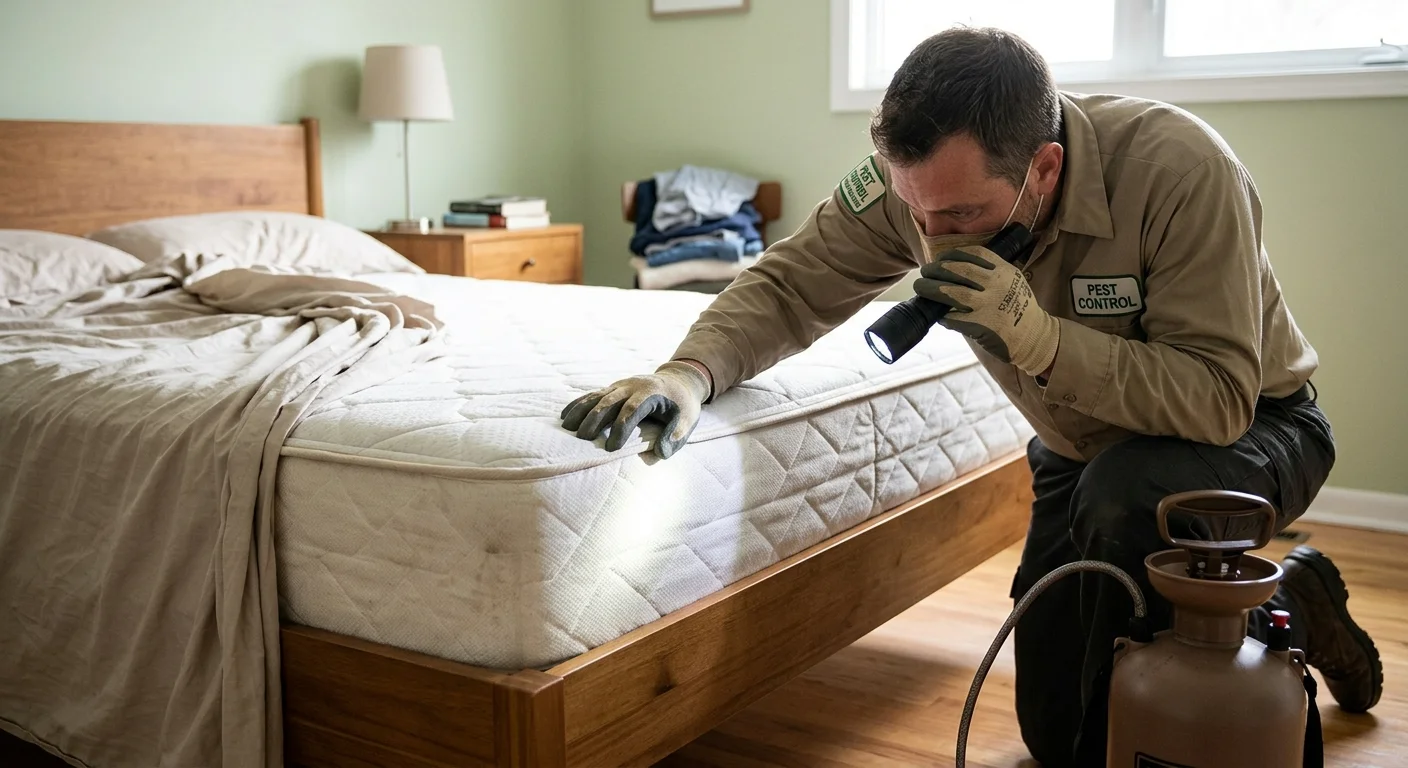
Start with the sleeping area and move slowly. Use a flashlight to examine mattress seams, tags, bed-frame joints, headboard edges, and nearby furniture. You don’t need to tear the room apart to create a useful record.
Document these findings separately:
- A suspect insect: Photograph it where you found it. Take another clear image that shows its full body. If possible, keep the specimen contained for professional identification.
- Dark spotting: Photograph the marks before cleaning them. Record whether they appeared on a sheet, mattress seam, frame, wall, or nearby furniture. Don’t label the material before it is identified.
- Cast material: Save any insect-like shell or fragment you find. A close photo helps, but an intact sample provides more information.
- Possible eggs: Photograph their location and the surrounding surface. Small pale particles can be unrelated debris, so shape or color alone isn’t confirmation.
- The room context: Note the exact bed, room, and furniture involved. This matters when a home has several sleeping areas.
Our guide to bed bug signs on sheets explains how to record sheet evidence without treating every stain as proof. For a room-by-room process, follow the professional bed bug inspection checklist.
Keep the original photos. Cropping can remove useful context, while filters may change colors or edges. Include both a close image and a wider view of the location.
A clean first inspection doesn’t prove that bed bugs are absent. It also doesn’t turn unexplained marks into evidence. If you remain uncertain, a licensed inspector can examine the room and identify any collected specimen.
Avoid choosing a treatment from a blurry image or an automated identification result. Identification should come before product, preparation, or cost discussions. The matched company can inspect first and explain what evidence supports its recommendation.
What common lookalikes can confuse the inspection
Bed bug searches often begin with two unrelated clues: a skin mark and something small near the bed. The mind connects them quickly. A careful inspection asks whether the object is actually insect evidence.
Lint, crumbs, soil, fabric fibers, and paint flakes can resemble parts of an insect in a phone photo. Dark debris can resemble spotting. Pale household debris can resemble eggs or cast material. Save the object and its location before naming it.
Other household arthropods can also complicate identification. A small insect found near a window, baseboard, pet bed, or piece of furniture isn’t automatically a bed bug. The full specimen matters more than one feature, such as color.
Ticks are one source of confusion when someone finds an actual arthropod. Our tick versus bed bug guide for San Diego provides a focused visual comparison. Use that comparison for the specimen, not as a way to diagnose a skin mark.
Room location also matters. Debris found beneath an old headboard deserves different attention than material carried onto a sheet with laundry. A specimen trapped inside a mattress seam gives an inspector more context than an unclear object found across the room.
Don’t force every observation into one explanation. There may be unidentified marks without pest evidence. There may also be an unrelated insect in the same room. Keeping those possibilities separate makes the inspection more accurate.
Create three photo groups: skin marks, room evidence, and suspect specimens. Label each with its location and date. That simple separation helps a licensed pro review what you found without treating assumptions as facts.
In San Diego’s multi-unit housing, include the unit and room in your notes. Don’t inspect another resident’s space or present your conclusion as confirmed. Property management and the licensed company can determine the proper inspection scope.
When a licensed inspection makes sense
A licensed inspection makes sense when you find a suspect specimen or repeated physical evidence. It also helps when uncertainty could lead to treatment, discarded belongings, or a dispute about a rental unit.
The inspector should examine the evidence, identify the pest when possible, and explain the basis for any recommendation. The matched company inspects first and provides a written quote before treatment begins. Preparation, follow-up, and warranty terms should come from that company’s written agreement.
You can check a company or individual through the California Structural Pest Control Board license search. Confirm the current license status and business name before authorizing work.
Pest Pros San Diego is a referral service. We don’t inspect rooms, apply pesticides, or perform treatments. We match San Diego County residents with licensed, insured local pest control companies holding the appropriate California credentials.
If bed bugs are confirmed, the company you’re matched with can discuss the available bed bug treatment service based on the inspection. Ask what was found, which areas are included, what preparation is required, and how the company will document the work.
Renters have another reason to preserve records. California requires landlords to provide bed bug information to new and existing tenants. After a pest control operator inspects units, the landlord must notify the tenants of those inspected units in writing within two business days of receiving the findings.
Report the concern through your property’s normal written process. Include dates, room locations, photos, and any contained specimen. Don’t state that the unit has bed bugs unless an inspection confirms it.
A professional inspection may end without confirming bed bugs. That result is still useful when the inspector explains what was examined and what evidence was absent. It lets you make the next decision from documented findings rather than skin marks alone.
When to call us
Call when you find a suspect insect, repeated spotting, cast material, or unexplained evidence near the bed. A licensed pest control pro can identify the finding and define the appropriate next step.
Call us at (858) 400-6561 and we’ll match you with a licensed local pro.