
Choose an ant exterminator in Escondido, CA by comparing the inspection process, treatment scope, and written follow-up terms. A company should identify the ant and investigate why it’s entering before recommending treatment.
Which ant evidence to photograph before calling
Start with close photos of the ants, but don’t stop there. The surrounding area often explains more than a single enlarged insect.
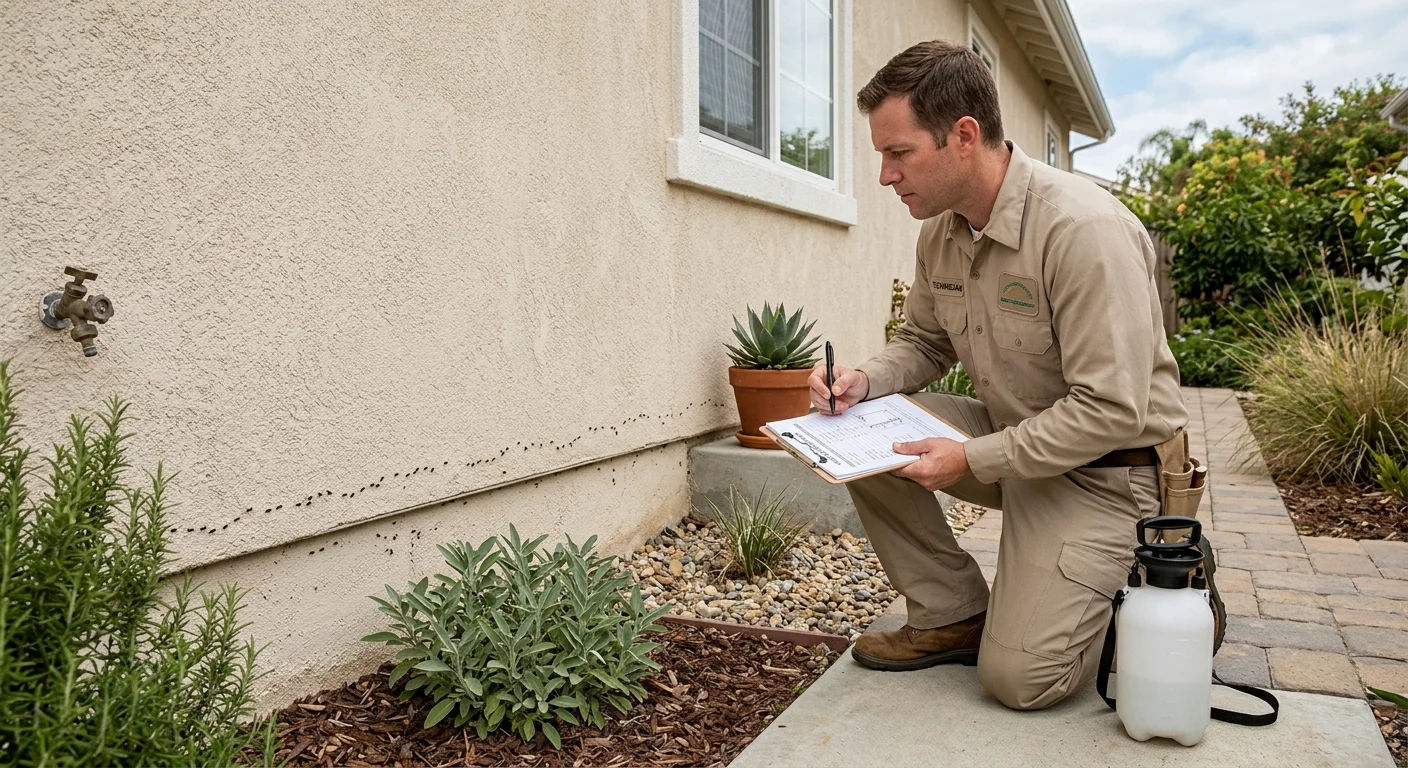
Take one close image showing color and body shape. Then step back and photograph the full trail. Include its starting point, direction, and nearby surfaces. A trail along a kitchen counter tells a different story from activity beside an irrigated planter.
Document each place where ants appear. Useful locations include:
- Sink cabinets, pantry shelves, and countertop edges
- Bathroom vanities, tubs, and window frames
- Patio doors, baseboards, and utility openings
- Foundation edges, pots, mulch, and irrigation lines
- Cracks where a trail enters or leaves the structure
Note when you saw the activity and whether the trail changed. Record any food, water, weather, cleaning, or irrigation changes near that time. This isn’t a diagnosis. It gives the inspecting company a better starting record.
Don’t describe every small brown ant as an Argentine ant. UC IPM identifies Argentine ants as dull brown and about 1/8 inch long. It also says they’re common around California homes and gardens. Other ants need different control decisions, so species confirmation matters.
Save photos from before any cleaning or store-bought treatment. Also photograph product labels for anything already applied. That helps the company understand what changed before its visit.
Our broader guide to ant control across San Diego explains how identification shapes the plan. Bring your photo log when discussing the property. Clear evidence makes competing scopes easier to compare.
Which Escondido property conditions need inspection
An Escondido ant inspection should cover the path between exterior nesting conditions and indoor food or water. A kitchen trail may be the visible end of a much longer route.
Ask each company which exterior areas it will examine. The list may include foundation edges, patio joints, door thresholds, utility penetrations, planters, mulch, pots, and irrigation equipment. Shrubs touching walls can also hide a route that’s easy to miss from indoors.
Property layout matters. A compact lot near central Escondido won’t present the same inspection path as a hillside property or a home beside planted acreage. Tell the company about slopes, retaining walls, drainage changes, garden beds, and regularly irrigated areas. These details help define where the inspection should extend.
UC IPM says Argentine ant nests are often shallow, extending just below the soil surface, and lists the species as nesting outdoors in shallow mounds. Under dry conditions, UC IPM says they will nest deeper in the soil. It also advises monitoring for ants near moist areas, so irrigation and moisture history stay relevant even when the current trail is indoors.
Inside, the company should check beyond the room where ants were noticed. Ask whether the scope includes sinks, plumbing penetrations, bathrooms, laundry areas, windows, doors, and wall gaps. A visible trail can disappear after cleaning while the access condition remains.
Mention leaks, recent plumbing work, new landscaping, or irrigation changes. Don’t assume those conditions caused the infestation. They’re inspection clues that deserve attention.
Our Escondido pest control guide covers other property details worth sharing before a visit. For ant work, the written findings should connect observed activity with specific locations. A vague promise to spray the perimeter doesn’t explain what the company found.
Why killing workers may not resolve the colony
The ants crossing a counter are foraging workers. Removing those visible ants may quiet the trail without addressing the colony supporting it.
This distinction is especially important when the species is an Argentine ant. According to UC Statewide IPM, Argentine ant colonies can link into a larger supercolony with multiple queens. Newly mated queens also travel with workers instead of starting alone. That structure helps explain why treating only one visible line may produce short-lived results.
A qualified company should explain whether its plan targets active workers, nesting areas, colony movement, entry routes, or several of those factors. Ask how the proposed method fits the identified species. The answer should be more specific than a product name.
UC IPM recommends sweet liquid bait for severe Argentine ant infestations. It notes that workers carry bait back into the colony. However, that doesn’t mean every ant problem needs the same bait or placement. Species, site conditions, competing food, and label directions all affect the professional plan.
Don’t ask competing companies only whether they spray. Ask what they expect each method to accomplish. A treatment can reduce visible activity without correcting moisture, access, or a nearby nesting condition.
Our article about Argentine ant colony behavior and spraying gives more context for that distinction. It’s still important to have the ant identified at your property.
The company should also explain how progress will be judged. That might involve trail activity, monitoring points, new locations, or recurring activity after the first service. Avoid assuming that a temporarily empty counter proves the underlying problem is gone.
What to compare in a licensed company’s scope
Compare written scopes, not sales language. Two quotes can describe very different work even when both say “ant control.”
A useful scope should identify the areas being inspected and the evidence found. It should name the suspected species or explain how identification will be confirmed. It should also separate interior work, exterior work, monitoring, and property corrections.
Look for clear answers to these points:
- Which rooms and exterior areas are included?
- What evidence supports the proposed treatment?
- Is the goal immediate trail reduction, colony control, or both?
- Which moisture or entry conditions need correction?
- What preparation does the company require?
- What label precautions apply around children, pets, food, and plants?
- How will the company assess recurring activity?
- Are later visits included, optional, or separately priced?
- Who handles exclusion or repair work outside the pest scope?
General household pest work falls under California’s Structural Pest Control Board Branch 2. Check the company and individual license status through the California Structural Pest Control Board. The public search can use a business name, person’s name, license type, or license number.
Read any warranty or re-treatment language in the company’s own agreement. Don’t rely on a verbal summary. Confirm what triggers another visit, what’s excluded, and whether property changes affect coverage.
Prices are set by the company you hire, not by us. Pest Pros San Diego has no fee schedule. The matched company should inspect first and provide a written quote before treatment begins.
Price still matters, but compare like with like. One proposal may cover a visible kitchen trail. Another may include exterior investigation, monitoring, and follow-up conditions. Ask each company to explain exclusions before you decide.
Our ant control service page describes the referral process. We match homeowners with licensed local pest pros who hold the appropriate California credentials for the service.
When to call us
Call when ant trails keep returning, appear in several rooms, or can’t be traced to a clear entry point. A licensed pest control pro can identify the ant, inspect the property, and explain the proposed scope.
Call us at (858) 400-6561 and we’ll match you with a licensed local pro.