
A termite inspection in La Jolla should produce more than a verbal opinion. Rental owners, tenants, and property managers need documented findings, clear access limits, and a defined next step. Start with a licensed Branch 3 company and agree on the inspection scope beforehand.
What evidence the inspector should document
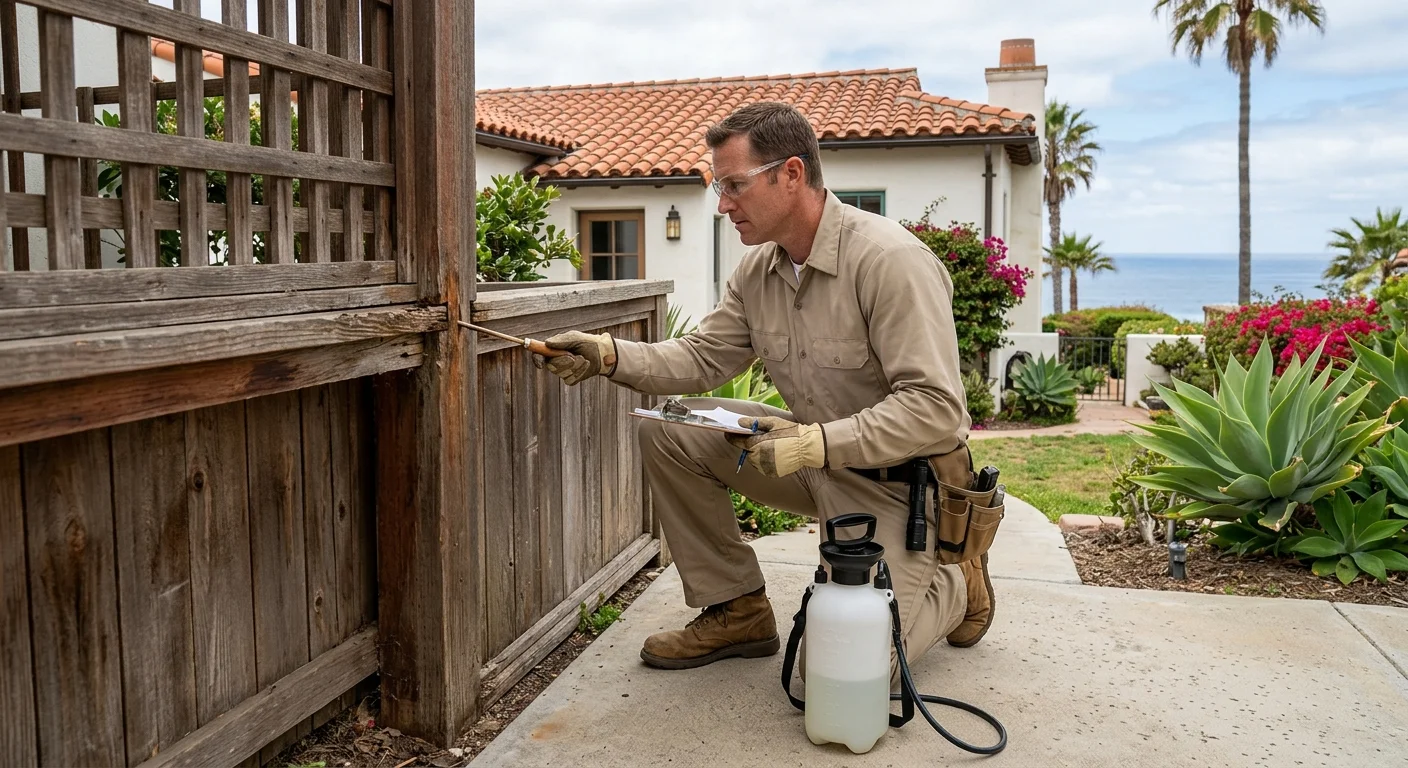
A useful termite report connects every finding to a specific place. “Termite activity present” isn’t enough for a rental decision. Ask the inspector to identify the room, wall, window, exterior feature, or accessible structural area involved. Photos should include both a close view and enough surrounding detail to locate the evidence later.
La Jolla sits within Southern California’s Pacific coastal region. UC IPM says western drywood termites are commonly found along California’s Pacific coast. Their fecal pellets have six hexagonal sides and are diagnostic evidence. Inspectors may also find small kickout holes where termites expel those pellets.
Subterranean termites leave different evidence. UC IPM explains that they nest in soil, require soil contact for moisture, and build shelter tubes between soil and wood. A report should distinguish drywood evidence from subterranean evidence. That distinction affects the areas investigated and the recommendations that follow.
Ask the inspector to document:
- Visible pellets, wings, shelter tubes, or damaged wood
- The exact location of each finding
- Whether the evidence appears current, old, or uncertain
- Areas that were inspected without visible evidence
- Areas that couldn’t be reached or viewed
- Conditions that limited the inspection
- Recommendations tied to each finding
Rental contents can hide baseboards, access panels, window trim, and wall edges. The report shouldn’t imply those concealed areas were cleared when they weren’t. California’s formal Wood Destroying Pests and Organisms report covers visible and accessible areas. It doesn’t confirm conditions behind every finished wall or blocked surface.
If you need a formal report, review what a WDO report covers before booking. Confirm that the company will produce the document you need, not only an informal inspection summary.
How rental access affects inspection planning
Rental access needs planning before the inspector arrives. The owner or manager should define which unit areas, exterior spaces, garages, storage areas, and shared locations are included. A coastal condo and a hillside house can present very different access problems. Don’t assume the same inspection scope fits both.
No La Jolla-specific rental-access notice period was confirmed in the approved Structural Pest Control Board material for this page. Owners and property managers should check the lease, current legal guidance, and their own management procedures before arranging entry. The pest company shouldn’t be asked to interpret the rental agreement.
Give tenants a clear description of the visit. Explain which rooms or storage areas need access. Ask them not to move or discard suspected pellets, wings, or damaged material before the inspector sees it. Photos taken before anything moves can help preserve the original location.
The person coordinating the visit should confirm:
- Which units and shared areas are included
- Who will provide keys, gate access, or entry permission
- Whether closets, cabinets, garages, and storage spaces are accessible
- Where suspected evidence was found
- Whether furniture or stored items block inspection points
- Whether pets need to be secured during the visit
- Who should receive the written report
Inspection and treatment are separate decisions. Access for an inspection shouldn’t be treated as automatic approval for drilling, pesticide application, wood repair, heat treatment, or fumigation. If the report recommends work, the company should explain the proposed method and affected areas first.
For a broader look at the visit itself, see our termite inspection service guide. Share the planned scope with the matched company before the appointment. That gives everyone the same definition of what will and won’t be inspected.
What to compare in written reports
Start by confirming what each company means by “termite report.” A general inspection summary isn’t automatically a formal WDO report. In California, a properly registered Branch 3 company issues WDO reports. The standard report records evidence found in visible and accessible areas and includes recommendations for correcting infestations.
Compare scope before comparing conclusions. One report may cover a single unit’s interior. Another may include accessible exterior wood, a garage, and shared areas. Those reports don’t answer the same question.
A clear comparison should cover:
- The property areas included
- Every inaccessible or obstructed area
- The evidence supporting each finding
- The termite type connected to that evidence
- Photos and precise location descriptions
- Recommended treatment or corrective work
- Items requiring more investigation
- Whether the document is a formal WDO report
Pay attention to uncertainty. A careful inspector may recommend opening access or checking another area before reaching a conclusion. That’s more useful than a confident statement unsupported by visible evidence.
Separate findings from proposals. The report should explain what was observed. The proposal should explain the work offered, its limits, and the written price. Warranty or re-treatment terms belong in the individual company’s agreement. Pest Pros San Diego doesn’t set those terms.
Fixr put a one-time termite inspection at $150 to $350 as of 2026. That’s a national cost-guide range, not our fee or a guaranteed La Jolla price. Property size, access, report type, and inspection scope can affect a company’s quote. Our San Diego termite inspection cost guide explains what to compare without treating one figure as universal.
The matched company inspects first and quotes in writing before any treatment begins. Compare the written scope alongside the price. A lower quote covering fewer areas isn’t a like-for-like comparison.
How to choose a licensed inspection company
Termite and wood-destroying organism work belongs within California’s Branch 3 licensing structure. A Branch 3 field representative can inspect, identify infestations, submit bids, and contract on behalf of a registered company. A properly registered Branch 3 company can issue a formal WDO report.
Fumigation has a separate licensing rule. Only an SPCB Branch 1 licensee may perform structural fumigation. If an inspection leads to a fumigation recommendation, ask which licensed company would perform that work. Don’t assume the inspection company and fumigation company are the same business.
Use the California Structural Pest Control Board license search before signing. Search the business name and the license information provided by the representative. Check the license type and current status. The public search also offers advanced filters for location and license status.
Ask each company these practical questions:
- Will a Branch 3 representative perform the inspection?
- Is this a general inspection or a formal WDO inspection?
- Which rental areas are included?
- How will inaccessible spaces appear in the report?
- Will photographs identify each finding’s location?
- Who issues the final document?
- Does any proposed fumigation involve a separate Branch 1 company?
- Where are warranty or re-treatment terms written?
Don’t select a company based only on treatment claims. The first job is to identify the evidence and inspection limits. A recommendation should follow the findings, not precede them.
Owners preparing for a transaction may need different documentation than someone evaluating a current rental concern. Our guide to a termite inspection before a San Diego home sale explains that distinction.
Pest Pros San Diego is a referral service. We don’t inspect properties or perform treatments. We match La Jolla owners, tenants, and property managers with licensed, insured local pest control companies holding the appropriate California credentials.
When to call us
Visible pellets, shelter tubes, damaged wood, or an important rental decision can justify a licensed inspection. We can connect you with a company that documents its findings and explains the available next steps. Call us at (858) 400-6561 and we’ll match you with a licensed local pro.