
San Diego County Vector Control says rats can enter through holes the size of a quarter coin or larger. UC IPM says seal cracks and openings larger than 1/4 inch, and that rats of either species, especially young rats, can squeeze beneath a door with only a 1/2-inch gap. Those are two different measurements. Use both: county’s coin-size hole as the field check, UC’s 1/4-inch seal rule as the repair standard. Set snap traps on overhead runways only after you know the routes. Trim trees and bushes at least 4 feet from the roof per the county page. Ask the matched Branch 2 company to quote trapping and exclusion as separate jobs.
Roof rats (Rattus rattus, also called black rats) climb and nest above ground. UC IPM notes that when both species occupy the same building, Norway rats typically occur in the basement and ground floors while roof rats occupy the upper floors. If you’re not sure which rodent you’re dealing with first, read how to tell which rat is in your home. If it turns out to be the smaller house mouse instead, see how to get rid of mice in San Diego. This page does not invent a county-wide dominant species ranking or a clearance calendar.
Why roof rats thrive in San Diego
Roof rats are built for the way San Diego homes are landscaped. They’re agile climbers that travel power lines, fence tops, and tree limbs, then nest above ground in attics, rafters, garages, and dense outdoor cover. They rarely burrow the way Norway rats do.
The county’s yards give them everything they need. Citrus and avocado trees drop fruit they feed on. Untrimmed palm trees hold nesting fronds. Ivy and bougainvillea give them cover along walls. Woodpiles, bird feeders, and open pet food add food and cover. County Vector Control also tells you to keep garbage cans covered. This page does not rank canyon-edge yards as a measured highway.
That’s why a roof rat problem is never only an indoor problem. The rats using an attic are fed by what’s available outside. Fixing only one side is an incomplete job, not a timeline.
The step-by-step removal playbook
Work the steps in order. Skipping inspection or jumping straight to bait is how people end up with a recurring problem and a dead rat smell in the wall.
| Step | What to do | San Diego note |
|---|---|---|
| 1. Inspect | Find runways, droppings, gnaw marks, and the overhead travel routes | Watch for rats on fence tops and power lines at dusk |
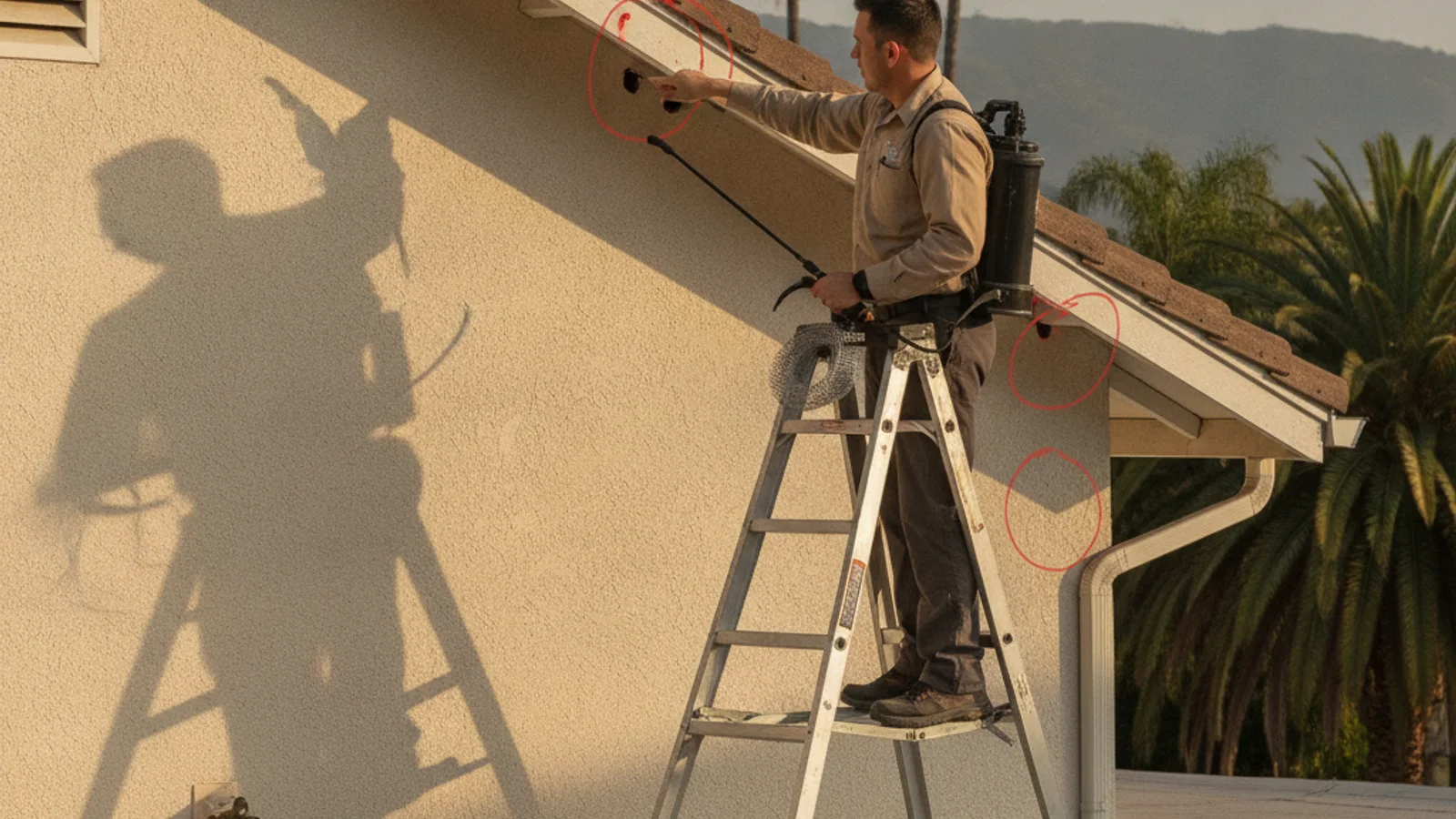
| 2. Exclude | Seal using UC’s larger-than-1/4-inch rule and county’s quarter-coin hole check; screen vents; close roofline and eave gaps | County repair material: 1/4-inch, 18-22 gauge wire hardware cloth |
| 3. Trap | Ask whether snap traps will be set perpendicular to overhead runways, not only on the ground | Placement in rafters, along beams, on fence tops is a question for the Branch 2 quote |
| 4. Clear harborage | Trim trees and bushes at least 4 ft from the roof (county), thin ivy, pick fruit, secure trash and pet food | Citrus and palms are common local food and cover |
| 5. Monitor | Re-check traps and seals, watch for new droppings or sounds | How long monitoring lasts is the company’s written plan, not a blog calendar |
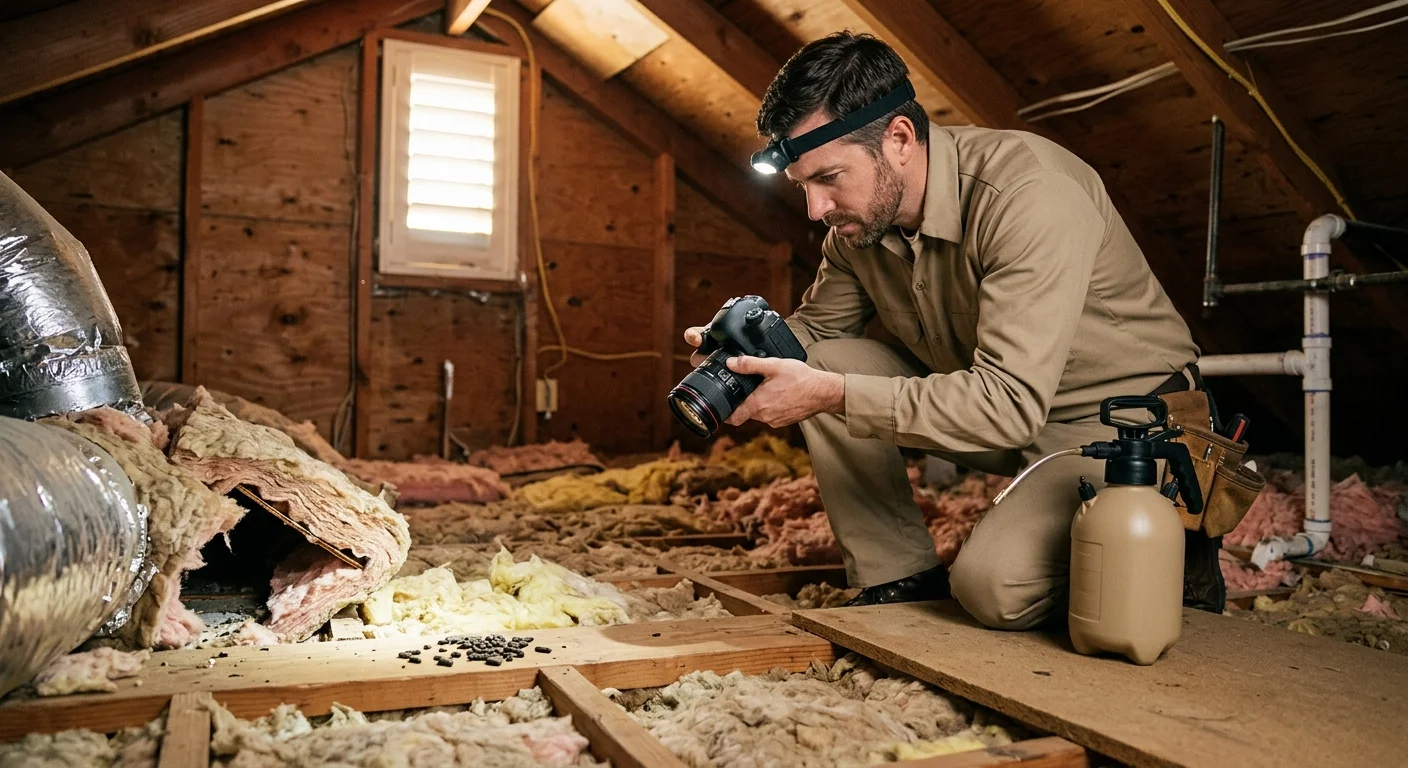
Start by reading the signs. Look for droppings along the routes they travel, dark smudge marks where fur rubs beams and pipes, gnaw marks on wood and wiring, and rats moving along fence tops or utility lines at dusk. This page does not publish dropping length or shape. The runways you find now tell you where to set traps later.
Exclusion lasts only if the openings stay closed
Sealing the building is the step that stops new rats from walking in. Trapping addresses the rats already inside. San Diego County Vector Control: rats can enter through holes the size of a quarter or larger; mice through holes the size of a dime or larger. Repair with 1/4-inch, 18-22 gauge wire hardware cloth, or seal holes with a combination of metal wool and expanding foam, and put metal weather stripping under doors. UC IPM: keep rats from entering by sealing cracks and openings larger than 1/4 inch with steel wool, wire screen, or sheet metal; rats can chew through plastic, foam, wood, and caulk. UC also states rats of either species, especially young rats, can squeeze beneath a door with only a 1/2-inch gap.
Those sentences do not contradict each other if you keep the units straight. A US quarter coin is larger than 1/4 inch. Seal to UC’s 1/4-inch standard so you are not leaving a 1/2-inch door gap.
UC: ventilator grills should be enclosed with 18-gauge, 1/2-inch mesh galvanized expanded metal or 16-gauge, 1/2-inch mesh galvanized wire cloth. Never use lightweight chicken wire. Because roof rats climb, openings above ground level must also be plugged.
Focus on the routes roof rats actually use: gaps along the roofline and eaves, unscreened or torn attic vents, openings where pipes and wires enter the wall, and the junctions where the roof meets additions or garages. When the opening is in damaged shingles, rotted fascia, or lifted flashing rather than a simple vent, a roofer like Top Pro Roofing SD can close it properly.
Trapping beats poison, and here’s why
UC IPM manages rats by removing food and shelter, trapping, and reducing entry points. Snap traps belong on the routes the rats use. Because roof rats travel overhead, ask whether traps will sit perpendicular to runways along rafters and beams, on fence tops, and high in vines, with the trap secured so a catch cannot drag it off. Checking frequency is part of the written job, not a blog rule.
Reach for rodenticide last, if at all. UC IPM warns to minimize entry points to buildings before baiting outside to prevent poisoned rats from coming inside to die. Secondary poisoning of wildlife is a real documented risk class, which is why trapping plus exclusion is the question to put on a Branch 2 quote rather than a poison-first plan. Pest Pros San Diego does not trap or bait. The company you are matched with inspects first.
If the food and harborage stay in place, trapping alone does not finish the job. County Vector Control: trim trees and bushes to at least 4 ft away from the roof. Thin ivy and dense shrubs. Pick fruit. Store trash with tight lids, bring pet food in at night, and clear woodpiles.
When to call a pro
DIY trapping can knock down a small, new problem if you find the entry points and seal them. Where a licensed company pays off is attic and structural exclusion you cannot fully reach or verify.
Ask the matched Branch 2 company to quote trapping and exclusion as different line items, plus cleanup if droppings or nesting material need removal. If you want a sense of pricing before you call, what rodent control costs in San Diego walks through market benchmarks. Our rodent control page explains matching, including Chula Vista, Escondido, and the city of San Diego.
Verify a pest control operator with the California Structural Pest Control Board at pestboard.ca.gov.
Frequently asked questions
How do I get rid of roof rats in San Diego?
Use the county coin-size hole check and UC IPM’s seal-openings-larger-than-1/4-inch rule, then ask a Branch 2 company whether snap traps will sit on overhead runways. At the same time, clear food and harborage: trim trees and bushes at least 4 feet off the roof, thin ivy, pick fruit, and secure trash and pet food. Exclusion and trapping are different jobs. Quote them that way.
What attracts roof rats to a San Diego home?
Fruit trees and fallen fruit, palm fronds, dense ivy and bougainvillea, woodpiles, bird feeders, and open pet food. Roof rats also follow power lines, fence tops, and tree limbs to the roof. This page does not rank canyon yards.
Are roof rats common in San Diego?
They are the climbing species UC IPM associates with upper floors when both rat species share a building. Scratching overhead is a reason to inspect. It is not a species proof by itself.
Should I use poison or traps for roof rats?
Ask for trapping and exclusion first. UC IPM warns that baiting outside before you seal entry points can send poisoned rats indoors to die. Traps let you remove the animal. Poison is a last question for a licensee, not a first step from this blog.
How do I keep roof rats out of my attic?
Seal to UC’s 1/4-inch standard along the roofline, eaves, and vents, using county-listed hardware cloth, and screen vents as UC describes. Then trim trees and bushes at least 4 feet from the roof.
How long does it take to get rid of roof rats?
This page does not publish a one-to-three-week clearance. The timeline depends on how many rats are inside, how many openings exist, and whether yard harborage is fixed. Those answers belong in the matched company’s written plan.
If you’re hearing them overhead or finding droppings, call us at (858) 400-6561 to get matched with a licensed local pro.