
For mosquito control in Chula Vista, start by logging the affected patio area and checking every place that holds water. A licensed company can then separate source correction from any proposed yard treatment. That distinction matters when patios connect with irrigation, shared landscaping, drains, and neighboring properties.
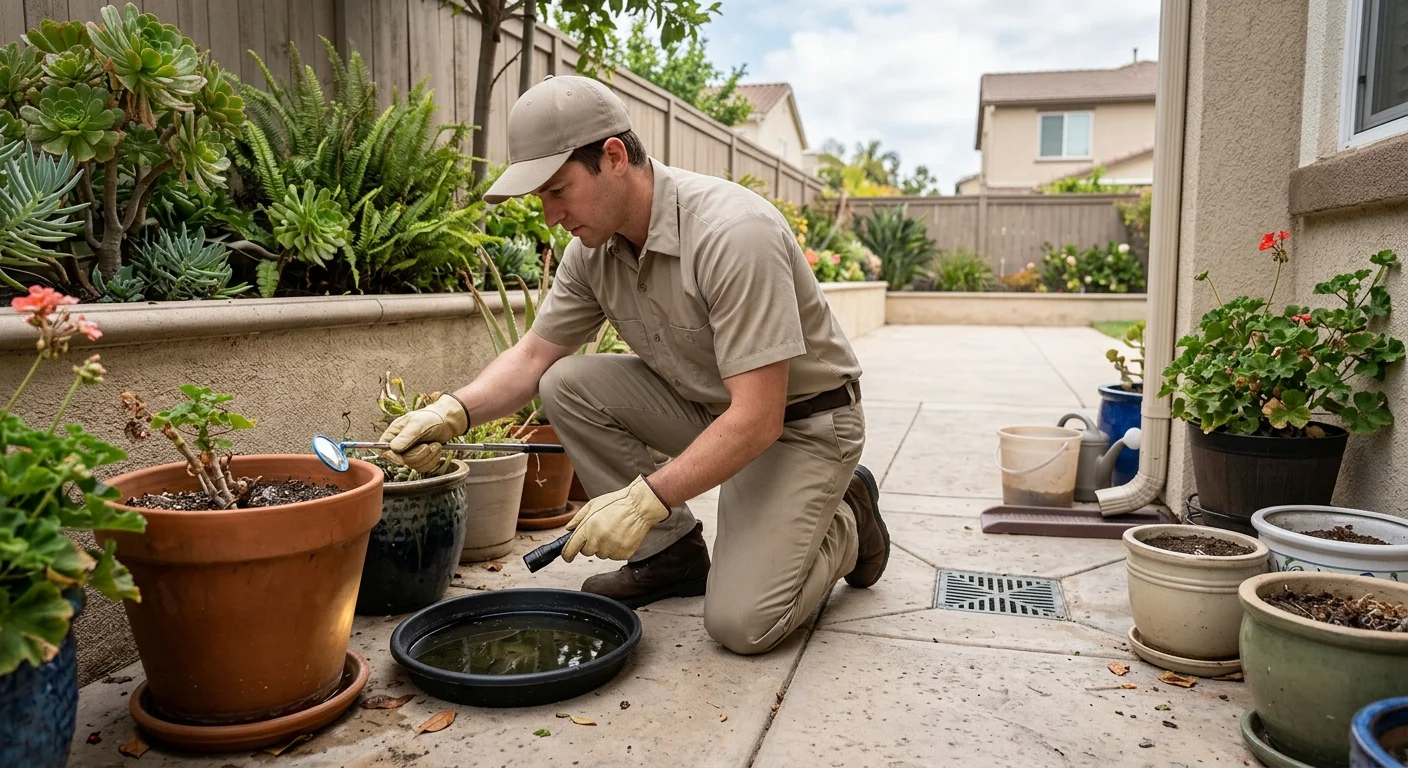
How to document where and when biting happens
Begin with the patio itself, not the entire property. Record where people were sitting, what time activity began, and which side of the yard felt busiest. A note saying “backyard mosquitoes” gives a company little direction. “Activity beside the shaded table near the west fence” is more useful.
Chula Vista conditions can change across a single property. A compact patio near Third Avenue may sit beside alleys, neighboring yards, and closely spaced drains. A larger Otay Ranch or Eastlake yard may include irrigation zones, planters, walls, and separate seating areas. Document the actual layout instead of relying on a neighborhood label.
Keep a simple activity log that includes:
- The date and general time of each event
- The exact chair, doorway, or patio edge involved
- Recent irrigation, rain, or container overflow
- Whether activity also appeared inside near a door
- Photos of standing water and accessible drainage areas
- Any insect specimen that can be photographed clearly
Don’t identify a mosquito species from skin marks. This page doesn’t diagnose bites or recommend bite treatment. Species questions need physical evidence and a qualified identification.
The pattern may also show whether the patio is the main source. Activity confined to one shaded corner suggests a different inspection path than activity across several adjoining yards. Shared fences and common landscaping should be marked on the sketch.
Our report on Aedes mosquito establishment data in San Diego provides more regional context. It shouldn’t replace an inspection of your property.
San Diego County Vector Control monitors mosquitoes and offers free mosquito inspections for county residents. Those services cover monitoring and education, not private treatment. Visit the San Diego County Vector Control Program to review its current services and request process.
Which patio containers and drains need inspection
Inspect anything that can catch or retain water. Start at the patio door and work outward in one direction. That method reduces the chance of overlooking a small container behind furniture or vegetation.
Plant saucers deserve individual attention. So do buckets, watering cans, children’s toys, pet bowls, folded tarps, wheelbarrows, and portable fire pit covers. Check the recessed surfaces of outdoor furniture and grill covers. Look inside decorative containers even when they weren’t intended to hold water.
Then review drainage points. Patio drains can collect debris or remain damp after nearby irrigation. Downspout outlets, channel drains, low spots, and covered catch basins should appear on your property sketch. Don’t open, enter, or disturb an area that isn’t safely accessible. Photograph it and show the image to the inspecting company.
Location changes the inspection. West Chula Vista patios near the Bayfront or Third Avenue may have smaller outdoor spaces and tighter property boundaries. Homes around Telegraph Canyon Road, Eastlake, and Otay Ranch may have several irrigation zones or landscaped slopes. These are inspection differences, not proof of a mosquito source.
Include property boundaries in your notes. Water behind a shared wall, inside an HOA landscape area, or on another parcel isn’t part of your private service area. Ask the company how that limitation affects its plan. If you rent, confirm which patio and landscaping areas fall under your control.
A clean inspection list separates confirmed water from possible water. “Water photographed inside blue planter saucer” is confirmed. “Drain may stay wet” needs inspection. That wording prevents guesses from turning into treatment decisions.
For broader preparation guidance, review our San Diego mosquito control overview. It explains how inspection, source review, and professional service fit together without treating every yard as the same job.
What a licensed yard plan should separate
A written yard plan should divide the work into clear parts. Ask the company to identify inspected areas, confirmed water sources, proposed treatment areas, excluded areas, and tasks assigned to the resident. A one-line promise to spray the yard doesn’t provide enough detail.
Source correction should have its own section. The plan can identify containers to empty, drainage problems to address, and irrigation conditions that need further review. Professional pesticide work belongs in a separate section with the proposed locations and products. That separation helps you understand what changes the site and what the company applies.
The plan should also distinguish private space from shared space. A Chula Vista townhouse patio may border HOA landscaping. A single-family yard may receive water from a neighboring slope or shared wall. The company can only quote the areas it has inspected and agreed to service.
Ask how the plan handles these zones:
- Seating and dining areas
- Planters and container groupings
- Patio drains and downspout outlets
- Shaded vegetation near regular activity
- Doors and windows adjoining the patio
- Side yards connecting front and rear spaces
- Shared landscaping outside the customer’s control
Keep indoor and outdoor findings separate too. Activity near an open patio door doesn’t prove an indoor source. It does tell the company where to inspect and what boundaries to discuss.
The written plan should name preparation steps for people and pets. Don’t rely on a salesperson’s general assurance. Ask for instructions tied to the products and areas proposed. The EPA pesticide safety guidance provides general questions for consumers. The licensed company must explain how its proposed products apply to your property.
Pest Pros San Diego is a referral service. We don’t inspect, apply products, or set treatment schedules. We match customers with licensed local companies that determine the appropriate scope after inspecting. Our mosquito control referral service explains that process.
How to compare labels and written service scopes
Compare written scopes line by line. Start with the inspected area. One proposal may cover only the rear patio. Another may include side yards, drainage points, and accessible landscaping. Those aren’t equivalent services, even when both use the phrase “mosquito control.”
Next, ask each company to identify its proposed products. Request the product labels before agreeing to treatment. Read the directions concerning application areas, preparation, people, pets, and re-entry. If the company’s verbal explanation differs from its paperwork, ask for clarification in writing.
Don’t treat “pet friendly” or “family friendly” as a complete safety explanation. Those phrases don’t tell you which product is proposed or where it will be applied. Product-specific instructions are more useful than broad advertising language.
A useful written scope should answer:
- What areas were inspected?
- Which water sources were confirmed?
- What source corrections are recommended?
- Which areas are proposed for professional treatment?
- Which products does the company propose?
- What areas are excluded from service?
- What preparation instructions apply?
- What conditions would lead to another inspection?
- Who handles shared or inaccessible areas?
- What are the cancellation and re-treatment terms?
Check the company’s credentials through the California Structural Pest Control Board license search. Pest Pros San Diego doesn’t hold an SPCB license because it doesn’t perform pest control. The companies we match hold the appropriate California credentials for their services.
Price also depends on scope. HomeGuide puts mosquito control at $80 to $150 per visit and $350 to $1,000 per season, a national benchmark. Those are national guide figures, not a Pest Pros San Diego price or a confirmed Chula Vista rate. The matched company inspects first and quotes in writing before any treatment begins.
Ask whether optional items are included or priced separately. Compare the total written scope rather than one headline figure. Warranty, cancellation, and re-treatment terms belong to the selected company’s agreement.
Repellents are another separate decision. They shouldn’t be confused with source correction or a professional yard plan. Our guide to mosquito repellents for San Diego yards helps you organize questions without substituting for product labels.
When to call us
Call when repeated patio activity continues after accessible water sources have been documented, or when the affected area crosses drains, landscaping, and shared property boundaries. Call us at (858) 400-6561 and we’ll match you with a licensed local pro.