
Choosing a pest control company for roaches takes more than comparing totals. The better quote identifies the suspected roach, records the evidence, and explains the proposed work. Get those details in writing before deciding which San Diego company fits your home.
Why species identification changes the quote
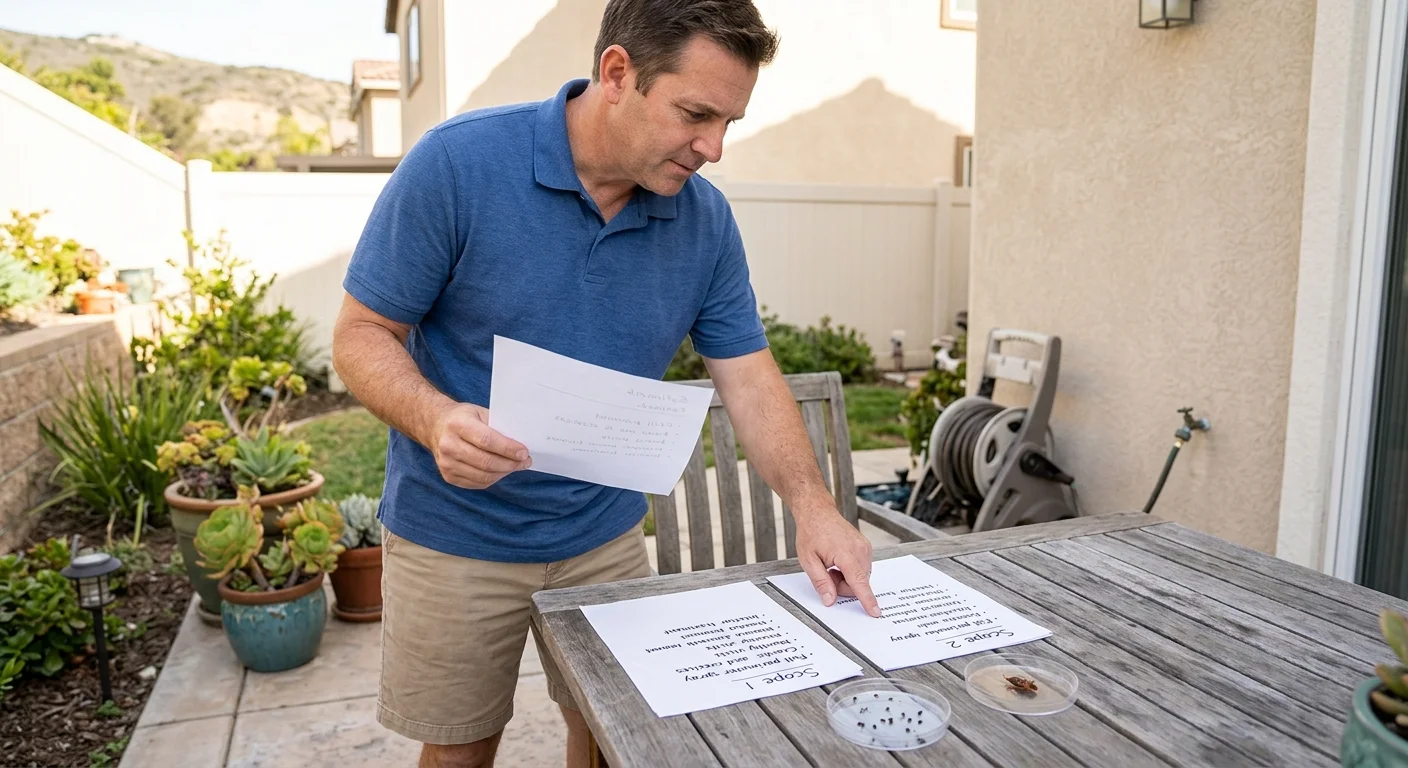
A useful quote begins with the roach itself. “Cockroaches in the kitchen” doesn’t describe the source, extent, or likely hiding areas. The company should explain which species it found and how that identification shaped the proposed scope.
UC IPM identifies the German cockroach as California’s most common indoor species. It’s especially associated with multi-unit housing. Adults are about half an inch long, light brown, and marked by two dark stripes behind the head. They favor warm, humid areas near food and water, including kitchens and bathrooms.
Those details matter when comparing residential quotes. A shared-wall apartment in City Heights presents different access questions than a detached home in Clairemont. In an apartment, ask whether the quote covers only your unit. It should also explain how evidence near shared walls, plumbing openings, or common areas affects the plan. The company can’t promise access to spaces controlled by a landlord or neighbor.
Other cockroaches may require a different inspection focus. A common name or blurry phone photo isn’t enough. Ask what physical evidence supports the identification. That evidence might include a captured insect, shed material, an egg case, droppings, or activity recorded on a monitor.
Our San Diego cockroach type guide can help you understand the names used in a quote. The broader cockroach control guide explains how identification connects with treatment planning.
Treat an uncertain identification as uncertain. The written scope can say that confirmation depends on the on-site inspection. That’s more useful than a confident species name unsupported by evidence.
What inspection findings should appear in writing
The inspection section should describe conditions at your property. Generic phrases such as “treat kitchen and bathrooms” don’t show what the company found. They also make two proposals difficult to compare.
Look for written findings covering:
- The suspected species and evidence supporting that identification
- Rooms and areas inspected
- Areas that couldn’t be accessed
- Locations where live insects, droppings, egg cases, or monitor activity appeared
- Food, water, clutter, gaps, or other conditions relevant to the proposed work
- Whether the scope covers the interior, exterior, or both
- Any coordination needed with a landlord, property manager, or neighboring unit
The findings should separate observations from possibilities. For example, evidence under a kitchen sink is an observation. Activity inside an inaccessible wall is a possibility unless the company documents supporting evidence.
Ask the inspector to distinguish active areas from preventive coverage. This keeps a targeted treatment from looking identical to a broad service plan. It also helps you see whether both companies evaluated the same rooms.
Access matters across San Diego County. A condo in Chula Vista may involve an association or shared utility spaces. A house in Rancho Bernardo may give the company direct access to more exterior areas. Those differences should appear in the scope instead of being left for the service date.
Our cockroach control service page explains what to expect when requesting a local match. The matched company inspects first and quotes in writing before any treatment begins.
Before accepting a quote, check that your address, unit number, inspected areas, and customer responsibilities are correct. If something discussed on-site isn’t written down, ask for a revised copy.
How treatment, monitoring, and follow-up differ
The lowest total doesn’t necessarily cover the same work. Compare each component separately: treatment, sanitation guidance, exclusion, monitoring, preparation, and follow-up.
UC IPM states that pesticides alone won’t solve cockroach problems. Its recommended approach combines sanitation, exclusion, monitoring, and appropriately placed controls. Gel baits can be effective when placed near roach harborages or foraging areas. Boric acid is also used in insecticidal dusts. Product selection and placement belong to the company performing the work.
A proposal should explain the planned approach without giving you a vague product list. Ask these questions:
- Which rooms and hiding areas are included?
- Will the company place monitors, and who checks them?
- Does the scope include sealing identified gaps?
- What preparation must occupants complete?
- What evidence will the company use to judge progress?
- What conditions would lead the company to change its approach?
- Who removes monitoring devices when the service ends?
Follow-up language deserves close attention. One proposal may include later monitoring, while another may cover only the initial visit. Don’t compare visit counts without comparing what happens during those visits.
There isn’t a standard follow-up schedule set by Pest Pros San Diego. The company doing the work sets its schedule after inspecting the property. Ask for that schedule, its purpose, and any conditions that could change it.
Safety language should also be specific. If a pesticide is proposed, ask for its name and the precautions connected with that application. Broad phrases such as “family friendly” don’t explain where a product will be placed or what occupants must do. The EPA’s pest-control safety guidance can help you prepare questions about products, labels, children, and pets.
A strong scope connects every proposed step to an inspection finding. It also separates the company’s responsibilities from yours.
Which company claims need verification
Verify the company before treating polished sales language as evidence. California separates structural pest control work into licensing branches. General household pest work falls under Branch 2, excluding fumigation with poisonous or lethal gases.
Use the California Structural Pest Control Board license search to check the business and relevant credential. Search the exact company name shown on the proposal. If the salesperson uses a different trade name, ask which registered company will perform the work.
The public search supports checks by business name, individual name, license type, number, location, and status. Cancelled licenses and registrations don’t appear in its results. If you can’t confirm a record, ask the company to explain the discrepancy before scheduling.
Insurance is another claim to document. Ask for current proof that names the company on your proposal. Pest Pros San Diego matches customers with licensed local pest control companies, but you can still review the documents tied to your particular job.
Treat warranty and guarantee language with the same care. Any warranty belongs to the matched company’s written agreement, not Pest Pros San Diego. If a company offers one, ask what it covers, what it excludes, and what you must do to keep it valid. Don’t rely on a verbal promise that doesn’t appear in the agreement.
Also compare cancellation terms, recurring-service terms, preparation duties, and access requirements. A short proposal can leave these points hidden until after scheduling.
Our guide to choosing a San Diego pest control company covers the broader hiring process. For a roach quote, pause if the company won’t name the suspected species, document findings, define the treatment area, or provide its terms in writing.
When to call us
Call when roach evidence continues, the species remains uncertain, or the infestation may extend beyond one room or unit. A licensed local pest control pro can inspect the property and prepare a written scope based on the evidence. Call us at (858) 400-6561 and we’ll match you with a licensed local pro.