
Scratching above the ceiling doesn’t confirm whether you have rats or mice. Effective rat control starts by connecting the noise with droppings, marks, access gaps, and other evidence. Document what you notice, then let a licensed pest company identify the cause.
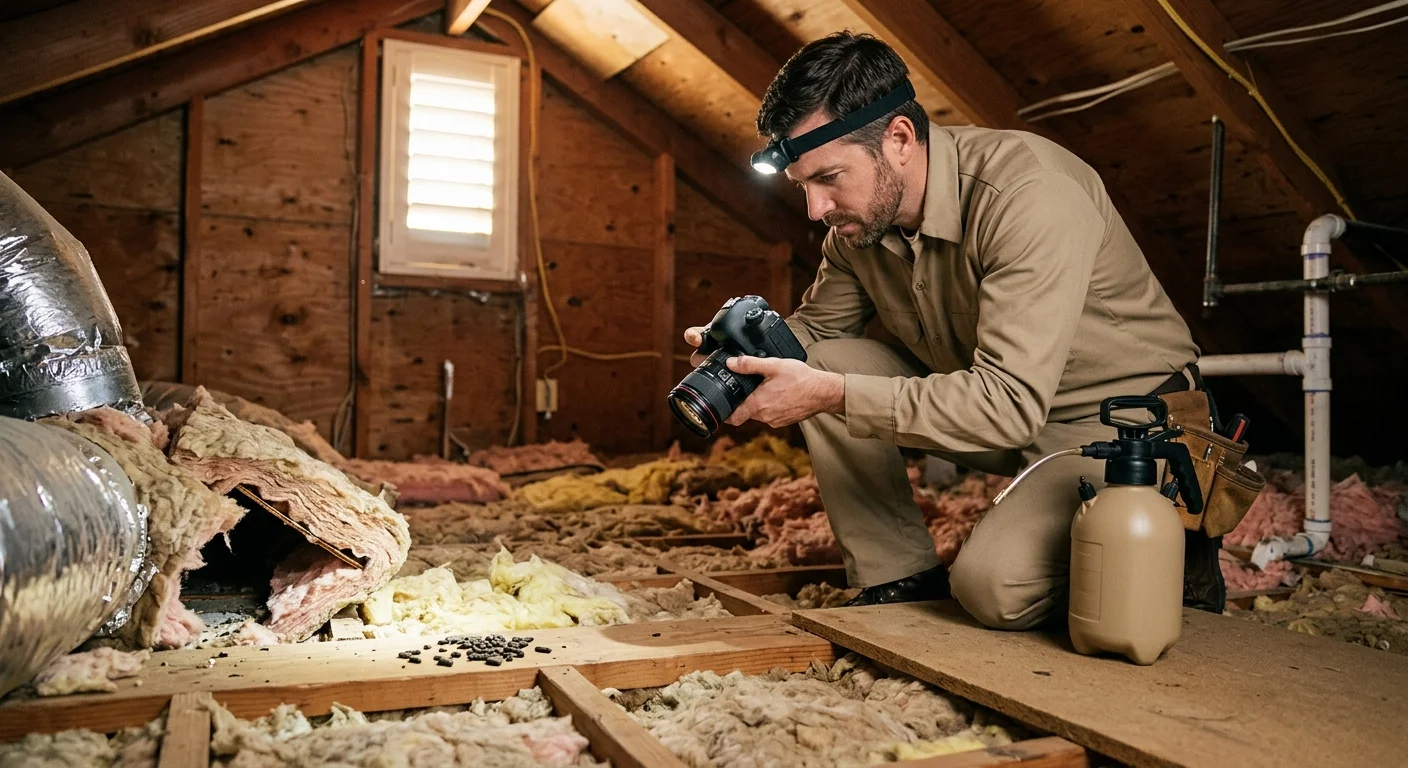
What scratching sounds can and can’t identify
Sound can tell you where activity might be happening. It can’t reliably identify the animal responsible. Volume alone isn’t enough, and a recording doesn’t confirm a species.
Start a simple log when the noise occurs. Record the date, approximate time, duration, and room. Note whether it came from the ceiling, a wall, or the roof edge. Describe the sound plainly. Scratching, tapping, movement, and gnawing-like noise give an inspector more context than “something was loud.”
Listen for a path rather than one isolated sound. Activity that seems to move between the wall and attic may guide the inspection toward a particular area. Note whether the route repeats on different nights. A short phone recording can preserve the pattern, although it still won’t identify rats or mice by itself.
Property setting also matters. Where the noise happens can point an inspection toward one part of the house. It doesn’t prove which animal made it. The same caution applies to any identification based only on location.
Our guide to common rats in San Diego homes provides more species context. The San Diego mice guide explains how a professional assessment fits into mice rodent control. Neither replaces evidence from the property itself.
Keep the first call factual. Share where the sound occurs, when you hear it, and what else you’ve documented. That gives the company a useful starting point without turning a guess into a diagnosis.
Which droppings, rub marks, and gaps to document
Droppings, streaks, damaged materials, and openings may help connect attic noise to rodent activity. They shouldn’t be treated as automatic proof of a particular species. Droppings size alone doesn’t separate rats from mice, so photograph what you found and let the inspector identify it.
Photograph what you see before the scene changes. You don’t need to enter the attic to create a useful record. Photos taken from the access opening can still show the surrounding area and the evidence’s location.
For each finding, document:
- Its position relative to the attic hatch, wall, vent, pipe, or cable
- The number of separate areas where it appears
- Its visible shape, color, and condition
- Its size beside a ruler or another fixed reference
- Nearby disturbed insulation, paper, fibers, or damaged material
- Any gap, loose edge, or opening close to the evidence
Use neutral labels in your notes. Write “dark streak beside pipe opening” instead of declaring it a rat rub mark. Write “small droppings near hatch” rather than deciding they came from mice. That distinction helps the inspector evaluate the evidence without inheriting an unsupported conclusion.
For a possible entry gap, photograph both the opening and its wider setting. A close image shows the edges. A second image should show whether the gap sits at a vent, roof junction, utility opening, or wall transition. Note whether you can see daylight, loose screening, or material that appears damaged.
Don’t enlarge an opening or rearrange nearby material for a better photo. Ask the company you’re matched with whether it wants anything left undisturbed before the visit. Our guide to rat trapping and exclusion in San Diego explains why evidence, animal removal, and entry-point work should appear as separate parts of the plan.
How attic access changes a licensed inspection
An inspector can only confirm what’s visible and accessible. A clear attic hatch may allow direct examination of nearby framing, insulation, utility openings, and roof transitions. A blocked hatch, low clearance, or inaccessible section limits what can be observed.
Explain the access conditions when arranging the inspection. Tell the company where the hatch is located and whether furniture or stored items sit below it. Mention sections that can’t be reached from the main opening. If the noise comes from an area separated by ducts, framing, or a finished ceiling, make that clear before the visit.
Ask the inspector to identify access limits in the written findings. “Attic inspected” is less useful than a description of which areas were visible. If part of the suspected route couldn’t be reached, the scope should say so. It should also explain what additional access, monitoring, or evaluation the company recommends.
California divides structural pest control into licensing branches. Branch 2 covers household-pest work excluding fumigation. You can check a company or individual through the California Structural Pest Control Board license search. We match customers with licensed local pest pros who hold the appropriate California credentials for their service.
San Diego County Vector Control also offers free rat inspections. The county calls them educational rodent inspections, free to county residents. It also says the Vector Control Program is not a pest control company and doesn’t trap, bait, or remove rodents. That can be a useful public option before you compare private rodent-control work.
If the evidence isn’t limited to the attic, say so. Sounds inside walls, findings around the exterior, or signs in another room can change what needs to be examined. For a broader look at hiring and assessment, see our San Diego pest control guide.
What to compare in a written rodent-control scope
A useful proposal should separate confirmed findings from assumptions. It should name the areas inspected, describe the evidence found, and identify any inaccessible spaces. If the company believes rats or mice are present, ask what property evidence supports that conclusion.
Compare the proposed work line by line. Look for clear answers to these points:
- Which interior and exterior areas are included
- Which openings or damaged materials are part of the scope
- How the company will document completed work
- What monitoring or removal work is proposed
- Whether cleanup is included, excluded, or quoted separately
- Which access limitations remain unresolved
- What follow-up conditions appear in the written agreement
- Who handles work outside the pest company’s stated scope
Keep identification, removal, exclusion, cleanup, and monitoring separate while comparing proposals. A broad phrase such as “rodent service” doesn’t tell you which tasks are included. It also doesn’t show whether the company plans to address the opening connected with the attic evidence.
Don’t assume an exclusion proposal promises permanent results. Ask what materials and locations are included, what isn’t included, and how later findings are handled. Any warranty or re-treatment terms belong to the matched company’s written agreement. Pest Pros San Diego doesn’t set those terms or make that guarantee.
Pricing should follow the same rule. This brand has no fee schedule, and there’s no standard San Diego price for rat control. The matched company inspects first and quotes in writing before any treatment begins. Compare the actual scope alongside the quoted amount, since different proposals may cover different work.
Our rodent control service page explains how we connect customers with local companies. Bring your sound log and photos to that conversation. Those records help each company price and describe the same suspected areas.
When to call us
Call when attic noise repeats, physical evidence appears, or you need a written rat-control scope from a licensed pest company. We’ll connect you with a licensed local pro who can inspect the accessible areas and explain the findings. Call us at (858) 400-6561 and we’ll match you with a licensed local pro.